
How to Choose Kitchen Cabinet Colors: Name Your Anchor First

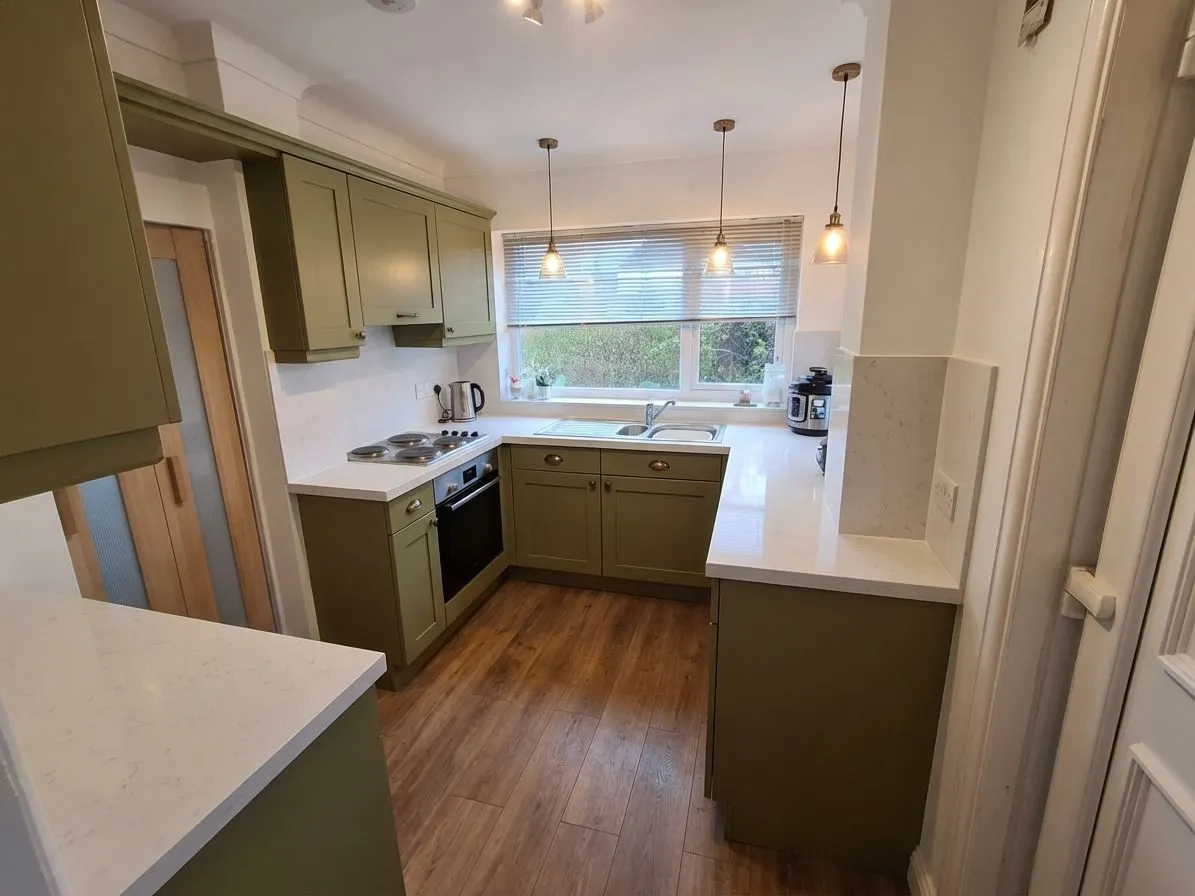
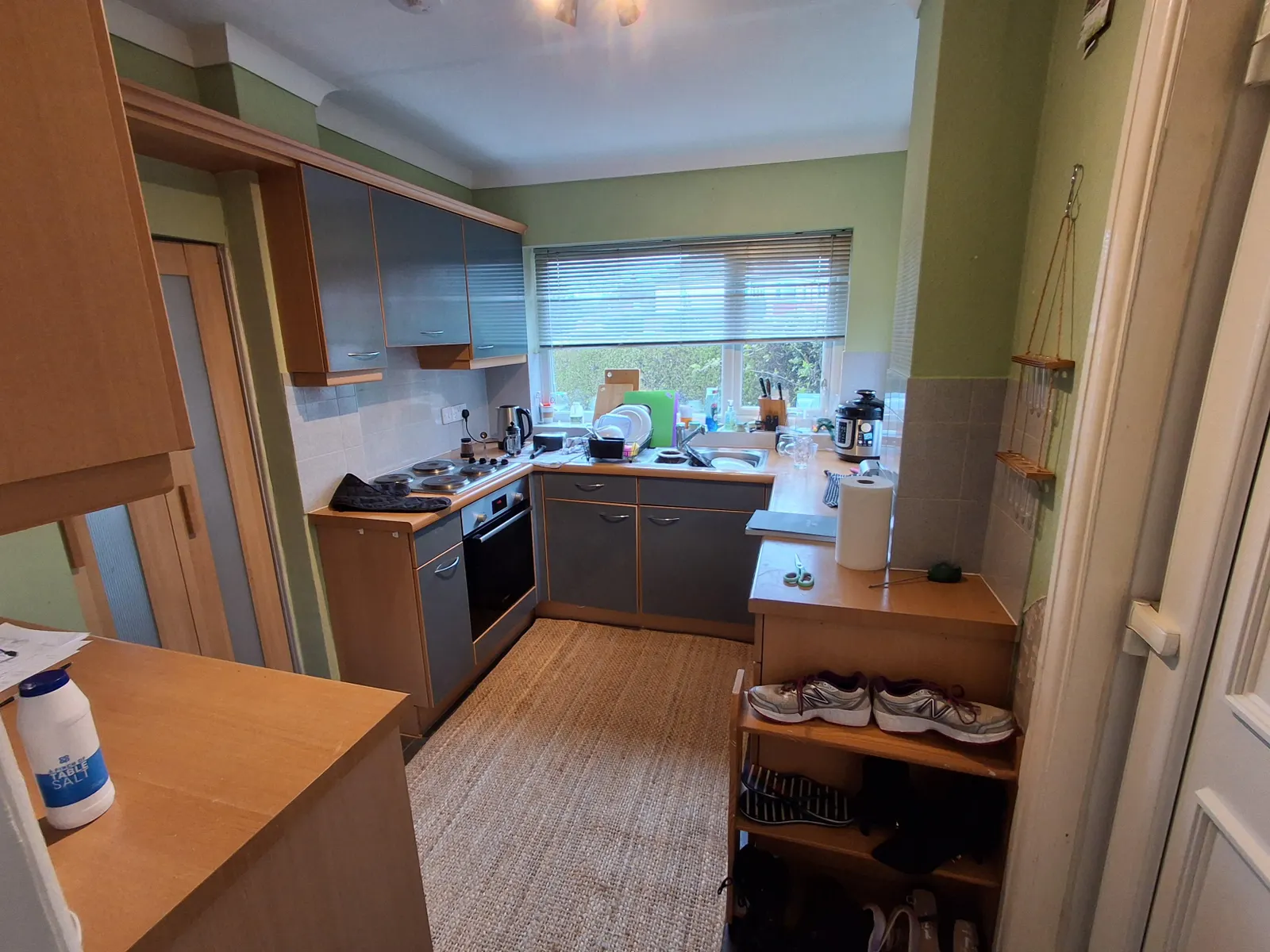
Same cabinets, new color. The boxes were never the problem.
The rule
A cabinet color works when it answers to one anchor you’re not replacing: the counter, the floor, or the backsplash. It fails when it comes from a trend list.
Cabinets are the biggest color block in your kitchen, but they’re not the boss. The boss is whatever surface is staying. Sage green is a great color. Sage green next to pink-beige granite is a fight you’ll look at every morning.
Three steps:
- Rank your anchors. Counter, floor, backsplash. Which one has the most pattern and the most color? That’s the loud one. Your cabinet color reports to it.
- Name its undertone. Warm (beige granite, oak, cream tile, terracotta) or cool (gray quartz, slate, bright white subway). Squint at a photo if you can’t tell. Photos flatten the room and the lean shows.
- Decide: two colors or one. Quiet anchors can carry a two-tone kitchen. A loud anchor wants one calm color everywhere. That single decision does more than any specific paint chip.
Notice what’s missing: no color has entered the conversation yet. That’s the point. The kitchen picks the shortlist. You pick from the shortlist.
Two-tone: darker below, lighter above
When your anchors are quiet, two-tone is the move, and the physics only run one direction. Darker color on the lowers, lighter on the uppers.
Why. Lower cabinets sit where the floor sits, so dark down low reads as ground. Uppers live at eye level, so light up top keeps the room open instead of closing in around your head. And lowers take the abuse: shoes, chair legs, the dog, the dishwasher steam. A deep green hides ten years of that. White documents it.
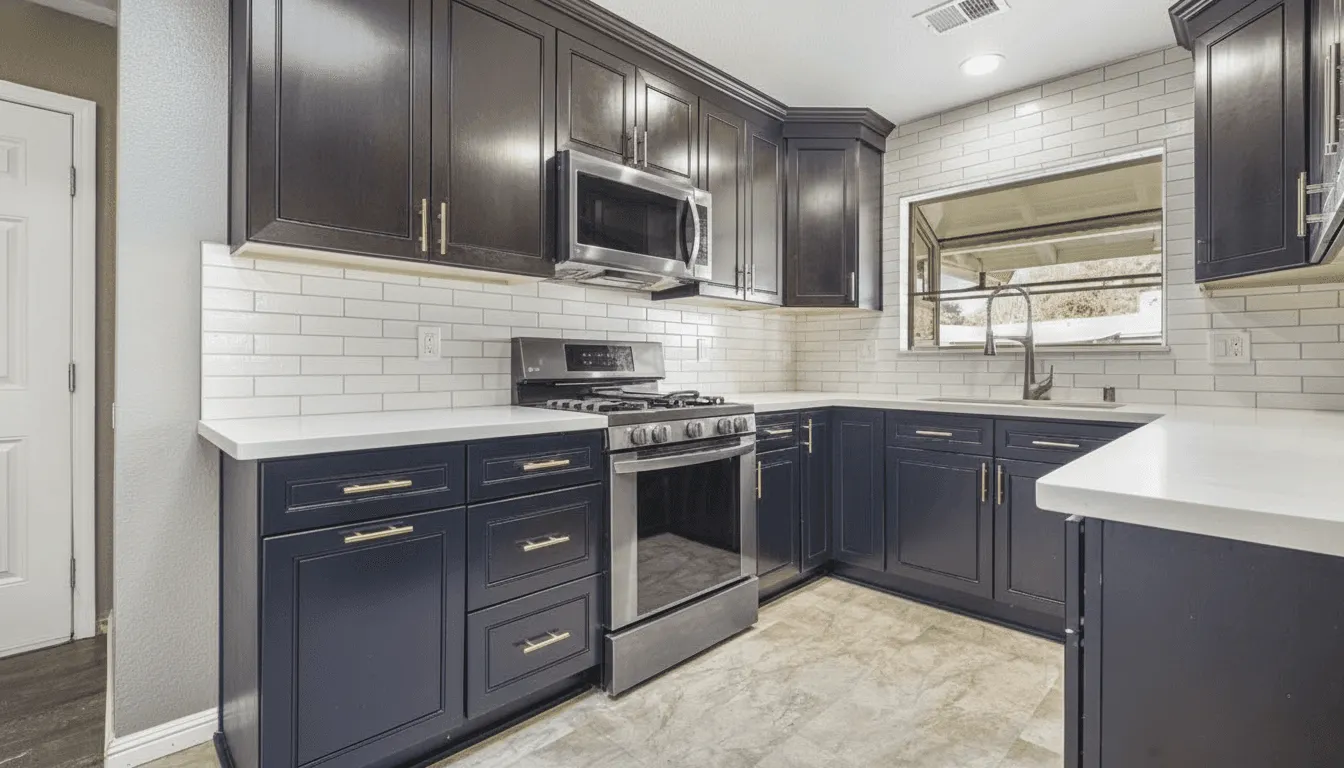
Look at how the navy behaves here. The subway tile and quartz are cool and quiet, so a saturated dark can carry the room without fighting anything. The gold hardware is the one warm note, and it works because it’s the only one. That’s a kitchen where the anchors gave permission.
When one color beats two
The most common cabinet question I see on Reddit is some version of “should I paint the lower cabinets white to match the uppers?” And the honest answer is: look at your counters first.
If your granite has heavy movement, or your backsplash is patterned tile, your kitchen already has a loud voice. Adding a second cabinet color makes three things compete. One color, uppers and lowers the same, turns the cabinets into a calm frame so the busy surface becomes the feature instead of the noise.
The reverse holds too. If someone painted your whole kitchen one color and the room feels flat, check the anchors. Quiet counters plus quiet floor plus one cabinet color equals a kitchen with no gravity. That room is asking for darker lowers.
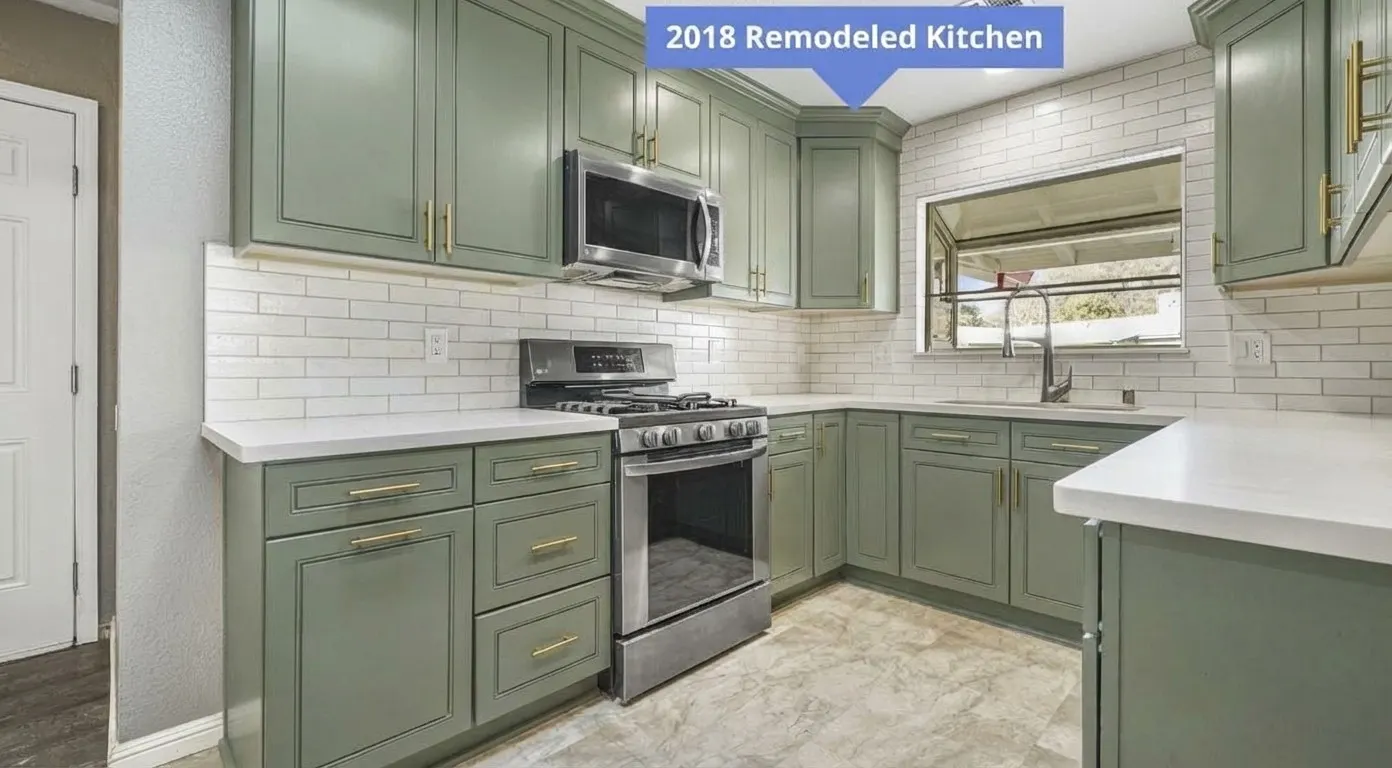
Sage against plain white subway tile. The tile is the quietest backsplash there is, which is exactly why a soft muted green can sit next to it and read intentional. Put this same sage against a veined marble mosaic and it becomes clutter.
Shaker vs slab is a style question, not a color question
People burn weeks on this one, so let me save you the detour. Door style tells you the personality of the kitchen. Shaker leans traditional or transitional. Slab leans modern. That’s it.
The same navy reads classic on a shaker door and sleek on a slab door. The color decision and the door decision are separate, and the anchor rule doesn’t care which door you have. Settle the color against your anchors first, then let the door style set the mood. Doing it in the other order is how you end up repainting.
Test it before you commit
You now have a hypothesis: “greige lowers, white uppers, because my granite runs warm.” A hypothesis is not a kitchen. The gap between a paint chip and 40 square feet of cabinet face is where most regret lives.
So test it on your actual kitchen, not a stock photo. Take one photo, phone is fine, and render your shortlist on it. We wrote up the mechanics in how to change your cabinet color with AI, and you can try it on your own photo here. The first render doesn’t need an account, and you get 5 free, which is enough to test a two-tone pair, a one-color calm option, and a wildcard.
When you compare the renders, don’t ask “which is prettiest.” Ask “which one answers to my anchor.” Different question, better kitchen.
The rule travels
Warm granite kitchen: greige or deep green lowers, cream uppers. Cool quartz kitchen: navy or charcoal lowers, white uppers. Busy counters either way: one calm color, everywhere. Same rule, different kitchens, different winners.
That’s what a real rule does. The trend list gives you this year’s answer. The anchor gives you yours.
Now name yours
Pull up a photo of your own space, or just look at it. Answer two questions in plain words:
- Which anchor is loudest in your kitchen, the counter, the floor, or the backsplash?
- Is that anchor's undertone warm or cool?
Most people never name it. They just circle swatches. Finish the sentence — in your words, about your home:
Your sentence rides the button below. Test it on your photo.
Test your answer before you commit. Upload a photo and tell RAI the exact change you're considering. You'll see it on your actual home in seconds.
See it on your home →Free · No account needed · 10 seconds
Stuck between two answers, or not sure what you're looking at? That's a design question. In the Renovate AI app, tap Ask and describe what feels off. Elena will help you name it, then design the direction.
FAQ
- Should I paint lower cabinets white to match uppers?
- Only if the kitchen around them is busy. If your counter or backsplash carries heavy pattern, one color everywhere calms the room. If your surfaces are quiet, keep the contrast: darker lowers ground the kitchen and hide the scuffs that white never forgives.
- Which cabinets should be darker in a two-tone kitchen?
- The lowers, almost always. Dark on the bottom reads like ground under your feet, and light uppers keep the room open at eye level. Flip it and the kitchen feels top-heavy, like a ceiling pressing down.
- Do cabinet colors have to match the floor?
- No. They have to share an undertone with it, which is different. A warm oak floor can carry sage, greige, navy, or cream, as long as the color doesn't pull icy cool against the wood's warmth.
- What are the most timeless kitchen cabinet colors?
- The ones that answer to anchors most kitchens actually have. Warm whites, creams, greige, and deep greens keep working year after year because they share undertones with wood floors and stone counters. A color is timeless when it reports to your surfaces, not to the year you painted it.
- Are white cabinets going out of style?
- White is a default, not a trend, so it doesn't really go out. What dates a kitchen is white paired with nothing: no contrast island, no warm floor, no texture. If everything in the room is white, the cabinets aren't the problem.