13 real before & afters

Living room paint colors, on two real rooms

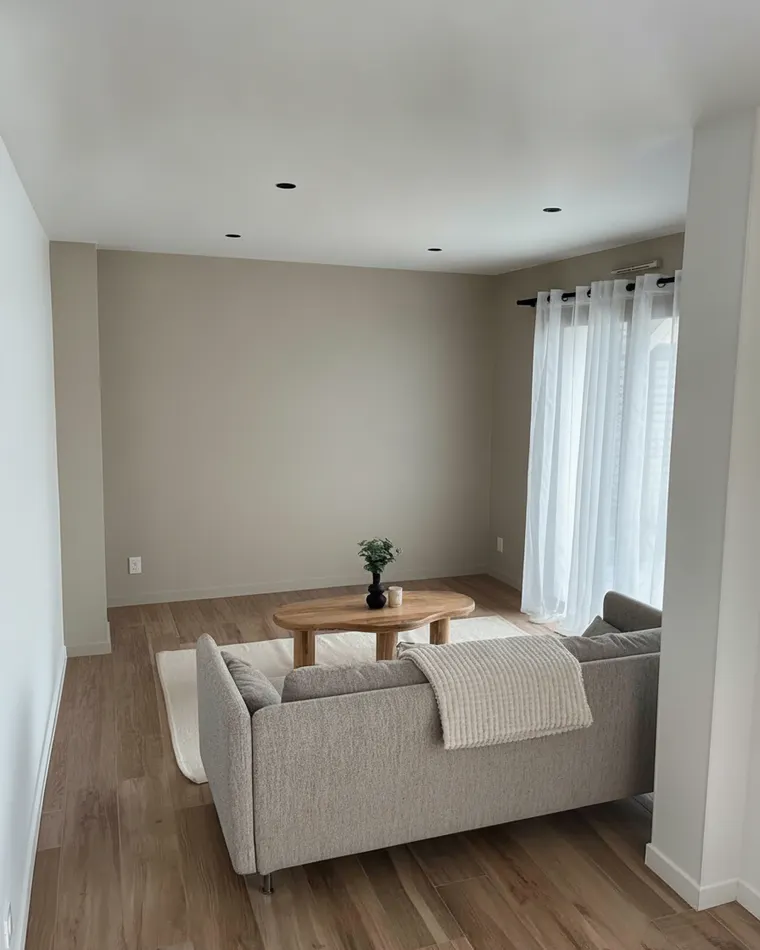
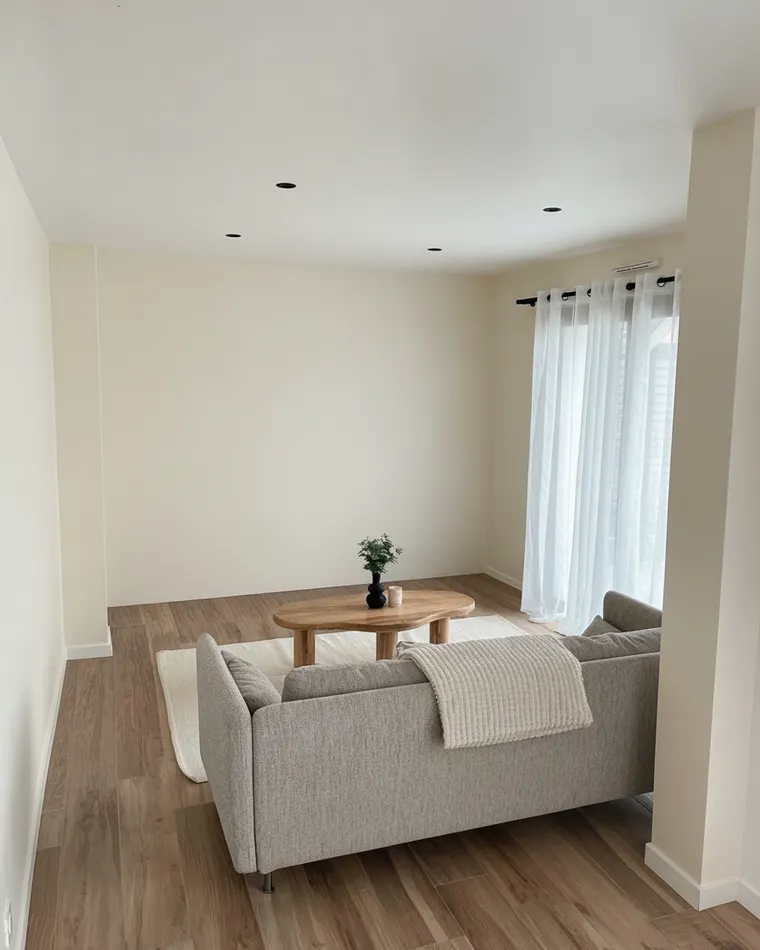
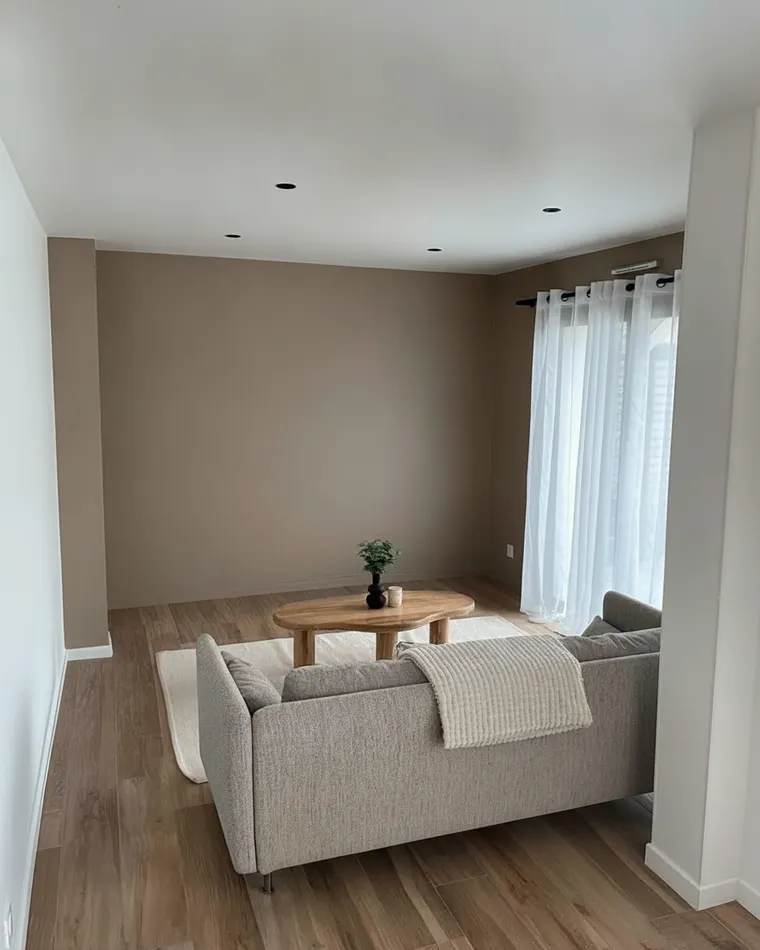
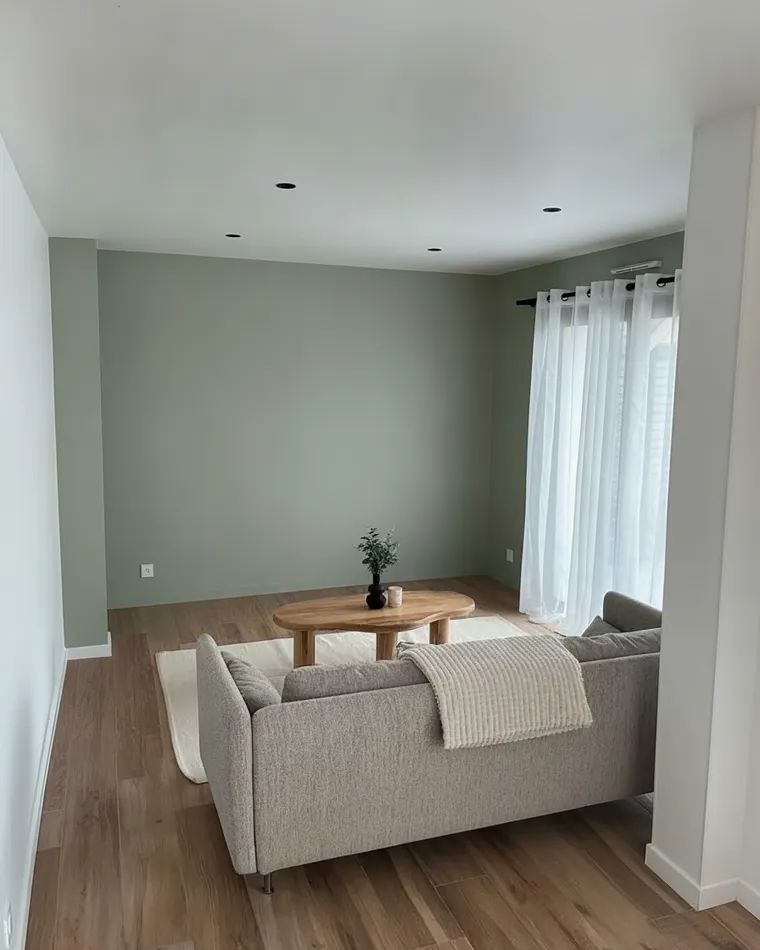
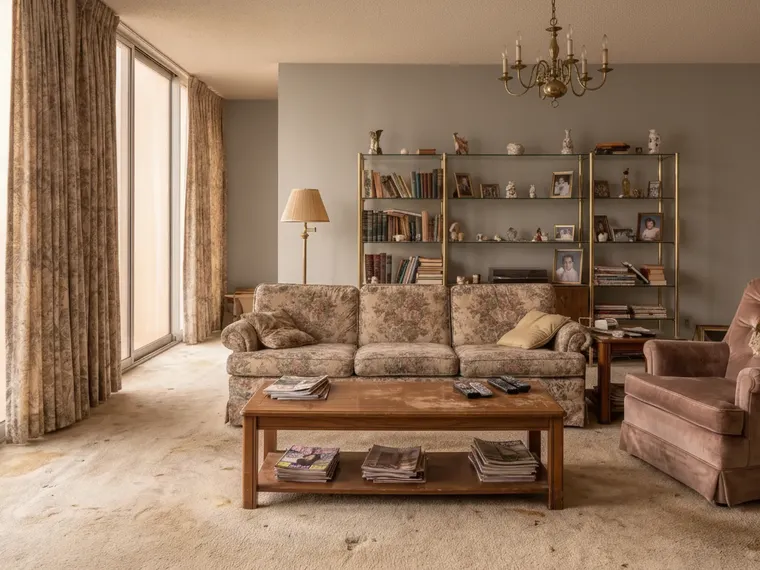
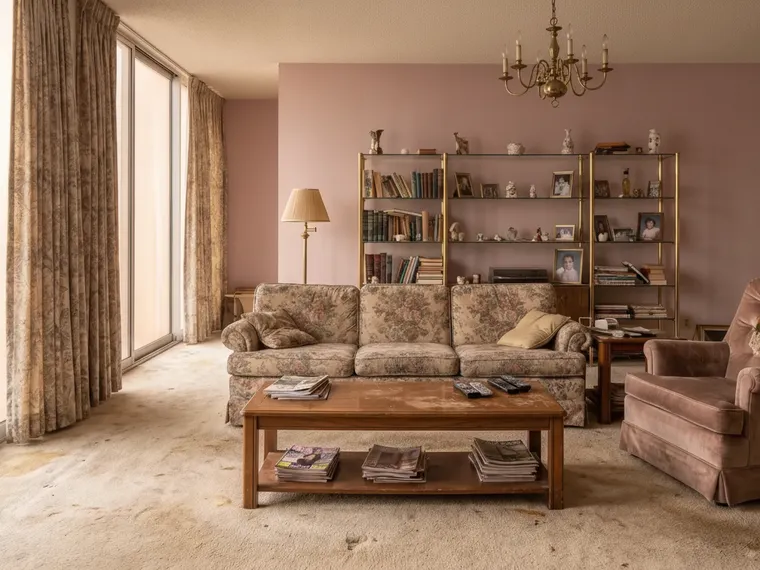
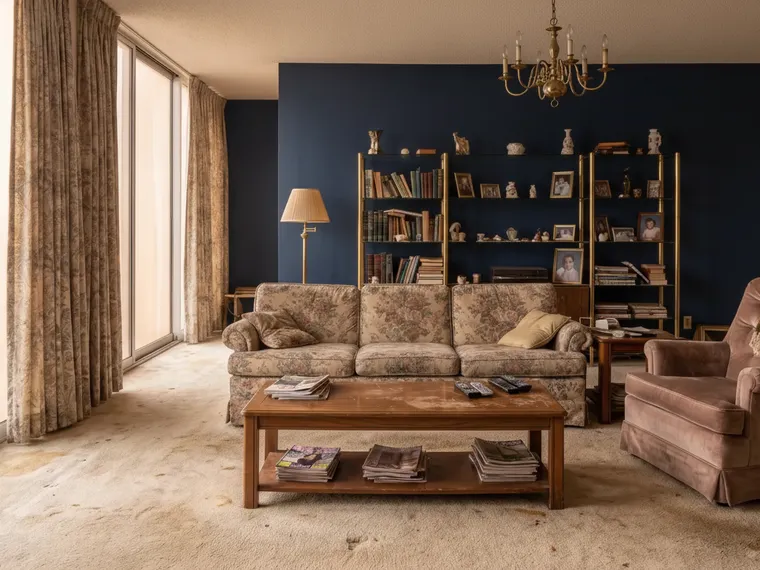
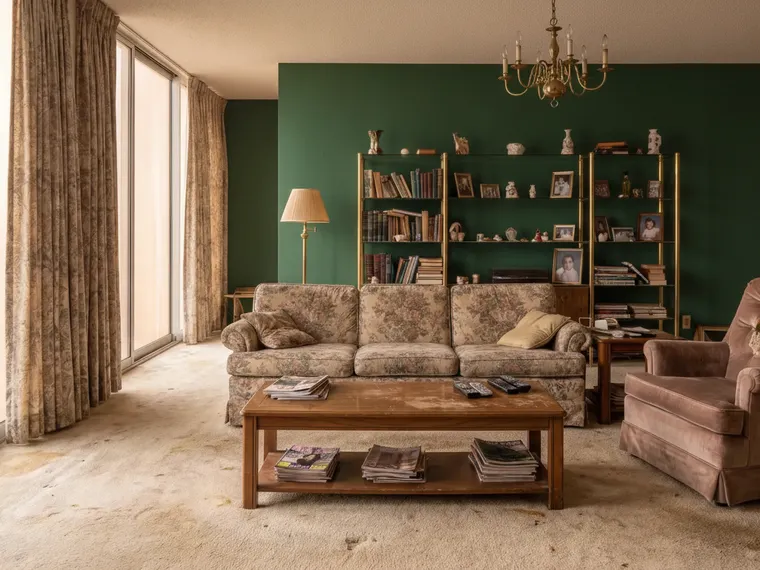
Greige, cream, mushroom, sage, dusty blue, olive, terracotta, navy, forest green, charcoal and blush — thirteen colours on two real living rooms with the furniture left exactly where it was, so you compare the colour and not the photography. Each one says what changed and why it works. Then see it on your own walls.

Your photo
Your photo — ready to restyle

No account for your first render · about ten seconds · nothing to mask or select

What makes it work

A living room colour is four decisions

The shade is the one everybody argues about and the one that matters least. The light in the room, how the colour sits against the furniture, whether the ceiling stays white, and whether the colour shows up anywhere else are what separate a room that looks designed from one that looks painted.

01

The light decides, not the chip

A colour on a two-inch chip under shop lighting is not the colour on four walls in your daylight. North light cools everything; south light warms it; evening lamps make greys go brown. Every render on this page is a colour in a real room’s real light, which is the only way to judge one.

02

A neutral should be a shade darker than the furniture

A wall lighter than the sofa makes the sofa look heavy; a wall a shade darker makes it look chosen. This is why greige beats white in most furnished rooms and why the dated room below looks better in greige than in white.

03

Deep colours need a white ceiling and a lamp

Navy, forest, olive and charcoal work on four walls when the ceiling stays white and there is a lamp on at least two walls. Without the white lid the room closes in; without the lamps it goes flat at dusk. With both, a dark living room is the most flattering room in the house.

04

The colour should show up once more

A sage wall with nothing else green looks like a mistake; a sage wall with one plant or a green cushion looks like a scheme. Pick the colour that already appears somewhere in the room — the floor, the sofa, a rug — and the walls will look like they were always that colour.

Before and after

The two real rooms behind every render

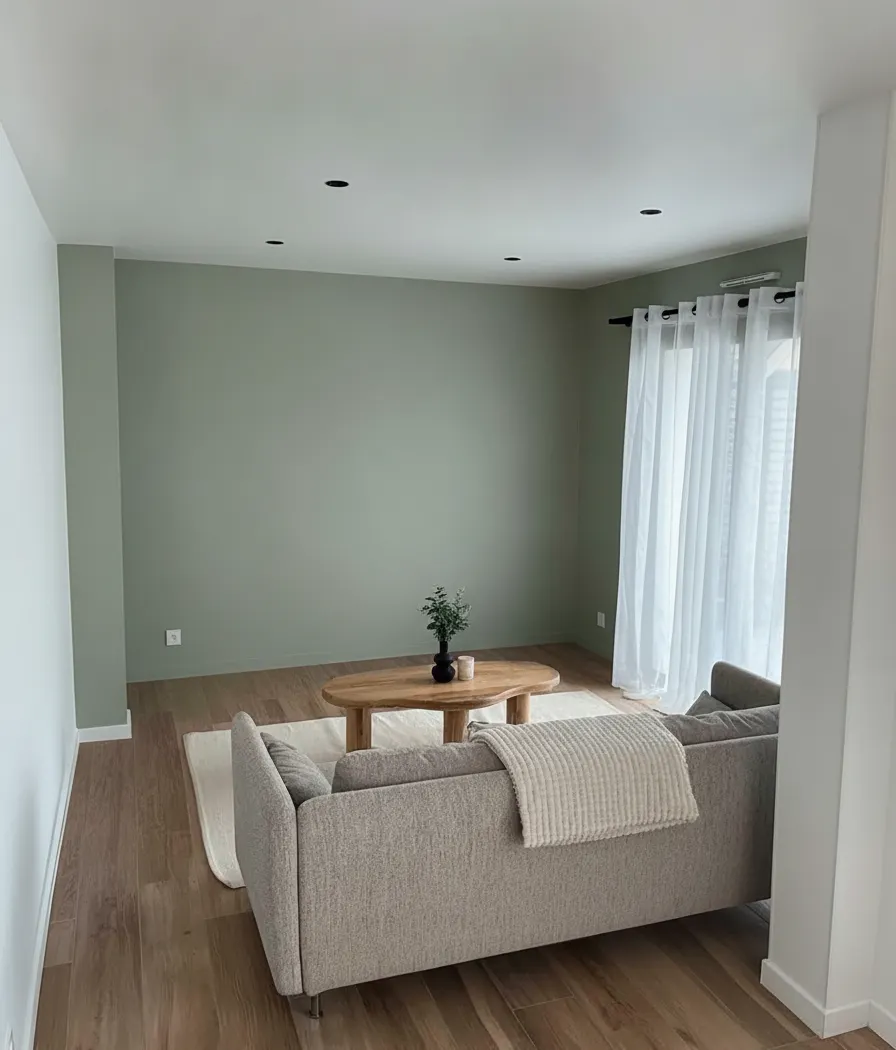
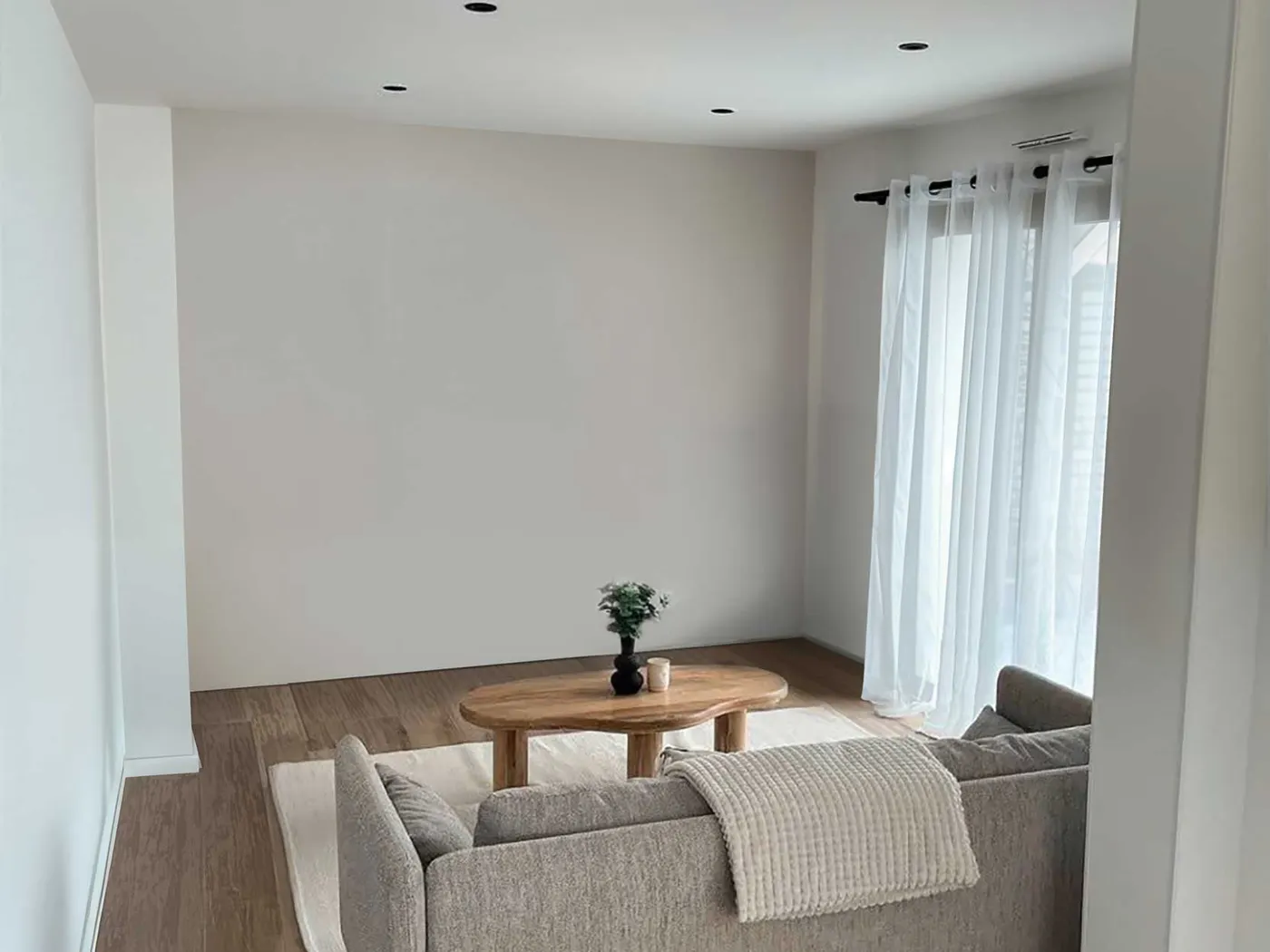
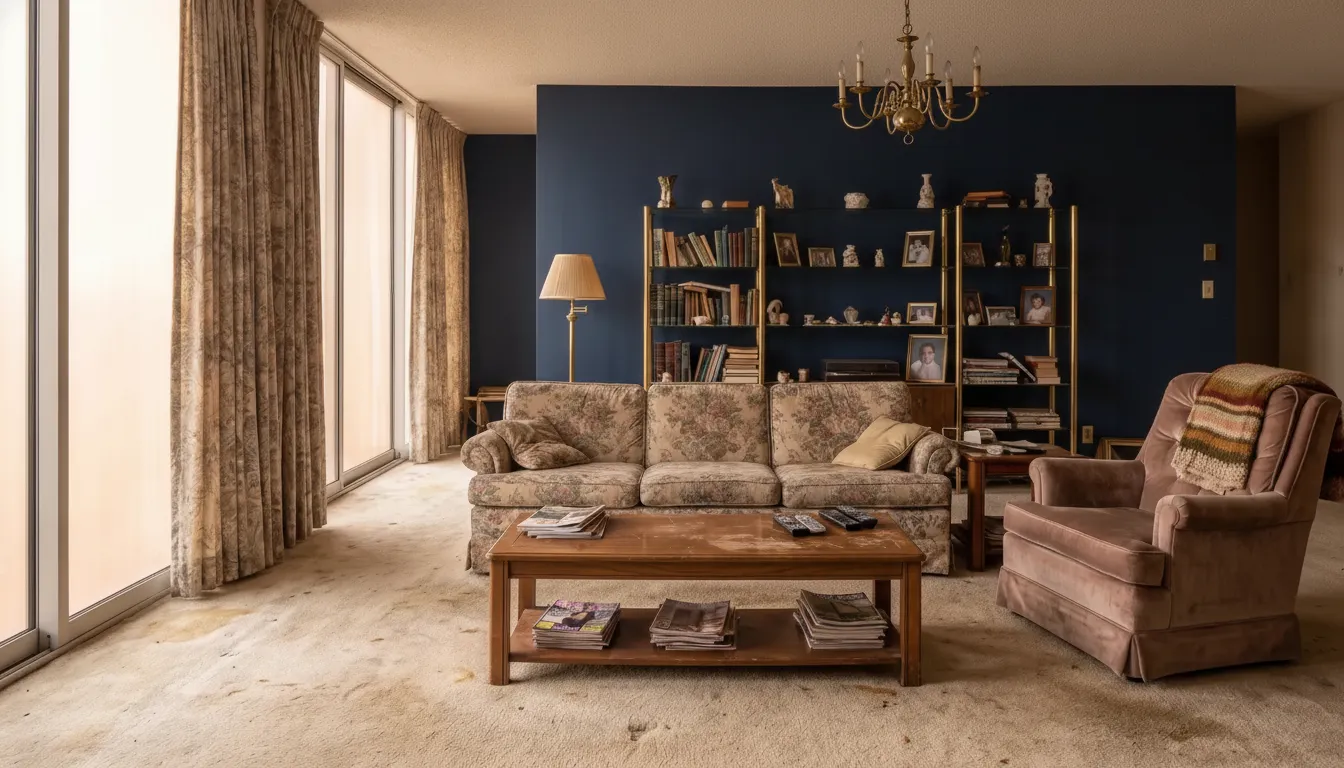
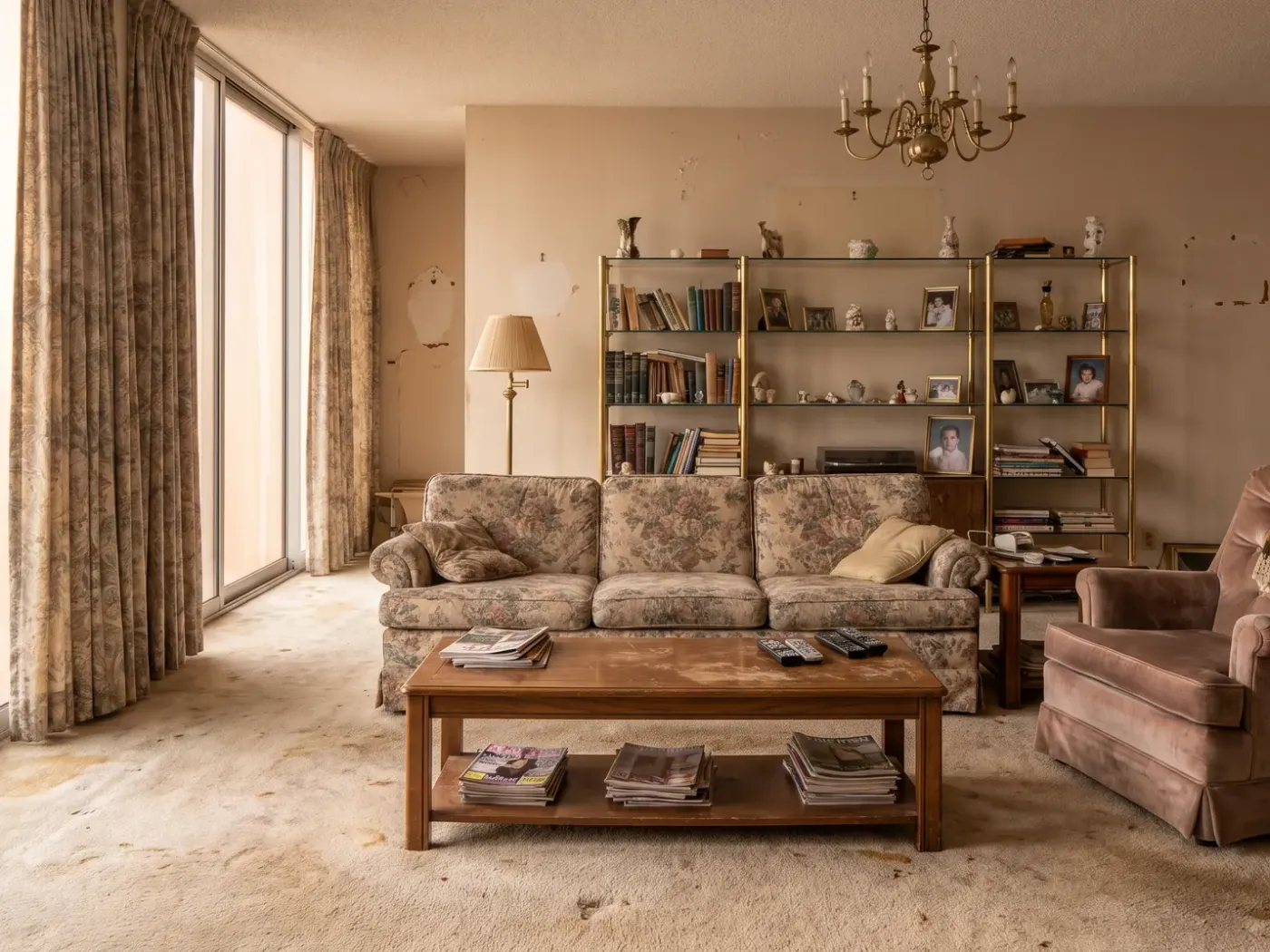
Nothing on this page is a stock photo of somebody's finished living room. One is a white new-build with a grey sofa; the other is a living room that has not changed since the 1980s. Every image below is one of them with the walls repainted and nothing else touched. Drag the handles.

After: Sage walls
Before: White walls
White walls Sage walls
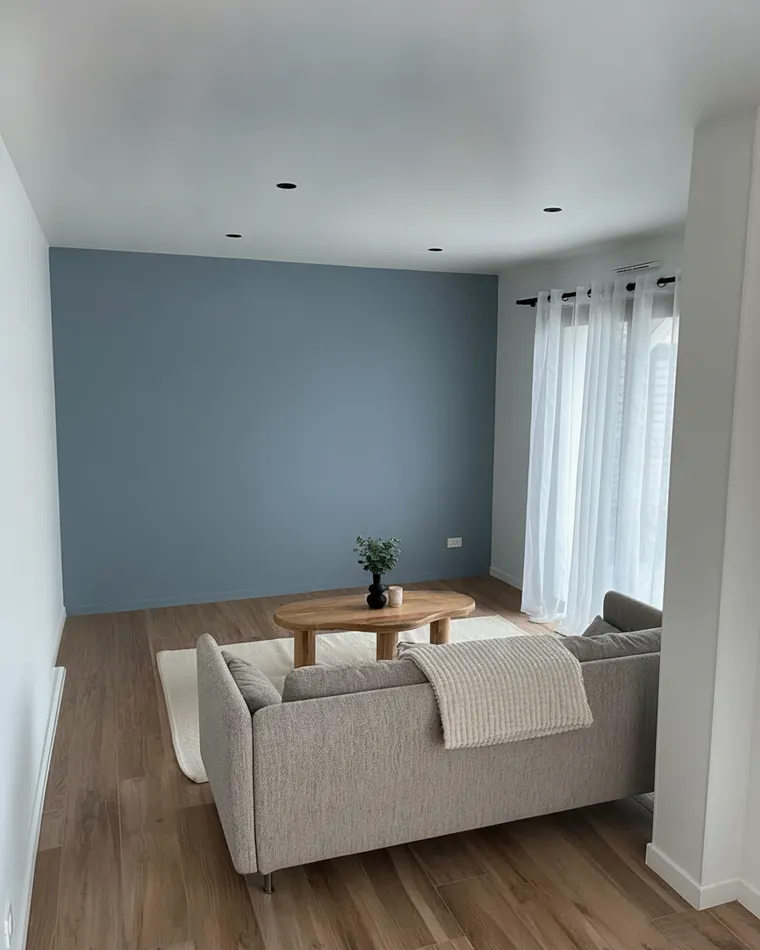
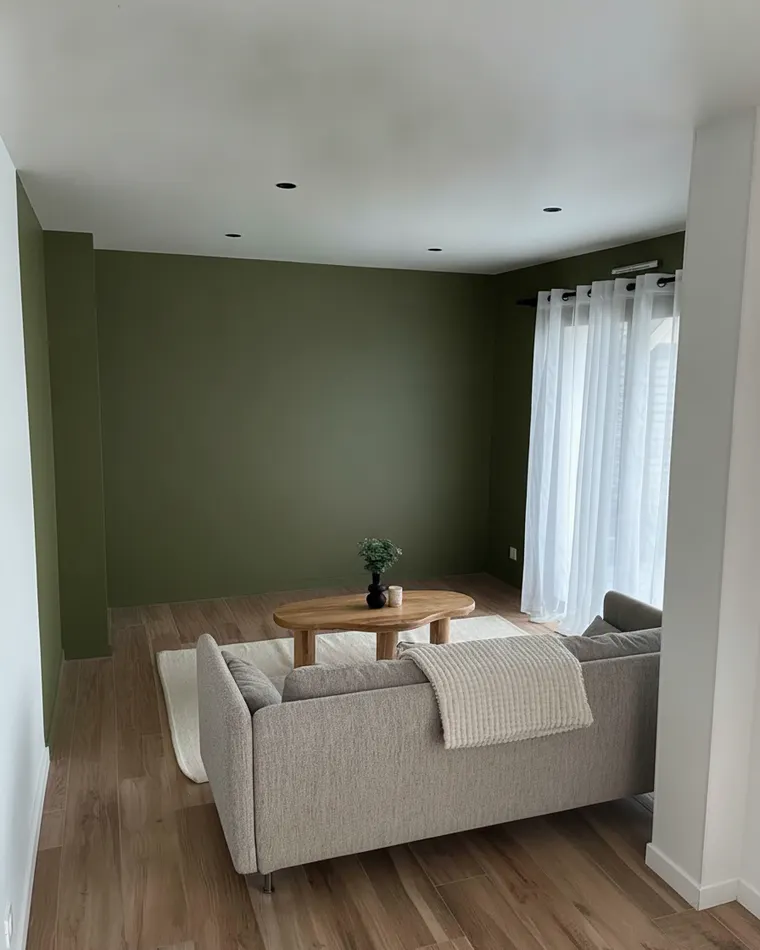
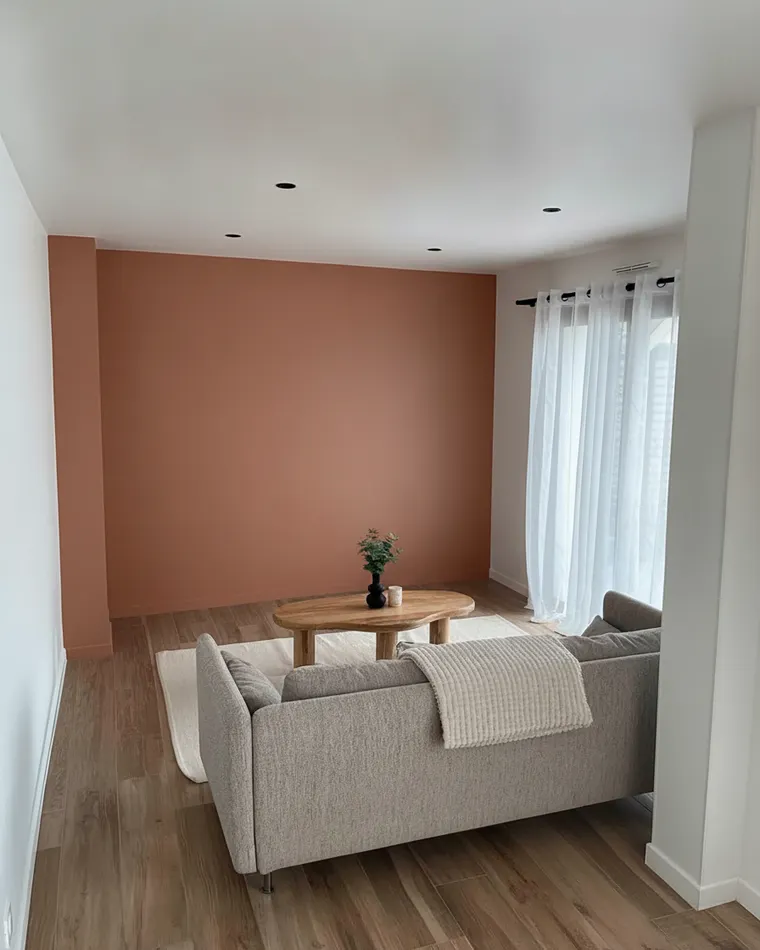
The white new-build. A bright living room with a grey sofa and white walls that could be any colour. Seven of the renders on this page are this exact room, repainted — the comparison a fan deck cannot give you. The engine tends to leave the short wall by the door white; say “including the wall nearest the camera” and it listens better.
After: Navy walls
Before: Beige walls
Beige walls Navy walls
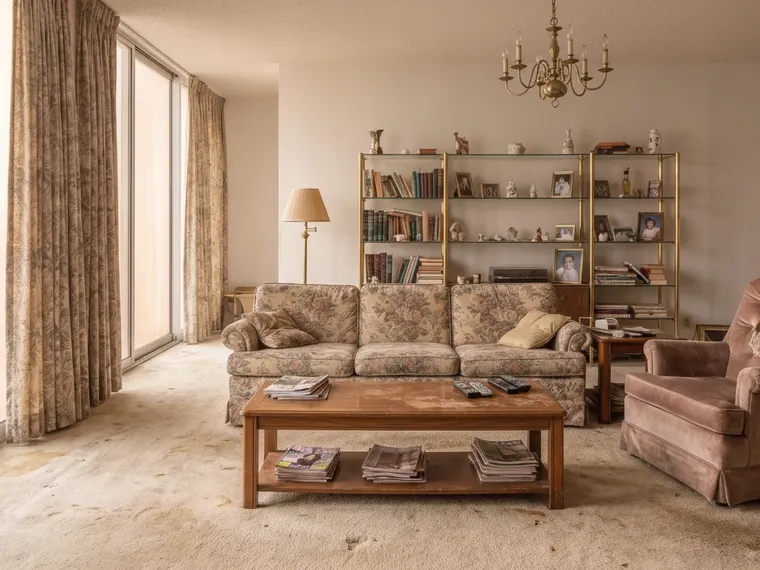
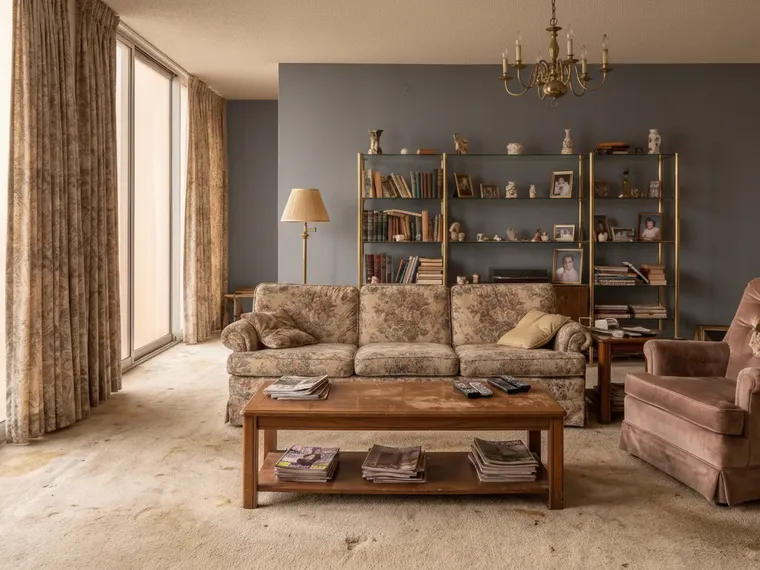
The 1980s living room. A room nobody has touched in forty years. Drag the handle: only the walls changed, and they change what every piece of furniture in front of them looks like.

Where to start

What to do first

In order of change-per-dollar. Two of the four steps are free, and the whole job is a weekend and two tins of paint.

  1. 1

    Photograph the room at midday and at dusk

    Two photos, same spot, from the doorway. The colour that works in both is the colour. Most regrets are a colour picked at noon and lived with at night.

    Free
  2. 2

    Render one neutral, one soft colour, one deep one

    Greige, sage and navy is the classic trio and the one on this page. Run all three on your own photo, put the phone down, and look again in the morning. The one you keep going back to is usually not the one you expected.

    Free
  3. 3

    Buy a sample of the winner and paint a square

    One square, two feet across, on the wall opposite the window and another beside it. Live with it for a week. If it still looks like the render, buy the tin.

    A sample pot
  4. 4

    Paint all four walls, matte, ceiling white

    Two coats for a light colour, three for a deep one over a light wall. Matte hides an imperfect wall; anything with a sheen shows every roller mark. Leave the ceiling white unless you have a reason. Total cost is two tins of good paint and a weekend.

    Under two hundred dollars

What goes wrong

Four ways a living room colour fails

Paint is cheap to do and cheap to redo, which is why so many living rooms are painted twice. Each of these shows up in a render before it shows up on a wall.

Picking the colour from the chip

A paint chip is a colour with no light on it. The greige that looks warm on the card goes pink on a north wall, and the sage that looks calm goes minty in sun. Test it on the wall or in a render of the wall, never on the card.

White walls in a room full of old furniture

White makes new things look newer and old things look older. The dated room below shows it: the white render is the cleanest and the least flattering. If the furniture is staying, the walls should be a neutral one shade deeper than it.

A deep colour in a room with one small window

Navy, forest and charcoal are rendered here on rooms with walls of glass. In a room with one window they close in at three in the afternoon. Deep colours are for rooms with light to spare, or for the one wall opposite the window.

Five different greys

Grey walls, grey sofa, grey rug, grey curtains and a grey floor is not a scheme, it is a fog. If the room is already grey, the walls are the place for a warm neutral or a soft colour, not a sixth grey.

Questions

Living room paint colours, answered honestly

What are the best neutral paint colors for a living room?

Warm greige, warm white, mushroom taupe and, if you count it, sage. Greige is the safest: warmer than grey, cleaner than beige, and it flatters a grey sofa, an oak floor and white trim at once. Warm white is the one for a north-facing room that goes cold in pure white. Mushroom is the neutral to pick when pale walls bore you. All three are rendered on the same white room above, so you can compare them on one sofa instead of three chips.

What are the most popular living room colors right now?

Greige and sage lead by a distance, followed by warm white, navy, forest green, olive and dusty blue. Terracotta and blush are the ones climbing. The cool greys of the 2010s are the ones falling. Every colour in that list is rendered on a real living room on this page.

Should living room walls be lighter or darker than the sofa?

A shade darker, nearly always. A wall lighter than the sofa makes the sofa the heaviest thing in the room; a wall slightly deeper makes it look chosen. This is the reason greige beats white on most furnished rooms and why the dated room above looks better in greige than in white, even though white is the brighter colour.

What colour makes a living room look bigger?

A light neutral on all four walls with the ceiling and trim in the same white — warm white, cream or a pale greige. Continuous colour with no hard edges is what makes a room read larger, not white specifically. A dark colour on the wall opposite the window makes a room read longer, which is a different trick and is on the accent wall page.

Can I paint my living room a dark colour?

Yes, if it has the light for it. Navy, forest green, olive and charcoal work on four walls when the room has a big window or two, the ceiling stays white and there are lamps on at least two walls. Three of the four dark renders above are on a room with a wall of glass, and that is why they work. With one small window, put the dark colour on the wall opposite the window instead.

What paint finish should I use on living room walls?

Matte or a flat eggshell. Matte hides an imperfect wall and makes a colour look like the chip; anything glossier bounces light and shows every roller mark, and on a dark colour it looks like plastic. Save satin for the trim and the doors.

Can I see a paint colour on my own living room before I buy it?

That is what the upload box at the top of the page is for. Photograph the room from the doorway, type one of the sentences under the renders above — "paint all the walls a warm greige and keep everything else the same" works as-is — and the render is back in about ten seconds. Run three colours and the decision makes itself.

Now see a colour on your own living room

Photograph the room from the doorway, pick the colour you kept scrolling back to, and you will have it on your own four walls in about ten seconds. Free, on iPhone, Android and the web.