
Lazy susan
A turntable inside the corner base cabinet you already have. Cheapest, and it fits in a weekend. Loses the four corners of the box and does not like heavy pans.
8 real before & afters
Glass with a light, open shelves, floating shelves that wrap the corner, blind-corner pull-outs and drawers — rendered on a 1990s oak kitchen and a white builder kitchen, one cabinet at a time. Each card says what changed and where the render actually put it. Then see it on your own corner.
No account for your first render · about ten seconds · nothing to mask or select
Which fix
"Corner cabinet" is six different things at six different prices, and the right one is decided by which corner you mean — the upper you look at or the base you reach into — and what has to live in it. The renders further down show three of them on a real kitchen.
A turntable inside the corner base cabinet you already have. Cheapest, and it fits in a weekend. Loses the four corners of the box and does not like heavy pans.
Shelves that swing out of the corner and then slide across — the magic corner or LeMans. Reaches the whole depth. The most expensive hardware, and it needs a cabinet with a wide enough opening.
One wide door across the corner at forty-five degrees, upper or base. The traditional unit every range sells, and the easiest to reach into. Sticks out into the room.
A stack of deep drawers at the corner — straight, or the angled kind that follow the L. Everything visible from above. More joinery than the others.
Take the doors off, or replace the box with floating shelves that wrap the corner. Costs almost nothing, brings light in, and makes the corner the one place the two runs meet cleanly.
A floor-to-ceiling unit in the corner, with pull-out shelves inside. Uses the depth a corner has and a counter wastes. Takes the counter and the upper with it.
Before and after
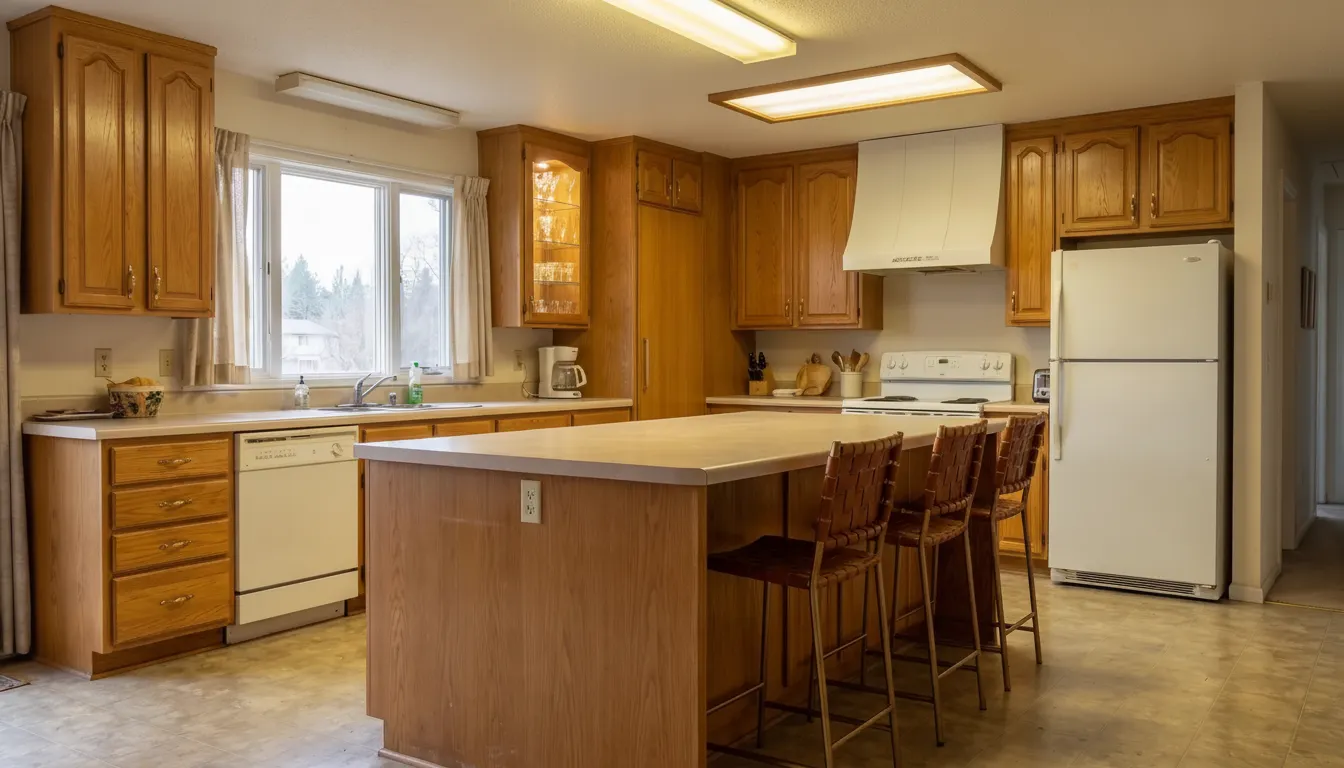
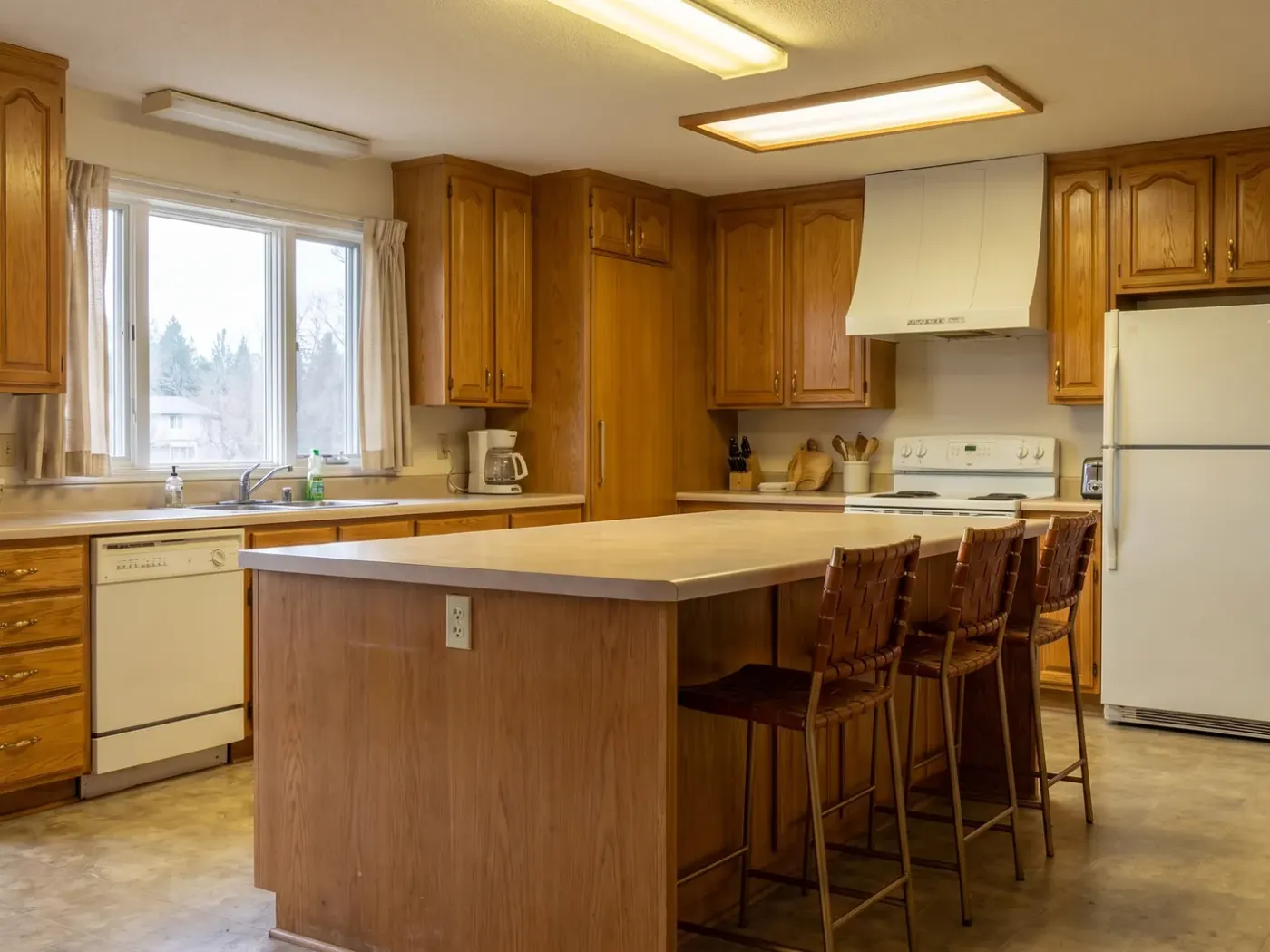
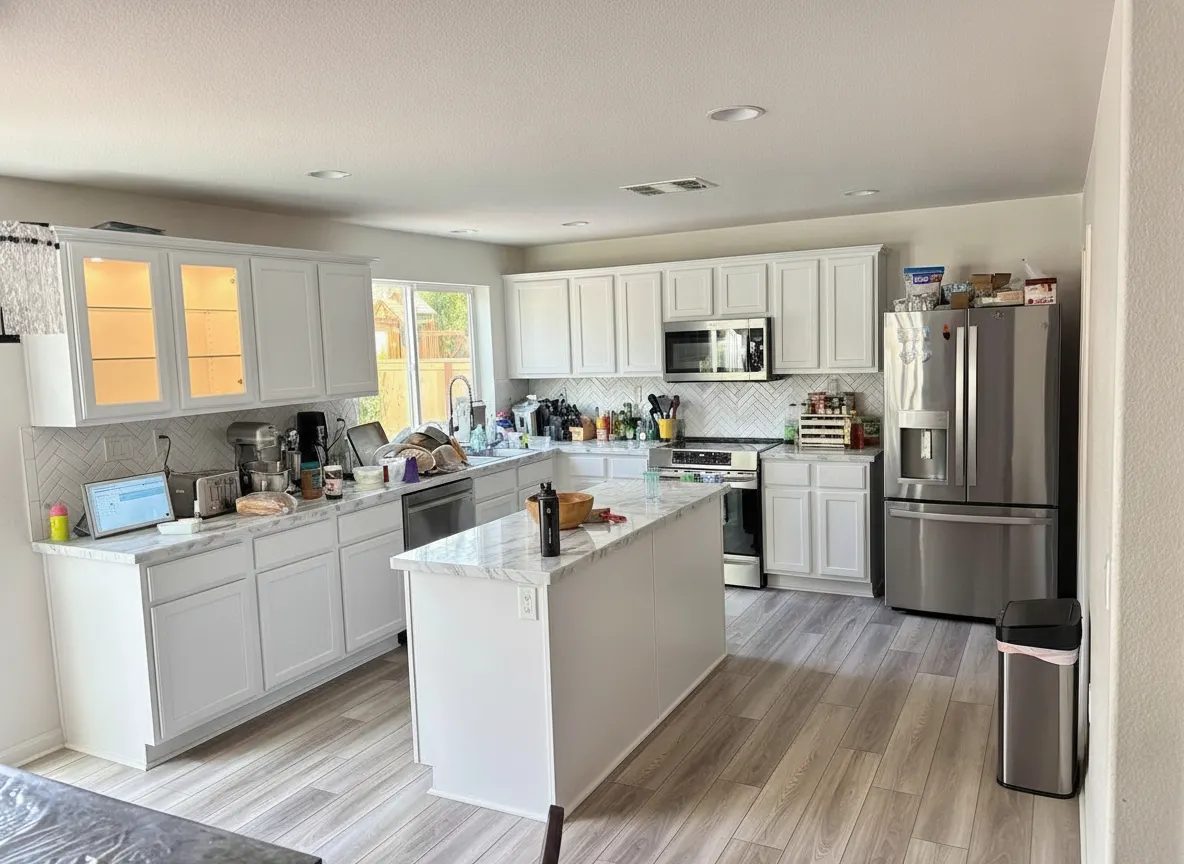
Nothing on this page is a catalogue photo of somebody's finished corner. One kitchen is 1990s honey oak with the corner in plain view; the other is a white builder kitchen with an L and an island. Every image below is one of them with a sentence rendered into it. Drag the handles.

The renders
The upper corner first, because it is the one you see, then the base corner, which is the one you fight with. Under each render is the exact sentence that produced it, and an honest note on where the model put it; steal the sentence and run it on your own kitchen.
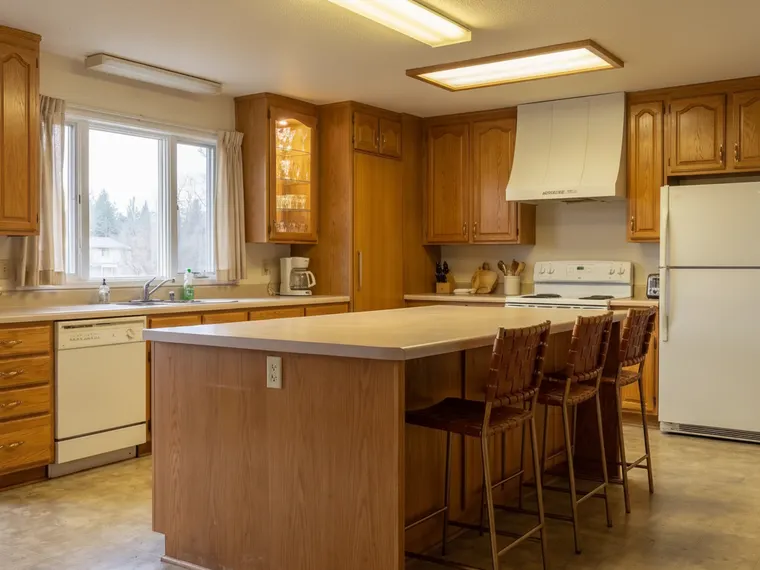 The oak kitchen Upper corner
 What changed Exactly what was asked: the upper cabinet to the right of the window became a glass-front oak cabinet with a warm light and glasses inside. Every other door, the counter, the stove and the floor are the owner's.
Why it works The corner upper is the cabinet you see from the sink and the island, so it is the one worth spending on. Glass turns a dead corner into the kitchen's one display, and a small puck light inside is what makes it read as intentional rather than as a door somebody forgot. It also fixes the real problem with corner uppers — that you cannot see what is in the back.
“Replace only the upper corner cabinet between the window and the stove wall with a glass-front corner cabinet with a warm light inside and glassware on the shelves. Keep every other cabinet, the countertop, appliances, island, window and floor exactly as they are.”
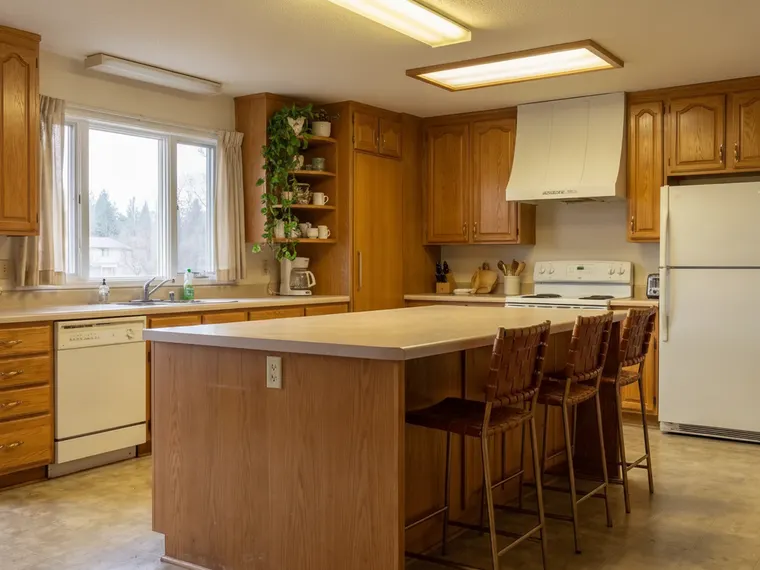 The oak kitchen Upper corner
 What changed The upper cabinet beside the window to three open oak shelves with a trailing plant and white crockery. The rest of the kitchen untouched.
Why it works Taking the door off is the cheapest corner cabinet idea there is — it is a screwdriver and a tin of paint for the inside. Open shelves beside a window get light the cabinet never did, and they make an oak kitchen feel less like a wall of wood. The honest trade is that whatever lives there has to be worth looking at, which rules out the blender.
“Replace only the upper corner cabinet between the window and the stove wall with open corner shelves in the same oak, holding plants and white ceramics. Keep every other cabinet, the countertop, appliances, island, window and floor exactly as they are.”
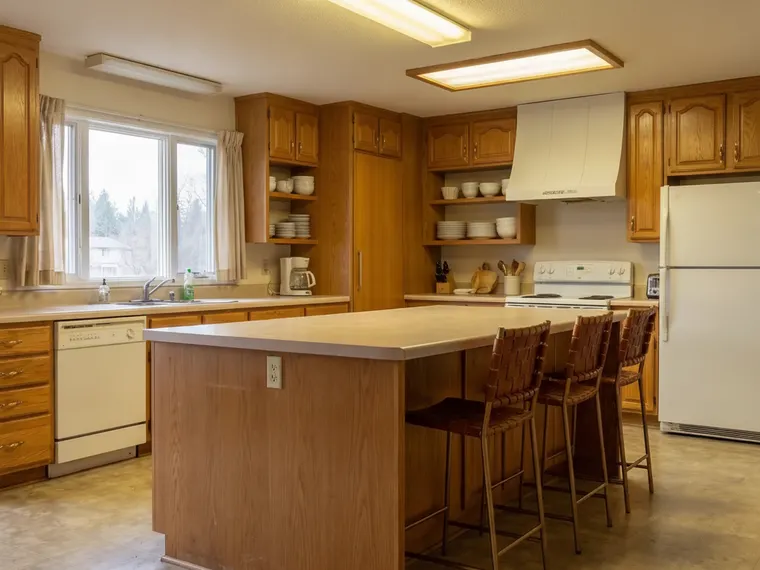 The oak kitchen Upper corner
 What changed Two thick oak shelves with stacked white dishes, running from the window round the corner to the hood. The render took the two cabinets either side of the corner as well as the corner itself — more than the sentence asked for, and a more honest picture of how wrapped shelves are usually done.
Why it works Floating shelves are the answer when the corner is the problem and the cabinets beside it are not much better. Wrapping them round the corner turns the worst cabinet in the kitchen into the one place the two runs meet cleanly. Thick shelves in the same wood as the doors keep it from looking like a coffee shop.
“Replace only the upper corner cabinet between the window and the stove wall with two thick floating oak shelves that wrap around the corner, holding white dishes. Keep every other cabinet, the countertop, appliances, island, window and floor exactly as they are.”
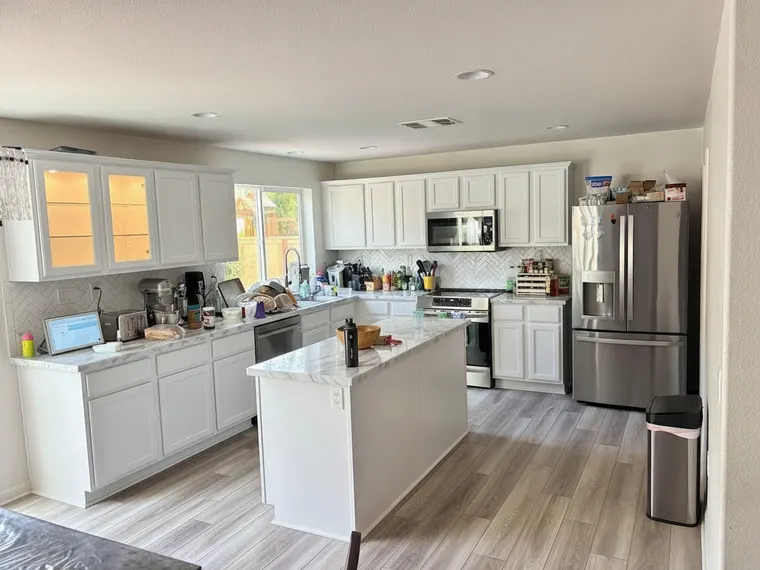 The white kitchen Upper corner
 What changed The upper at the far left — the corner of the room, not the corner of the L — to a glass-front cabinet with warm lights inside. The render ignored the word “diagonal” and kept the cabinet flat, which suits this kitchen.
Why it works Worth showing because the model picked the corner you would actually do this to. The L corner in this kitchen is half hidden by the island; the cabinet against the room's corner is the one you see from the table. Two lit glass doors at the end of a run of white shaker is the single change that makes a builder kitchen look specified.
“Replace only the upper corner cabinet with a diagonal glass-front corner display cabinet with interior lighting. Keep every other cabinet, the countertop, backsplash, appliances, island, window and floor exactly as they are.”
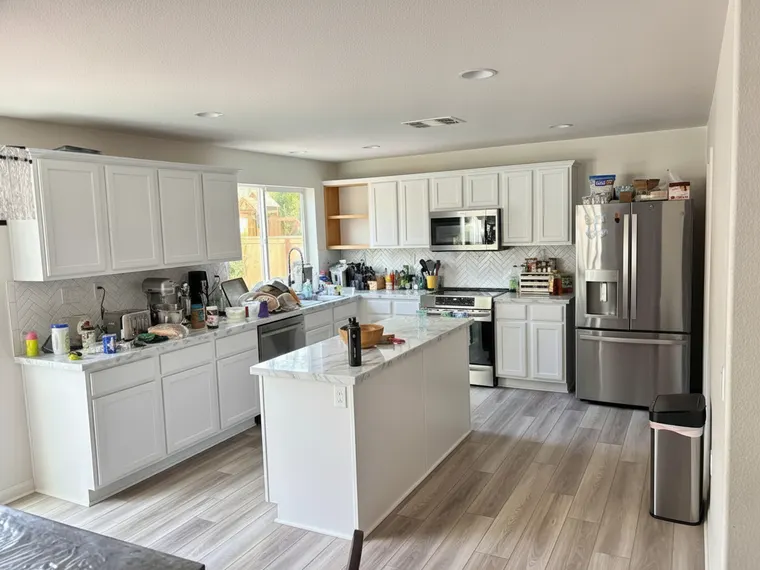 The white kitchen Upper corner
 What changed The first upper to the right of the window, where the back run starts, to three open oak shelves. Not the L corner the sentence pointed at — the render read “between the two runs” as the gap the window makes — but a real place people put open shelves.
Why it works One oak shelf unit in a white kitchen does two jobs: it breaks up the run of identical doors and it brings the one warm material a white kitchen is missing. Beside the window is where open shelves work best, because daylight lands on whatever is on them. If you want it in the actual corner, say “the corner where the counter turns” — the model listens to that better.
“Replace only the upper corner cabinet in the corner between the two cabinet runs with open oak corner shelves, three shelves stepping around the corner. Keep every other cabinet, the countertop, backsplash, appliances, island, window and floor exactly as they are.”
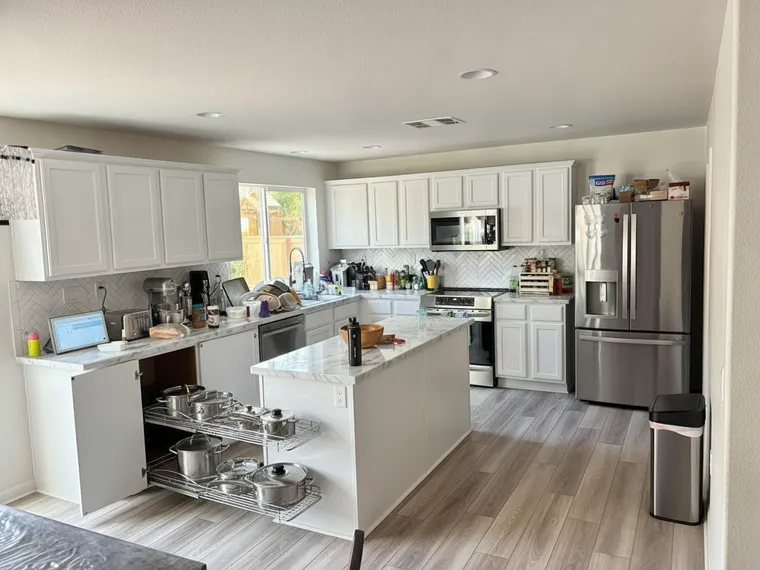 The white kitchen Base corner
 What changed A base cabinet on the left run opened to show two tiers of chrome wire shelves pulled out into the room with pots on them. The render put it at the end of the run rather than in the L corner, and drew wire baskets rather than the kidney shelves the sentence described.
Why it works The blind-corner pull-out — sold as a magic corner or a LeMans — is the fix for the corner where one cabinet runs behind another and the back is unreachable. Shelves swing out, then slide across, so the whole depth of the corner comes to you. It is the most expensive hardware on this page and the one that makes the biggest difference to how a kitchen is used.
“Show the corner base cabinet in the corner of the L-shaped counter with a bi-fold door open, revealing two kidney-shaped pull-out shelves swung out of the corner with pots on them. Keep every cabinet, the countertop, backsplash, appliances, island, window and floor exactly as they are.”
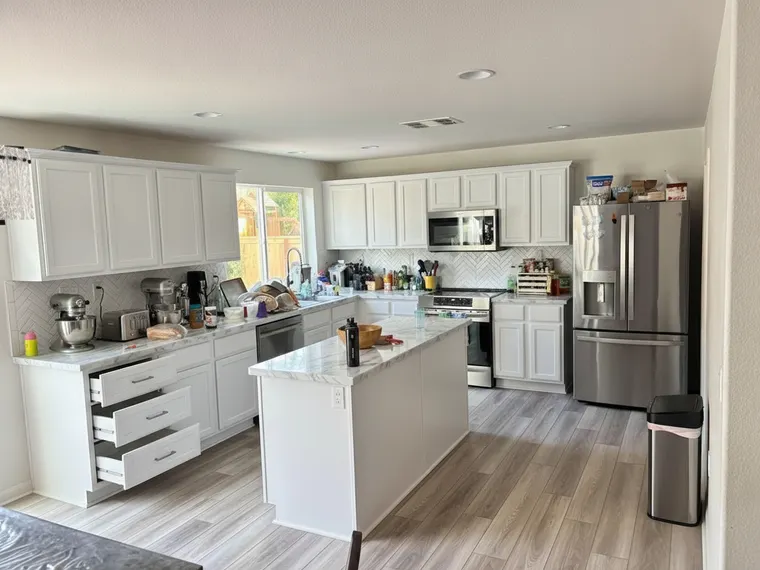 The white kitchen Base corner
 What changed The base cabinet at the far-left end of the run to three deep drawers, drawn open so you can see them. Not angled, and not in the L corner — the render chose the room corner again. Everything else in the kitchen as it was.
Why it works The same idea in the white kitchen, and a useful comparison: three drawers at the end of a run read as a piece of furniture, while three doors read as more cabinet. If you replace one base cabinet in a kitchen, it should be the one nearest the corner, and it should be drawers.
“Change only the corner base cabinet in the corner of the L-shaped counter into a set of three angled corner drawers with brushed nickel handles, matching the white shaker doors. Keep every other cabinet, the countertop, backsplash, appliances, island, window and floor exactly as they are.”
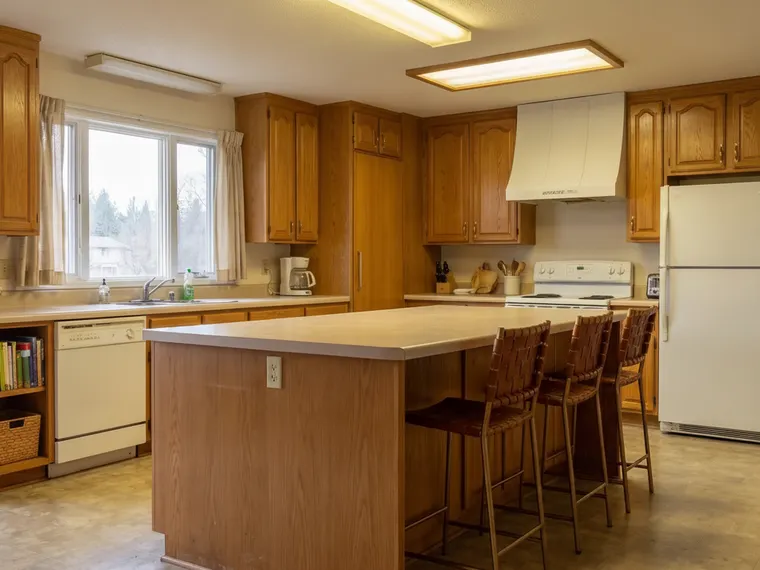 The oak kitchen Base corner
 What changed The drawer stack at the far left, beside the dishwasher, to open oak shelves with cookbooks and a basket. The sentence said the corner near the stove; the render chose the corner by the window. Everything else stayed.
Why it works An open base shelf at the end of a run is the corner idea for things you reach for daily and do not mind seeing: cookbooks, baskets of vegetables, the dog's bowls. It costs nothing but the door, and it gives a run of identical oak fronts one place to breathe. Put it at the end nearest the table, not the stove, or it fills with grease.
“Change only the corner base cabinet under the counter in the corner near the stove into open oak shelving with a row of cookbooks and baskets. Keep every other cabinet, the countertop, appliances, island, window and floor exactly as they are.”
Every render was made on the same engine the free tier of AI Kitchen Design runs on, unretouched. A corner is a hard thing to point at in a sentence, and the cards say so where the model picked a different corner than we did — you will see the same thing on your own photo, and describing the geometry (“where the counter turns”) works better than naming the cabinet. If the doors you keep are the problem, the cabinet color visualizer repaints them on the same photo.
Where to start
In order. Two of the four steps are free, and the third costs less than dinner. Most people who hate their corner cabinet are done at step three.
Upper or base, and which one. The upper corner is the one you see and the one to spend design on — glass, shelves, a light. The base corner is the one you fight with and the one to spend hardware on. Most people who say “corner cabinet” mean the base and want to fix the upper.
FreeWhatever has been in the back of the corner for three years does not need a better cabinet; it needs to leave. What is left tells you the hardware: jars and small things want a lazy susan, pans want pull-outs or drawers, a mixer wants a tall unit or an open shelf at counter level.
FreeA screwdriver and a tin of paint for the inside of the box. Live with it open for a month. If you like it, you have an open corner shelf for nothing; if you do not, you have learned what you want to see there, and glass is the next step.
Under fifty dollarsA lazy susan is a weekend and the price of a good pan. A blind-corner pull-out is a few hundred dollars and a careful afternoon. Corner drawers and a tall pantry are a joiner and part of a bigger job. Render the tall unit first — it is the one that changes the kitchen and the one to see before you commit.
A hundred to a few thousandWhat goes wrong
The corner is the cabinet most kitchens get wrong twice — once when it is built and once when it is “fixed”. Each of these is a common mistake, and each one shows up in a render before it shows up in a kitchen.
Two doors meeting at right angles with a fixed shelf behind them, which is what most kitchens have. It is not storage; it is where things go to be forgotten. Any of the six options in the table above is better than leaving it.
Turntables are for jars, bowls and small appliances. Cast iron and a stack of saucepans stress the post, and every corner of the box is wasted. Pans want pull-outs or drawers.
Open corner shelves beside the hood collect grease on everything on them within a month. Put open shelves on the corner nearest the window or the table, and keep doors on the corner beside the stove.
A diagonal cabinet sticks out eight to ten inches further than the run beside it. On a long wall that is fine; beside a window on a short run it blocks the light and hits your head at the sink.
Questions
Six things, in rough order of cost: take the door off and use it as open shelves; put a lazy susan inside the base corner; fit a blind-corner pull-out so the shelves come to you; replace the upper corner with a glass-front cabinet with a light; replace the base corner with a stack of drawers; or replace the whole corner with a tall floor-to-ceiling pantry. Three of the six are rendered above on two real kitchens; the lazy susan and the diagonal are the two the model would not draw, because the base corner is hidden behind the island in both photos — which is a fair warning about how to photograph your own — and the pantry render was dropped because the model removed the fridge to make room for it.
A blind-corner pull-out — sold as a magic corner, a LeMans or a kidney pull-out. Shelves swing out of the opening and then slide across, so the depth of the corner comes to you rather than the other way round. It is the most expensive corner hardware and the one that makes a real difference to a kitchen you cook in. If the budget will not stretch, a lazy susan in the same cabinet is the cheap version and it works for anything that is not a pan.
Things you want to see. The upper corner is the cabinet you look at from the sink and the island, so it is the one to make glass, open, or lit, and to fill with glassware, white crockery or a plant. Things you do not want to see — the blender, the cereal — belong in the base or the tall unit. Three of the renders above are the same upper corner as glass, open oak shelves and floating shelves.
Yes, and it is usually the best use of the corner, because a corner is deep and depth is wasted on a counter. A floor-to-ceiling unit with pull-out shelves in the corner replaces the base, the counter and the upper with one cabinet that holds more than all three. It is the one idea on this page without a render: when we asked for it on the oak kitchen the model removed the fridge to make room, which is exactly the question a real pantry raises — where does the fridge go? Render it on your own kitchen with the fridge named in the sentence.
For jars, bowls, bottles and small appliances, yes — it is the cheapest fix and it fits inside the cabinet you have. What it is bad at is heavy pans, which strain the post, and the four corners of the box, which it cannot reach. If the corner holds pans, spend the money on a pull-out or drawers instead.
Only when they are thin, mismatched or full of the wrong things. Thick shelves in the same wood as the doors, wrapping the corner, with white crockery or glass on them read as a designed choice. Thin white brackets holding the blender read as a missing cabinet. The floating-shelf render above is the version to copy.
That is what the upload box at the top of the page is for. Photograph the kitchen from the doorway so the corner is in the picture, type one of the sentences under the renders above, and the render is back in about ten seconds. One thing the renders taught us: say “the corner where the counter turns” rather than “the corner cabinet” — the model is much better at finding the right cabinet when you describe the geometry.
Photograph it from the doorway with the corner in the frame, pick the sentence you kept scrolling back to, and you will have it rendered into your own kitchen in about ten seconds. Free, on iPhone, Android and the web.