
Board and batten
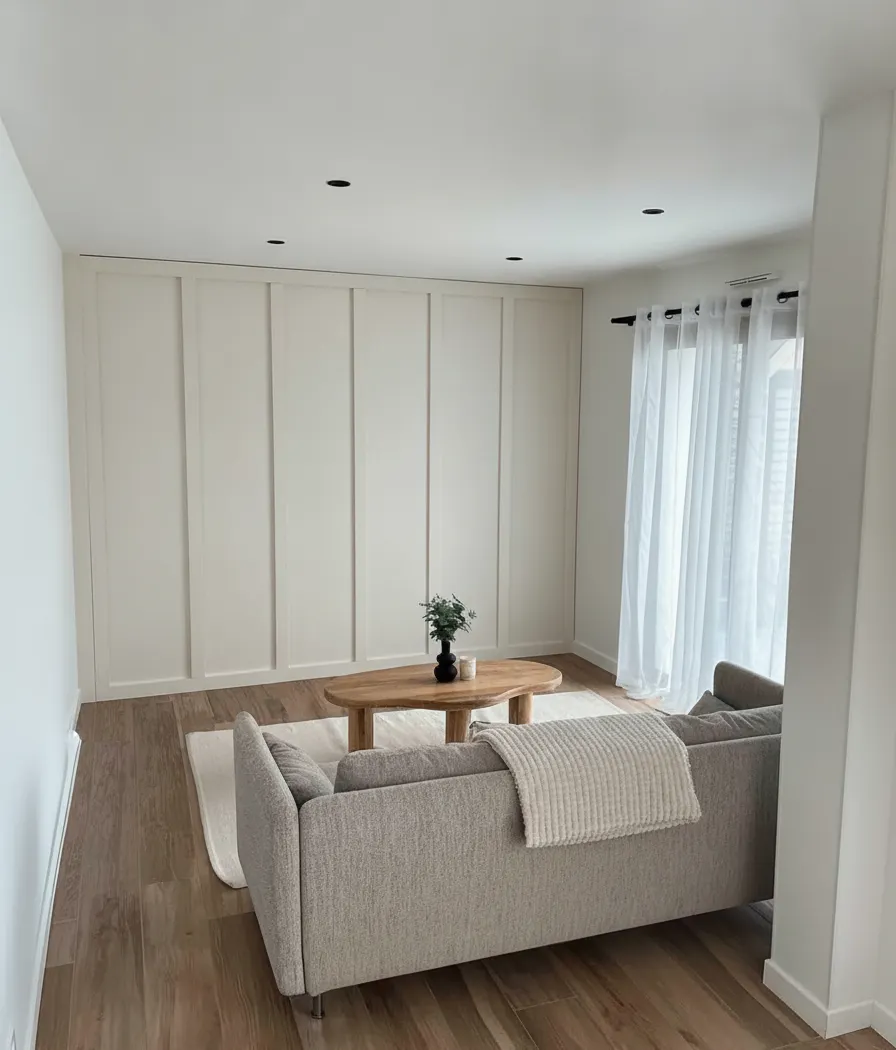
Flat vertical strips over a flat wall, usually painted the wall colour. Cheapest, easiest to do yourself, and forgiving of an uneven wall because the battens hide the joins.
12 real before & afters
Board and batten, an oak slat wall, picture-frame moulding, shiplap, fluted panels and wainscoting — twelve renders on four real rooms, six of them on the same blank wall behind the same sofa so you can compare the patterns and not the photography. Each one says what changed and why it works. Then see it on your own wall.
No account for your first render · about ten seconds · nothing to mask or select
Which paneling
"Wall paneling" is six different things at six different prices, and most of the decision is made by the room: its ceiling height, its style, and whether you are doing it yourself. The renders further down show each one on a real wall.
Flat vertical strips over a flat wall, usually painted the wall colour. Cheapest, easiest to do yourself, and forgiving of an uneven wall because the battens hide the joins.
Rectangles of moulding applied to the wall, then the whole thing painted one colour. The classic townhouse look; the moulding gives a flat colour edges and shadow.
Narrow vertical timber slats on a dark backing. Warm, current, and it softens sound. The most expensive in real oak; MDF and veneer versions exist at a third of the price.
Horizontal boards with a shadow gap. Makes a wall read wider and a ceiling lower. Coastal and farmhouse; it dates faster than the vertical options.
Fine vertical grooves in an MDF panel, painted any colour. The slat wall's texture without the wood — pick this when you want the rhythm and a colour.
Framed panels, either to chair-rail height or floor to ceiling. Traditional, protective, and the one that changes the architecture of a room rather than decorating it.
Before and after
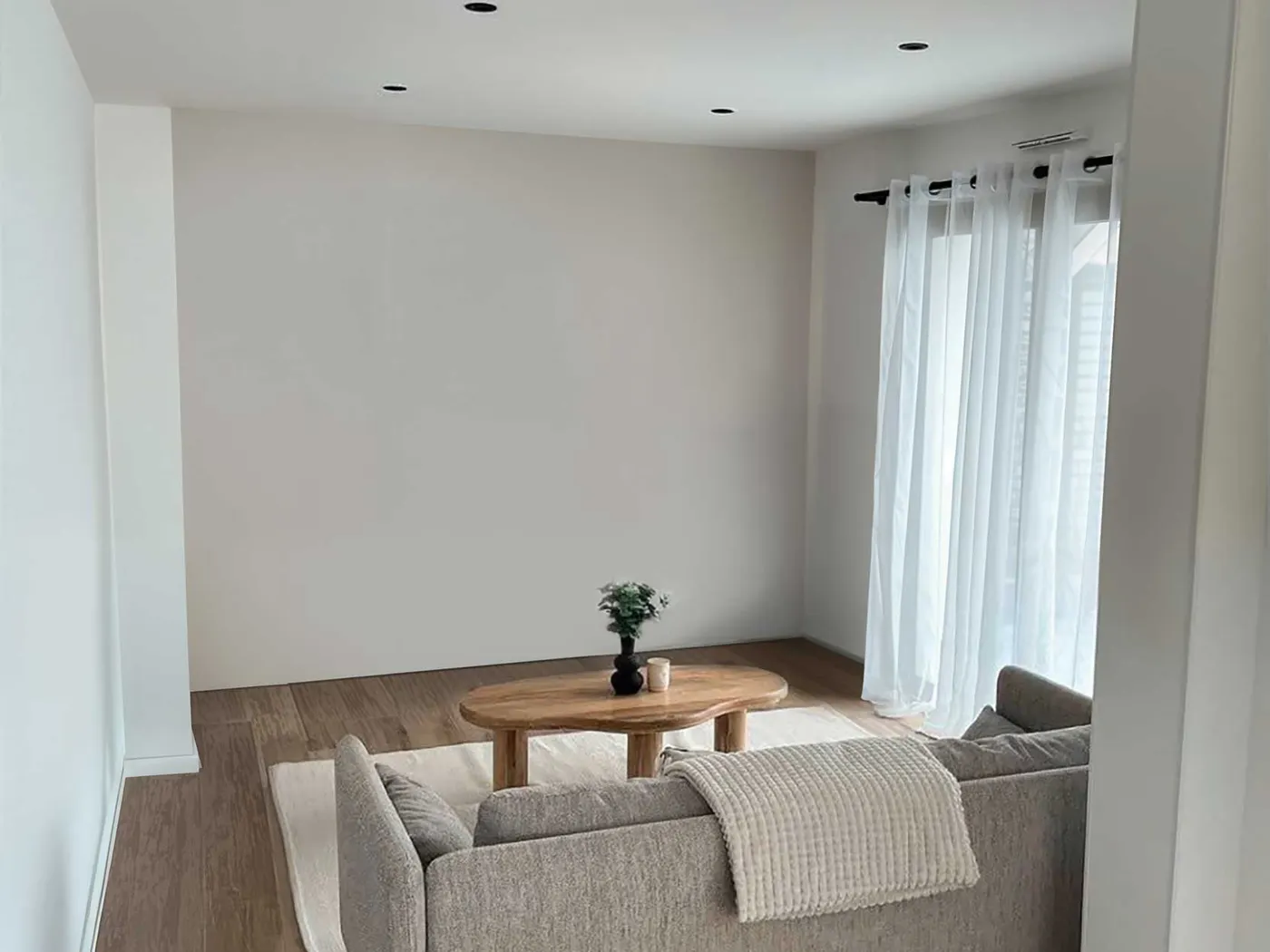
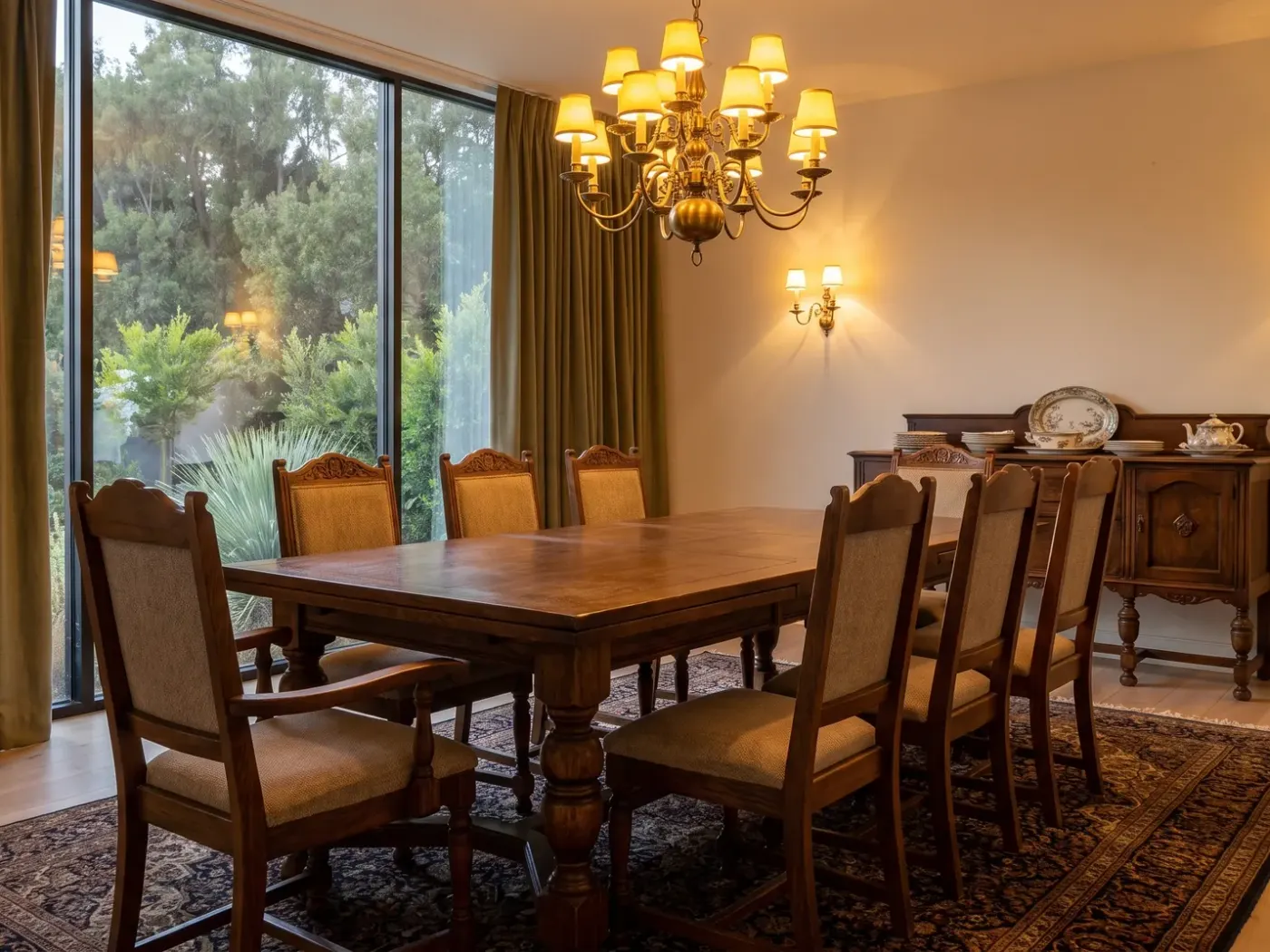
Four real rooms, photographed from where you would stand: a new-build living room with one blank wall, a bare bedroom, a traditional dining room and a 1980s living room that has not been touched since. Nothing here is a stock photo of somebody's finished wall.
Twelve panelled walls
The six living room accent wall ideas first — same wall, same sofa, same light, six patterns — then the bedroom, the dining room and the dated room. Under each render is the exact sentence that produced it; steal it and run it on your own wall.
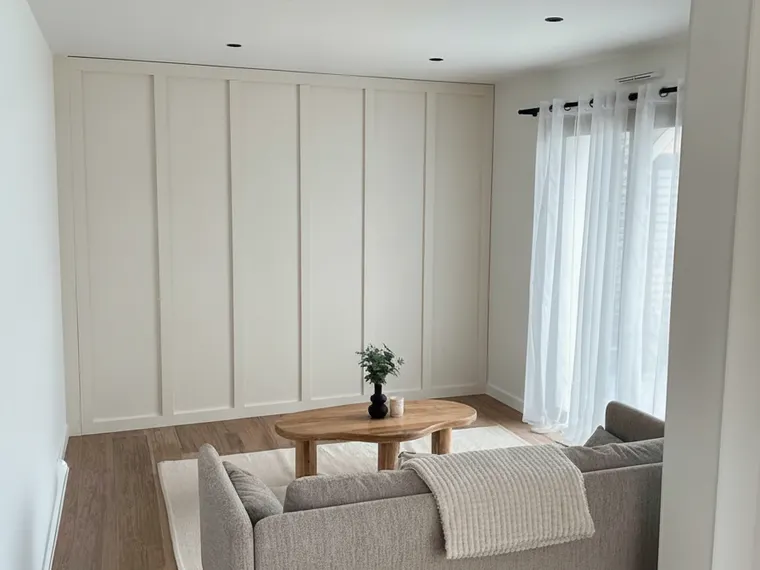 The blank living-room wall Board and batten
 What changed Vertical battens on the blank wall from skirting to ceiling, with a top rail, all in the same warm white as the wall. Nothing else in the room moved.
Why it works The cheapest paneling on the page and the one most people can do themselves: MDF strips, glue, a nail gun, caulk and paint. In the same white as the wall it adds texture without adding a colour, which is why it suits a room that already has its colours decided. Widen the spacing on a wide wall — narrow bays make a big wall look like a fence.
“Add board and batten wall paneling to the large blank wall behind the sofa, floor to ceiling, painted warm white. Keep the sofa, coffee table, floor, ceiling lights and curtains exactly as they are.”
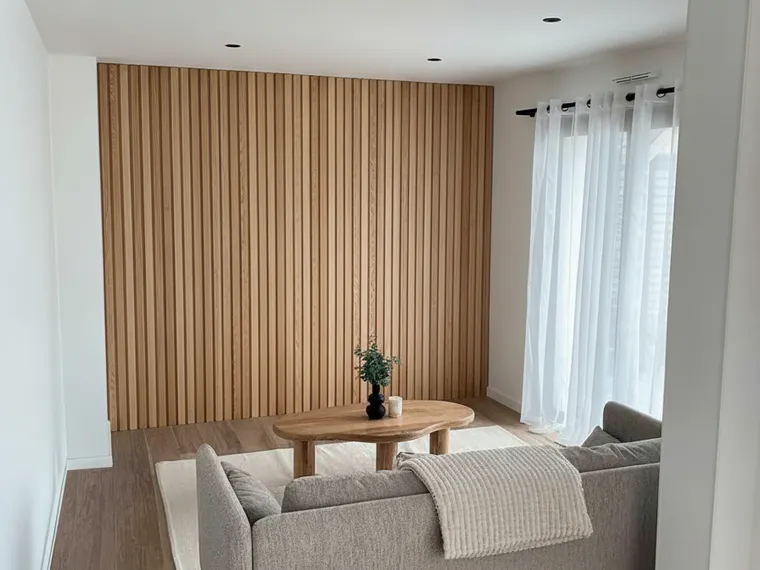 The blank living-room wall Slat wall
 What changed Narrow vertical oak slats on a dark backing across the whole blank wall. Sofa, table, floor and curtains untouched.
Why it works The most current paneling and the warmest: a slat wall brings wood into a room that has none without committing to a wood floor. It also softens sound, which matters in a room with a hard floor and a big window. The trade is cost — real oak slats are the most expensive option here — and dust, which collects in the grooves.
“Add a vertical natural oak wood slat panel wall to the large blank wall behind the sofa, floor to ceiling. Keep the sofa, coffee table, floor, ceiling lights and curtains exactly as they are.”
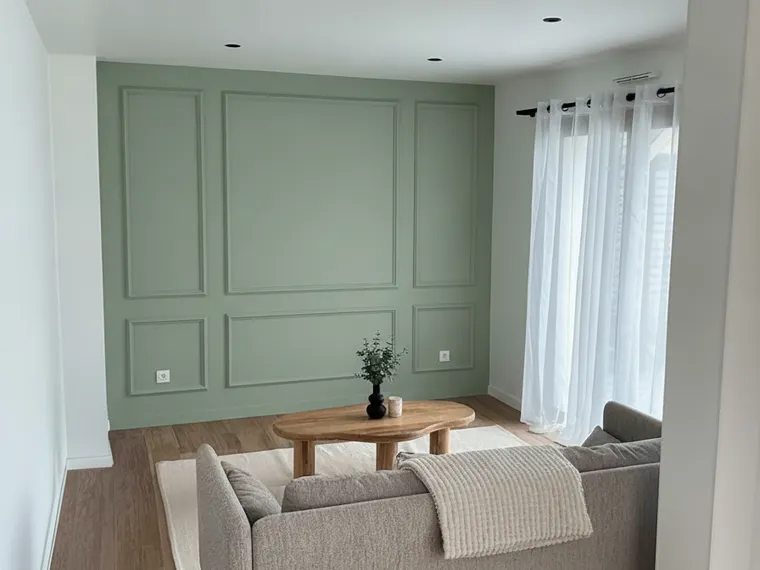 The blank living-room wall Picture-frame moulding
 What changed Tall rectangular moulding frames on the wall, a row of small ones below, and the whole wall — moulding included — painted sage green.
Why it works Picture-frame moulding is the classic version, and it is really a paint decision: the moulding gives the colour edges and shadows, so a flat green wall becomes a panelled one. Always paint the moulding the wall colour; white frames on a coloured wall look like a rental. This one costs about the same as board and batten and takes a mitre saw and patience.
“Add picture frame moulding wall paneling to the large blank wall behind the sofa, in tall rectangles, and paint the whole wall and moulding a soft sage green. Keep the sofa, coffee table, floor, ceiling lights and curtains exactly as they are.”
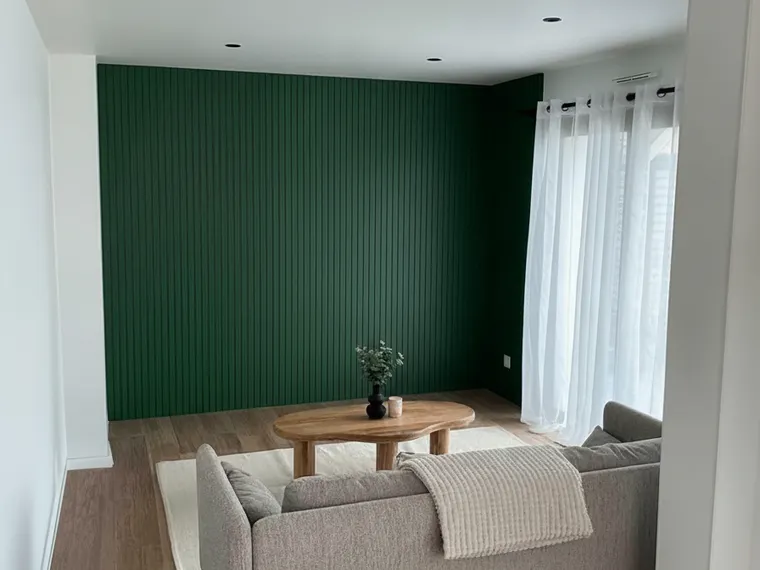 The blank living-room wall Fluted
 What changed Fine vertical fluting across the full wall, painted a deep green. Everything else in the room stayed.
Why it works Fluting is the slat wall's painted cousin: the same vertical rhythm, but in MDF you can paint any colour. It is the choice when you want the texture of slats and a colour that is not wood. Deep green on the one wall behind the sofa is a whole living-room accent wall in a single decision, and the sheer curtains and white side walls keep it from closing the room in.
“Add fluted wall paneling to the large blank wall behind the sofa, floor to ceiling, painted deep green. Keep the sofa, coffee table, floor, ceiling lights and curtains exactly as they are.”
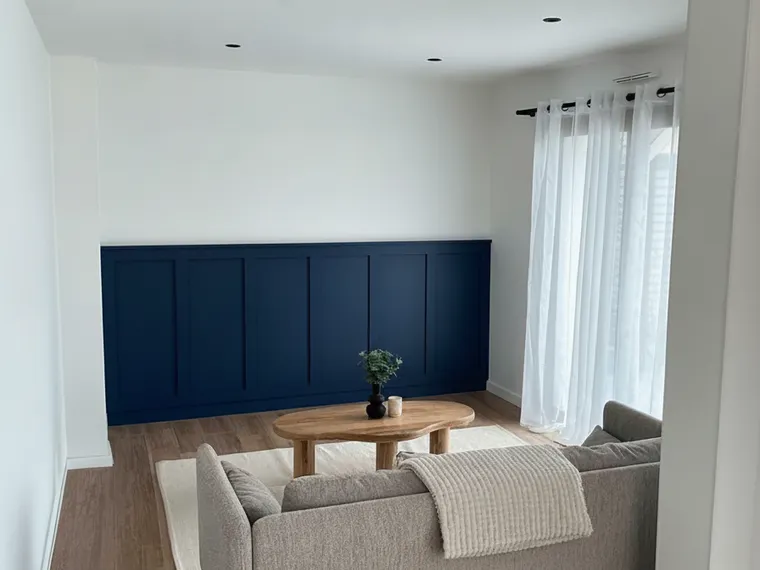 The blank living-room wall Board and batten
 What changed Board and batten on the lower two-thirds of the wall in navy, with a cap rail and the top third of the wall left white.
Why it works Stopping the paneling short of the ceiling is the traditional move and the one that works in rooms with a low ceiling: the white above keeps the height. Navy on the bottom grounds the grey sofa, which reads floaty against a plain white wall. The rail on top is a shelf for art, which is the other thing a blank wall was missing.
“Add board and batten wall paneling to the lower two thirds of the large blank wall behind the sofa, painted deep navy blue, with the wall above left white. Keep the sofa, coffee table, floor, ceiling lights and curtains exactly as they are.”
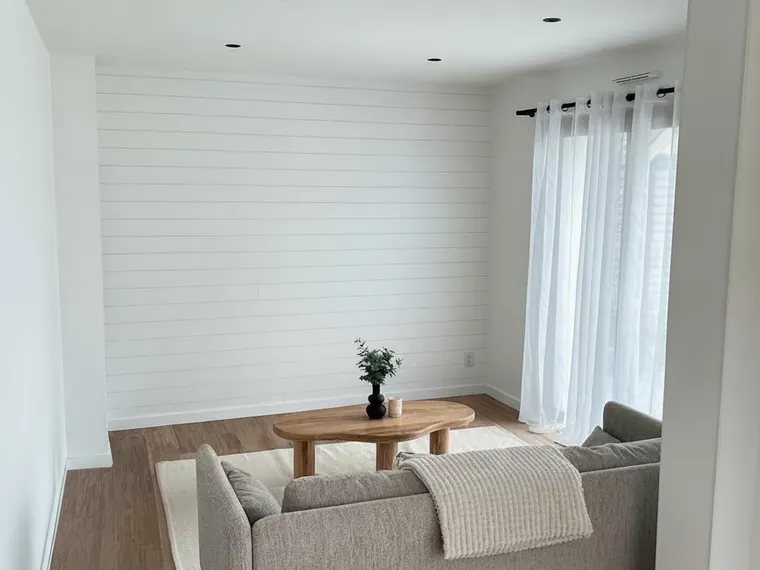 The blank living-room wall Shiplap
 What changed Horizontal boards with a shadow gap across the whole wall, painted white. Nothing else moved.
Why it works Horizontal lines make a wall read wider, which is the opposite of everything else on this page. Shiplap is the farmhouse and coastal option and it dates faster than the others, so it belongs in rooms where the rest of the house already leans that way. In a modern room like this one it reads as a choice rather than a style, which is fine if that is what you want.
“Add horizontal white shiplap wall paneling to the large blank wall behind the sofa, floor to ceiling. Keep the sofa, coffee table, floor, ceiling lights and curtains exactly as they are.”
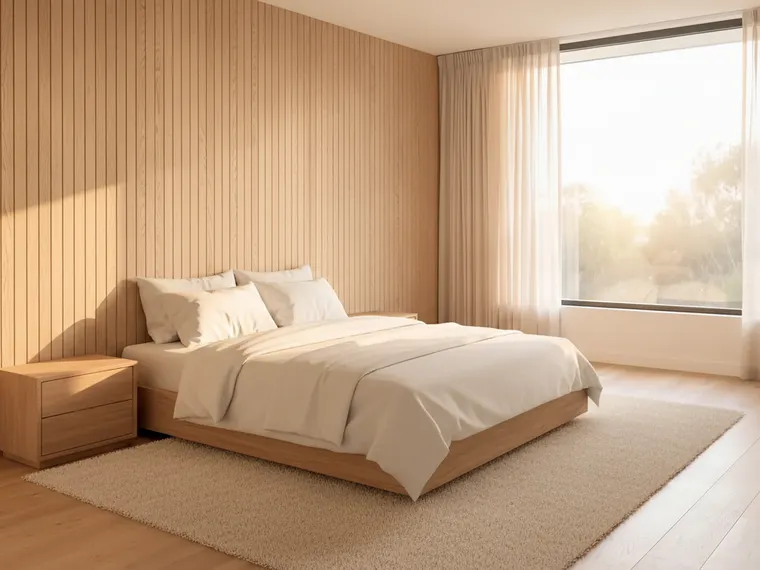 The empty bedroom Slat wall
 What changed An oak slat wall behind the bed, a low oak bed, oak bedsides and a cream rug added to the empty room. We asked for half-height and the render went floor to ceiling — which, looking at it, is the better call in a room this tall.
Why it works A slat wall behind a bed does the job of a headboard for the full width of the room, and it is the paneling that suits a bedroom best because it is soft to look at and quiet. Keep the bed low so the slats show above it. A dark backing behind the slats (black or deep brown) reads more expensive than a white one.
“Turn this empty room into a bedroom with a half-height oak wood slat panel wall behind the bed, white walls above, a low oak bed with white linen bedding, oak bedside tables and a cream rug. Keep the window, curtains and floor exactly as they are.”
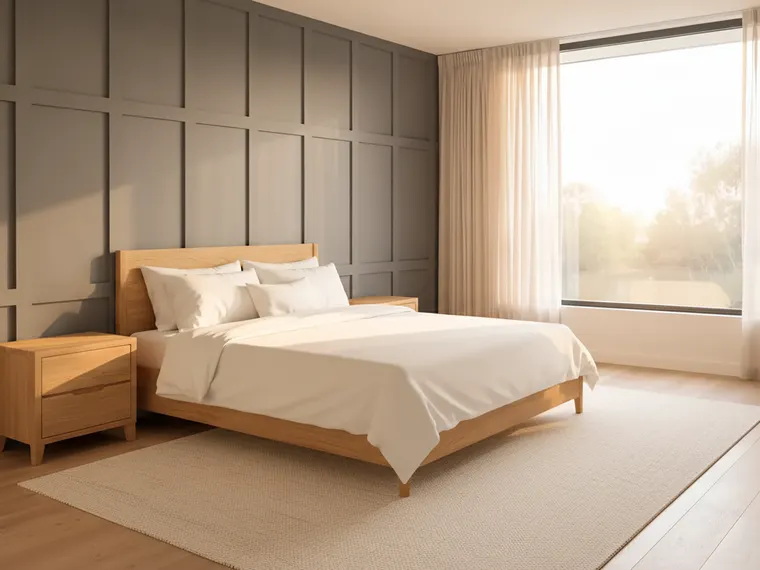 The empty bedroom Wainscoting and panels
 What changed A square grid of raised panels in charcoal on the bed wall — the sentence said board and batten, the render drew a grid, and the grid is the stronger choice here — plus a light oak bed, oak bedsides and a cream rug.
Why it works A dark panelled wall behind a light wood bed is the hotel formula: the wall is the headboard. The grid pattern suits a bedroom because it is calm and symmetrical, and charcoal rather than black keeps it from swallowing the light from the big window. Paint the skirting to match or it draws a white line under the whole wall.
“Turn this empty room into a bedroom with board and batten wall paneling on the wall behind the bed painted charcoal grey, a light oak bed with white bedding, oak bedside tables and a cream rug. Keep the window, curtains and floor exactly as they are.”
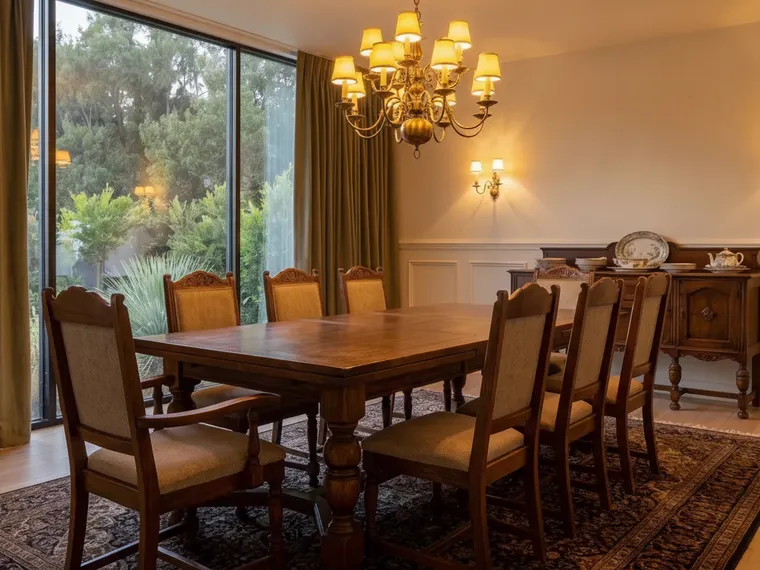 The dining room Wainscoting and panels
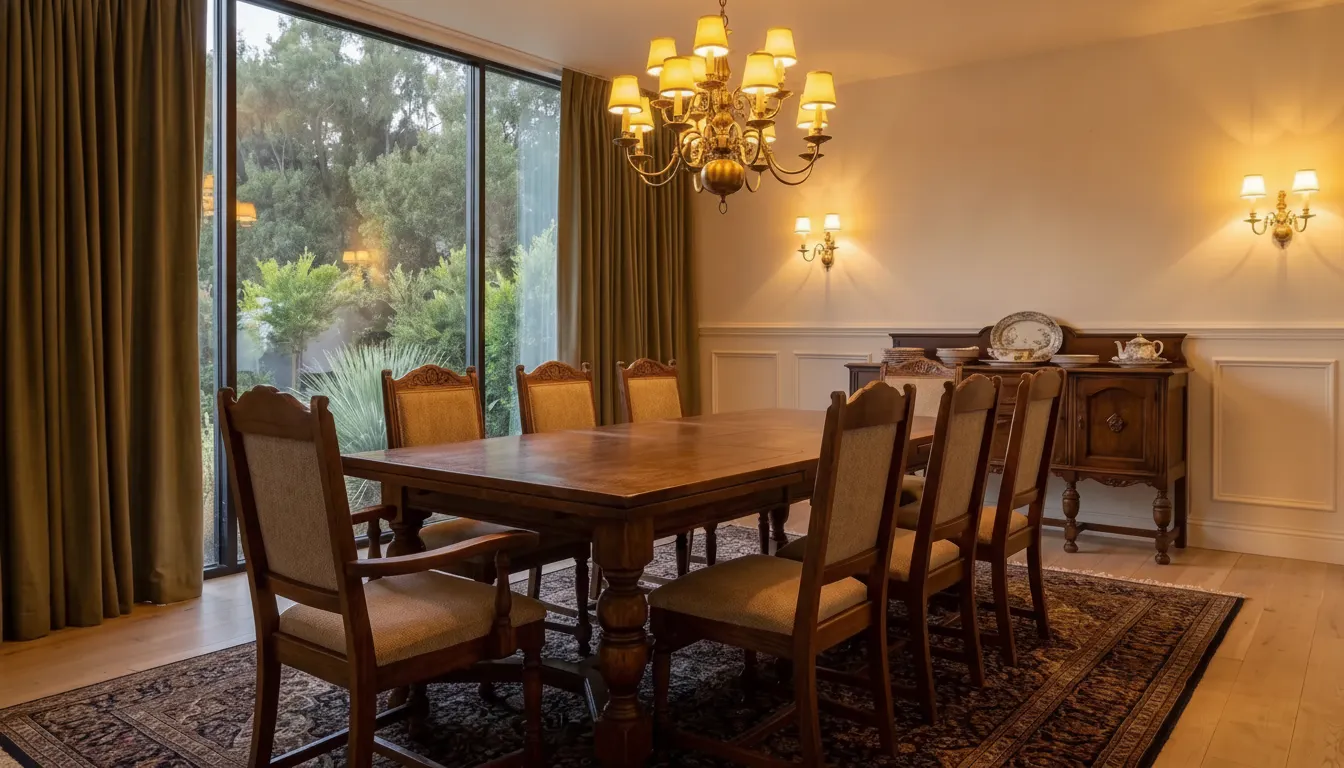
 What changed Picture-frame wainscoting to chair-rail height along the sideboard wall, painted off-white, with a rail on top. The table, chairs, sideboard and chandelier are the owner's.
Why it works Wainscoting is the paneling a dining room was built for: it protects the wall where chair backs hit it and gives a traditional room the architecture it is missing. It is subtle here on purpose — off-white on white — because the furniture is already doing the talking. The chair rail is the piece to get right: too high and the room looks squat.
“Add traditional wainscoting with picture frame panels to the lower two thirds of the walls in this dining room, painted soft off-white, with a chair rail on top. Keep the table, chairs, sideboard, chandelier, curtains, rug and floor exactly as they are.”
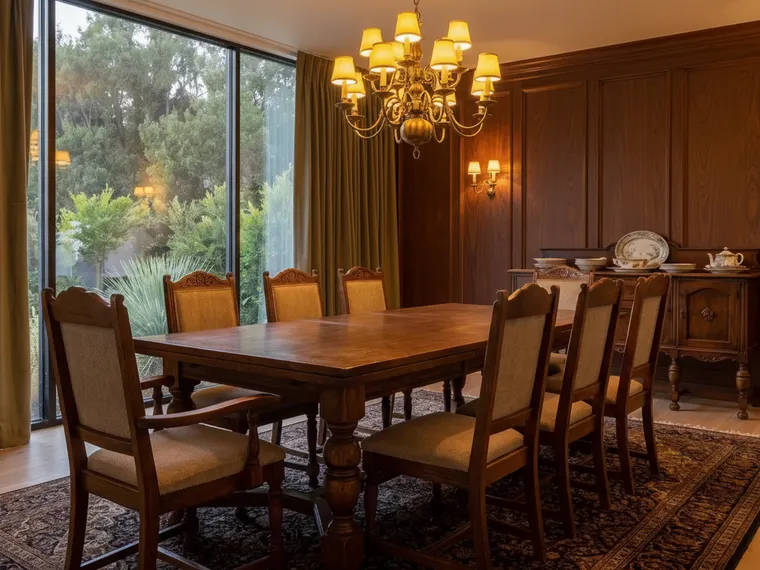 The dining room Wainscoting and panels
 What changed The back wall and the wall beside the window to floor-to-ceiling walnut raised panels. Everything in the room stayed where it was.
Why it works Dark timber panelling on every wall turns a dining room into a library, and it only works in a room that is used at night, has warm lighting and has a big window for the daytime — which this one does. It is the most expensive idea on the page in real wood, and it is also the one that MDF and a good stain-effect paint fake surprisingly well from across a table.
“Add full-height dark walnut wood wall paneling with raised panels to the walls of this dining room. Keep the table, chairs, sideboard, chandelier, sconces, curtains, rug and floor exactly as they are.”
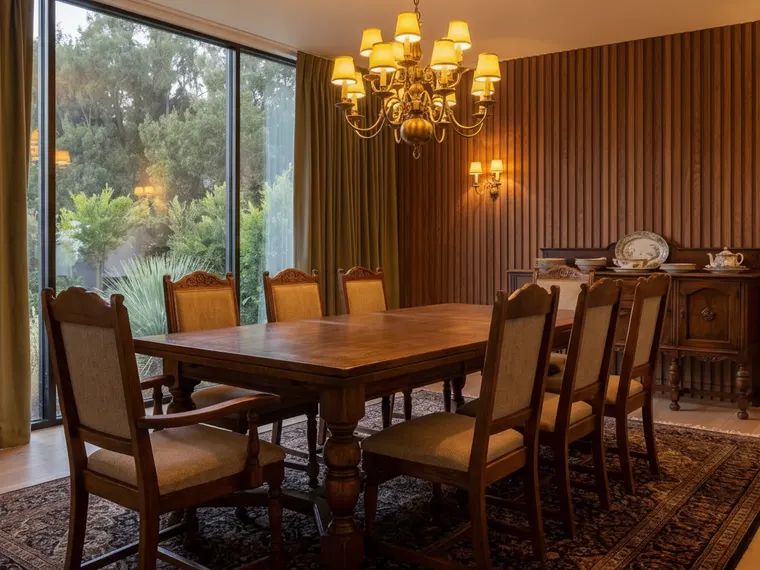 The dining room Fluted
 What changed Only the sideboard wall, to fluted walnut, floor to ceiling. The side wall stayed white.
Why it works The one-wall version of the room above. Fluted walnut on the wall you face from the table gives the dining room a focus and keeps the white wall beside the window, so the room does not go dark in the day. It is the choice between "a panelled dining room" and "a dining room with a panelled wall", and for most rooms the second is enough.
“Add a floor-to-ceiling fluted walnut wood panel wall to the wall behind the sideboard in this dining room. Keep the table, chairs, sideboard, chandelier, sconces, curtains, rug and floor exactly as they are.”
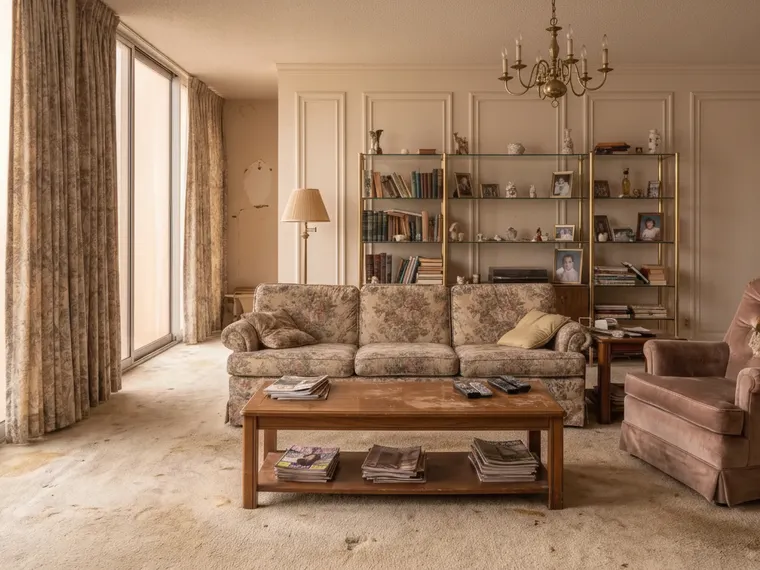 The 1980s living room Wainscoting and panels
 What changed Tall shaker-style panels on the back wall in warm white. The floral sofa, brass shelves, worn carpet, chandelier and curtains are all still there.
Why it works Included because it is the honest test. Paneling on a wall does not fix a room; it gives the room bones. Here the wall looks finished and the furniture now looks like the thing to change, which is the right order — walls first, then what stands against them. If you are staging a house to sell, this is the wall treatment that reads as "well kept" from the doorway.
“Add floor-to-ceiling shaker style wall paneling to the back wall and the right wall of this living room, painted warm white. Keep the sofa, armchair, coffee table, shelves, chandelier, curtains and carpet exactly as they are.”
Every render was made on the same engine the free tier of AI Room Design runs on, unretouched. Where the render did not do exactly what the sentence asked — the half-height slats that went to the ceiling, the battens that became a grid — the card says so, because you will see the same thing on your own photos and it is worth knowing which instructions the model treats as suggestions.
Where to start
Paneling is a cheap job that is expensive to undo, so the order of decisions matters more than the budget. Three of the four steps are free.
One wall, and the right one: the wall you face from the door or the wall the main piece of furniture sits against. Paneling the wall beside the window darkens the daylight; paneling the wall behind the sofa or the bed gives the room a focus. Six of the renders above are the same wall for exactly this reason.
FreeFloor to ceiling reads modern and makes a low ceiling feel lower. Two-thirds with a rail reads traditional and keeps the height. If the ceiling is under eight and a half feet, stop short. If it is over nine, go all the way up.
FreePaneling in the wall colour adds texture; paneling in a new colour adds a wall. Most disappointment with paneling is really disappointment with the colour it was painted. Render the pattern you like in two colours and decide on the colour first.
A sample potBoard and batten, picture-frame and shiplap are a weekend with a mitre saw, a nail gun and caulk. Slat and fluted come as panels. Full-height raised panels and anything in real hardwood are a joiner's job. The render tells you which one you want; the wall tells you which one you can do.
A few hundred dollars for one wall in MDFWhat goes wrong
Paneling is forgiving to install and unforgiving to design. Each of these is a common mistake, and each one shows up in a render before it shows up on a wall.
Paint the moulding, the battens and the skirting the same colour as the wall. White trim on a coloured panelled wall reads as unfinished, and it is the single most common way paneling looks cheap.
One wall is a feature. Four walls in a small room is a box. The dining room above is the exception because dining rooms are supposed to feel enclosed; a bedroom or living room mostly is not.
Board and batten spaced at twelve inches across a fourteen-foot wall reads as a fence. Divide the wall into an odd number of wide, equal bays, and let the spacing match the room — wider walls, wider bays.
Sockets, switches, thermostats and radiators are the first thing a render skips and the first thing a joiner asks about. Plan where they land in the pattern before you cut anything; a socket in the middle of a batten is permanent.
Questions
Board and batten in MDF, painted the wall colour. One wall is a few hundred dollars in material and a weekend with a mitre saw, a nail gun, glue and caulk. Picture-frame moulding is the same price and slightly more fiddly. Slat and fluted panels cost more per square foot because you are buying a made panel; real hardwood panelling is a different budget entirely.
Vertical paneling — battens, slats, fluting — makes a wall read taller and is neutral on width. Horizontal shiplap makes a wall read wider and a ceiling lower. Full-height paneling on every wall of a small room will close it in; the same paneling on one wall gives the room a focus and makes it feel more finished, not smaller. Colour matters more than pattern here: dark paneling on one wall recedes, dark paneling on four walls encloses.
The wall the sofa sits against, or the wall you see first from the door — usually the same wall. It is the wall that gives a living room accent wall its point: the panelling becomes the backdrop for the room's main piece. Avoid the wall beside the window, which darkens the daylight, and the wall with the television unless you are building a media wall around it.
Usually, yes. Paneling in the wall colour adds texture and shadow and reads as architecture. Paneling in a contrasting colour — white battens on a green wall — reads as decoration, and it is the look most people regret. The exception is two-tone: dark paneling to a rail with a lighter wall above, as in the navy render above, which is a traditional and deliberate split.
If you want wood in a room that has none, yes — it is the warmest thing on this page and it softens sound in a hard-floored room. The honest trades are cost, which is the highest of the DIY options in real oak, and dust in the grooves. Veneered MDF slat panels are a third of the price and read the same from across the room. Fluted MDF, painted, is the version to pick if what you actually want is the vertical rhythm and a colour.
Board and batten and picture-frame moulding are nailed and glued, so no. Slat and fluted panels can be fixed to a batten frame screwed into a few wall plugs and taken down at the end, which most landlords will accept. A tall panelled headboard — a free-standing slat or upholstered panel behind the bed — gets most of the bedroom effect with nothing attached to the wall.
That is what the upload box at the top of the page is for. Photograph the wall from across the room, type one of the sentences under the renders above — "add board and batten wall paneling to the wall behind the sofa, floor to ceiling, painted warm white" is a sentence you can use as-is — and the render is back in about ten seconds. Run three patterns on the same photo and the decision makes itself.
Photograph the wall from across the room, pick the pattern you kept scrolling back to, and you will have it rendered onto your own wall in about ten seconds. Free, on iPhone, Android and the web.