
Sage
Grey-green. Behaves like a neutral, goes with oak, white and brass, and warms towards beige in evening light. The green most people mean and the one that is hardest to get wrong.
Best forMost bedrooms, and any room where you are nervous.
11 greens, one real room
Sage, olive, forest, mint, a botanical wallpaper wall and a green velvet bed — eleven greens rendered into the same bare spare room under the same light, so the only thing that changes between them is the green. Each one says what moved and why it works. Then see your green on your own bedroom.
No account for your first render · about ten seconds · nothing to mask or select
Which green
"Green bedroom" covers everything from a tint of white to a colour you can barely see the corners in. The four families below behave differently in a room, and the decision is mostly about your light and your ceiling height, not your taste.
Grey-green. Behaves like a neutral, goes with oak, white and brass, and warms towards beige in evening light. The green most people mean and the one that is hardest to get wrong.
Best forMost bedrooms, and any room where you are nervous.
Yellow-green. Warmer and earthier than sage. Wants natural texture beside it — rattan, jute, linen, terracotta — and off-whites rather than pure white.
Best forRooms with warm afternoon light and wooden floors.
Blue-leaning dark greens. Enveloping, dramatic, and they make a bedroom read as a bedroom rather than a spare room. Need brass or walnut against them and more lamps than you think.
Best forRooms you mostly use at night, and any room with a good window.
Barely-there greens that read as a tint of white. Keep a small or low-ceilinged room bright while still giving it a colour. Can look clinical without a warm metal or wood.
Best forSmall rooms, low ceilings, north light.
Before and after
A gallery of eleven different green bedrooms mostly tells you which photographer had the best window. Eleven greens on one room tells you what the green does. This is the room, photographed once, empty.
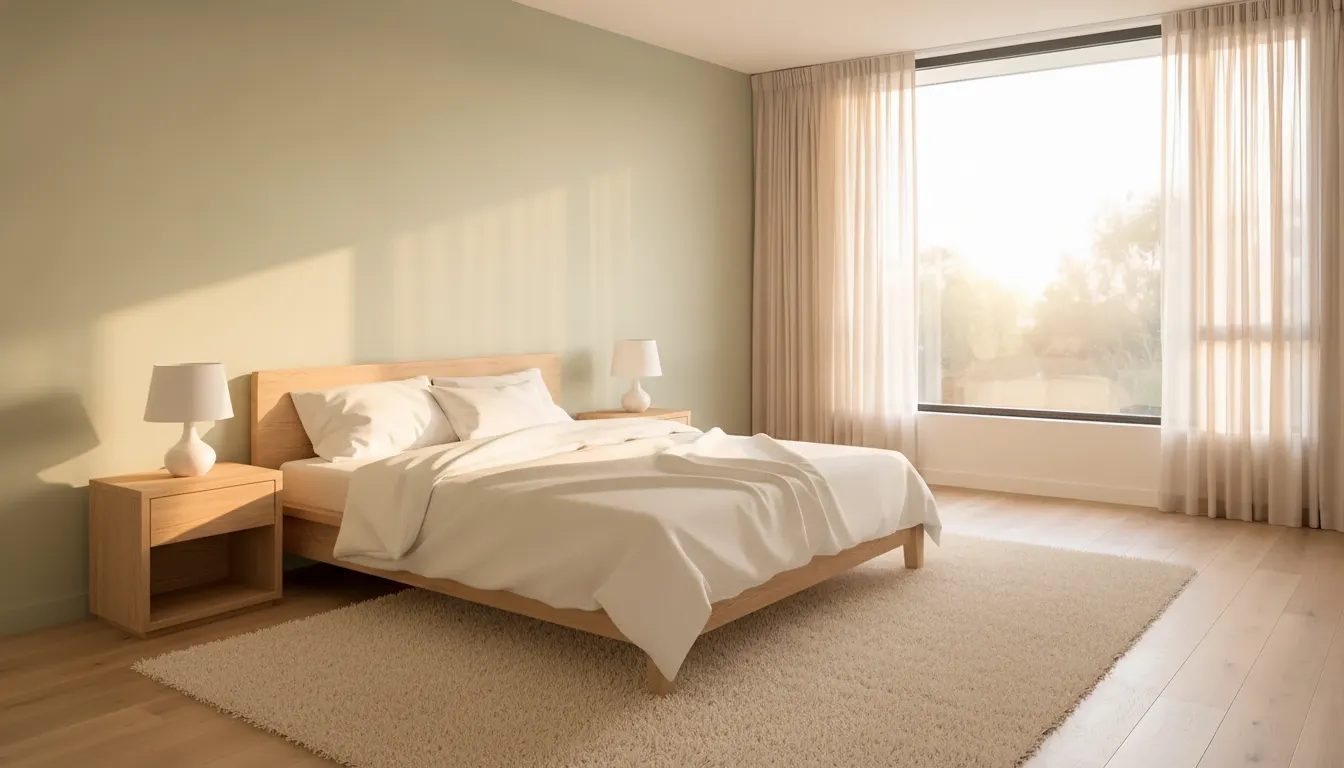
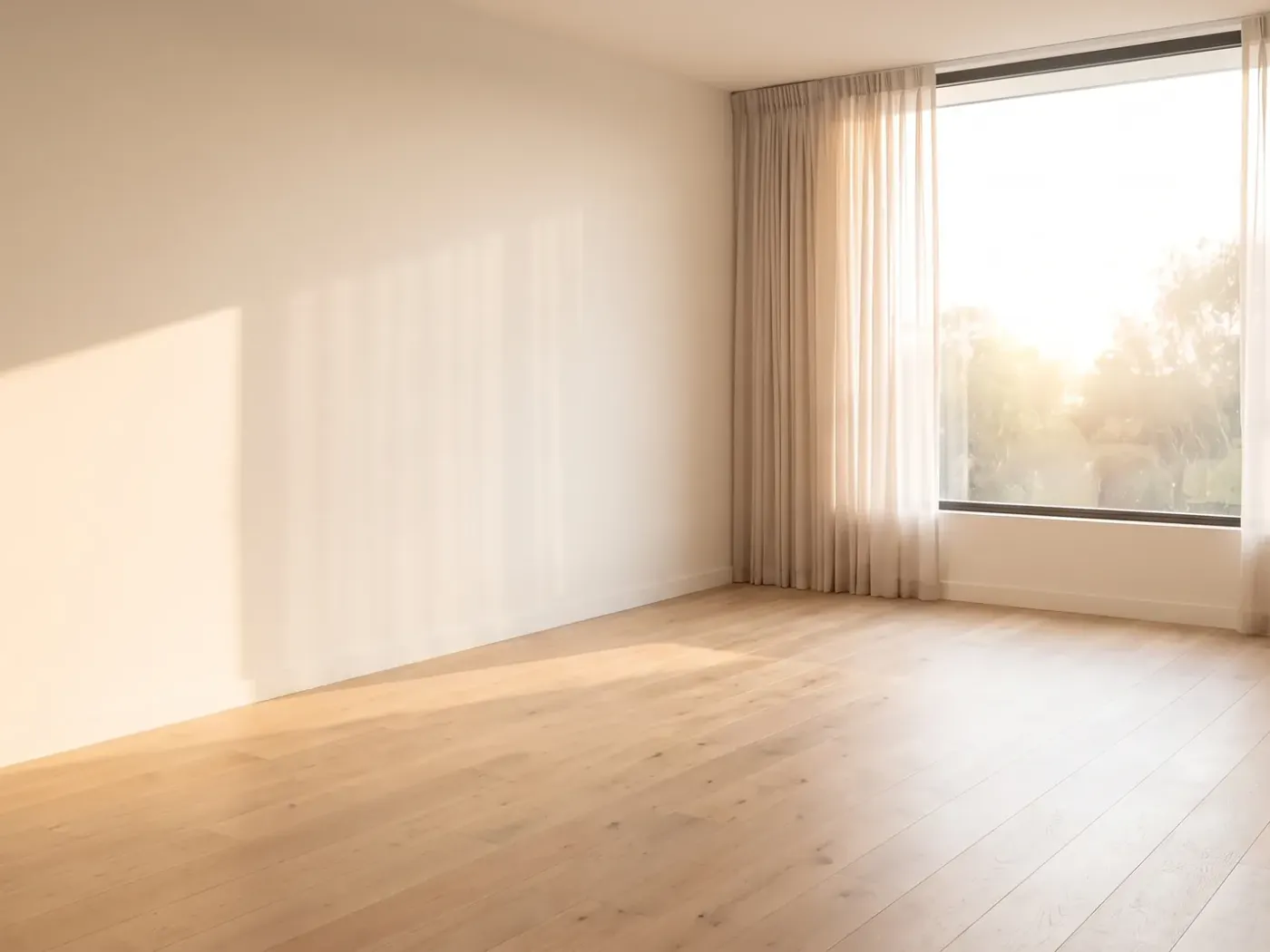
Eleven green bedrooms
The greens most people mean first, then the darker ones, then the versions where the green is one wall or one piece of furniture. Under each render is the exact sentence that produced it — steal it, change the green, and run it on your own room.
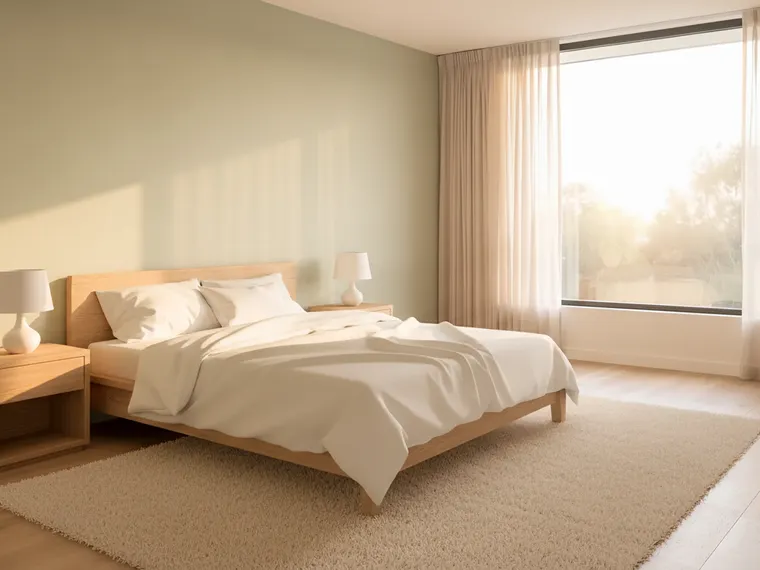 Sage green
 What changed Walls from white to soft sage. A light oak bed, oak bedsides, white ceramic lamps and a cream rug added. Floor, window and curtains untouched.
Why it works This is what most people mean by a green bedroom, and it is the safest one on the page. Sage is a grey-green, so it behaves like a neutral: it does not fight the oak, it does not fight the white, and in warm evening light it goes almost beige. If you are only going to render one, render this one.
“Turn this empty room into a sage green bedroom: paint the walls soft sage green, add a light oak bed with white linen bedding, two oak bedside tables with white ceramic lamps, and a cream wool rug. Keep the window, curtains and floor exactly as they are.”
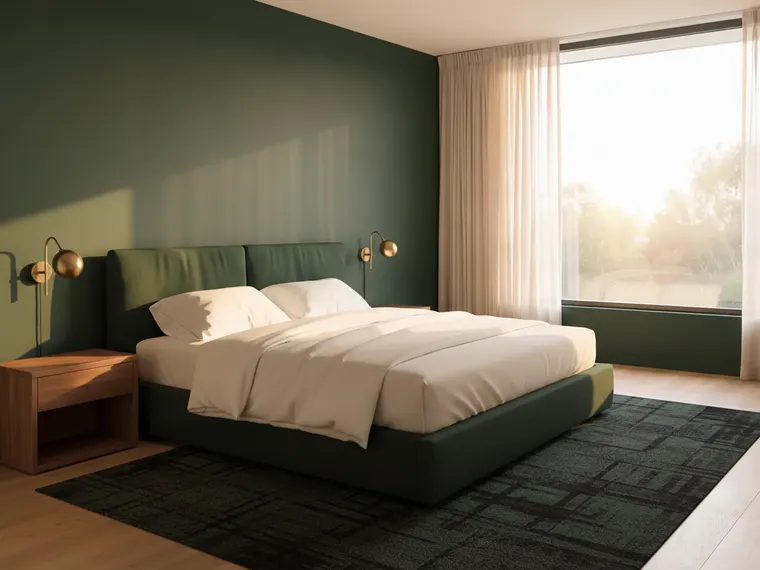 Dark green
 What changed Walls and skirting to deep forest green, a bed upholstered in the same green, walnut bedsides, brass reading lights on the wall, a dark rug. The ceiling stayed white.
Why it works Painting the trim the same colour as the wall is what makes a dark bedroom feel enveloping rather than boxed in — a white skirting board would draw a bright line around the bottom of the room. Brass is the metal for dark green. The window keeps it from going gloomy; a north-facing room needs more lamps than this.
“Turn this empty room into a moody dark green bedroom: paint the walls and the trim deep forest green, add an upholstered bed in the same green with white bedding, walnut bedside tables, brass wall-mounted reading lights and a dark patterned rug. Keep the window and floor exactly as they are.”
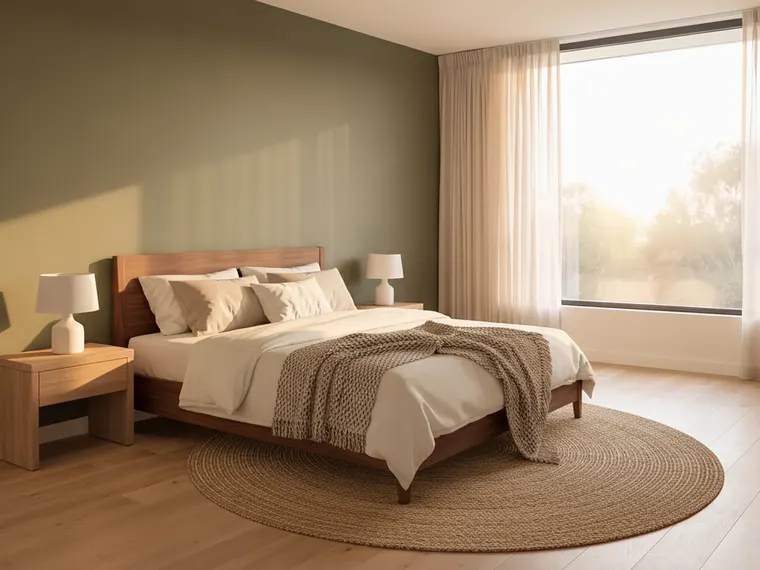 Olive green
 What changed Only the wall behind the bed, to olive. The side wall stayed white. A walnut bed, oatmeal bedding, oak bedsides and a round jute rug added.
Why it works The accent wall is the cheapest way to find out if you like green in the room — one wall, one afternoon. It works here because the green wall is the one you face from the door and the one the bed sits against, so it reads as a decision and not a leftover. The wall beside the window should stay light; painting it darkens the daylight.
“Turn this empty room into a bedroom with an olive green accent wall: paint only the wall behind the bed olive green and leave the other walls white, add a walnut bed with white and oatmeal bedding, oak bedside tables and a jute rug. Keep the window, curtains and floor exactly as they are.”
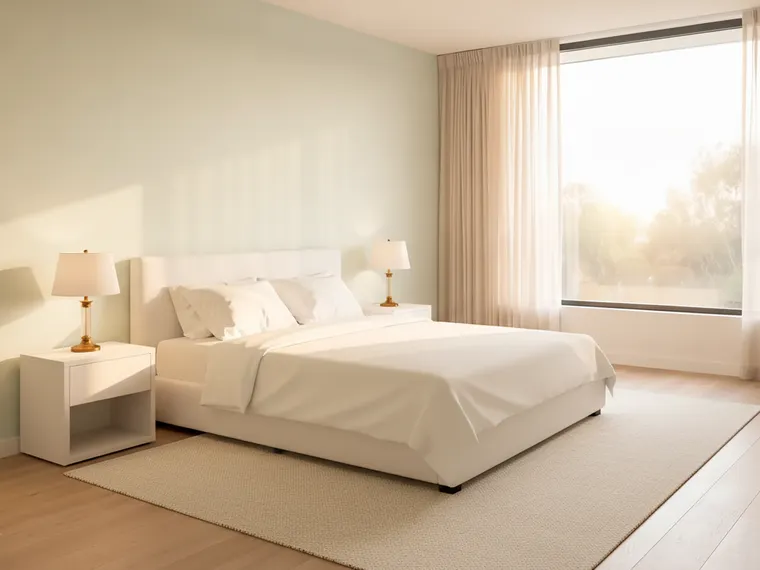 Pale green
 What changed Walls to a pale mint. A white upholstered bed, white bedsides, brass lamps and a pale rug added.
Why it works The lightest green that still reads as green. In this much daylight it is barely there, which is right for a small or low room where sage would feel heavy. The brass lamps do the work of giving the room a temperature — without them, pale green and white together can read like a clinic.
“Turn this empty room into a light green bedroom: paint the walls a pale mint green, add a white upholstered bed with crisp white bedding, white bedside tables, brass lamps and a pale wool rug. Keep the window, curtains and floor exactly as they are.”
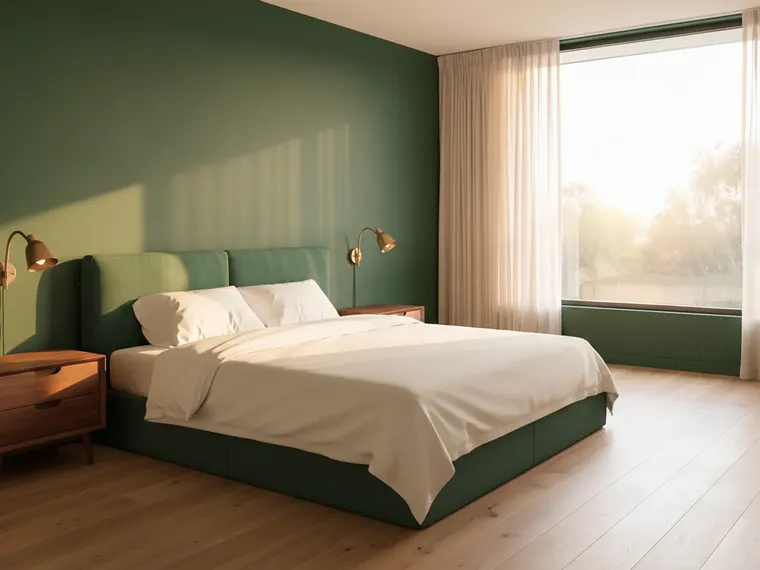 Dark green
 What changed Every wall, the window reveal and the trim to one bottle green. A linen bed, walnut bedsides and brass sconces added. We asked for the ceiling too and the model left it white — a render is a brief, not a drawing.
Why it works Drenching means one colour on everything, so the room loses its edges and reads as a single volume. It is the version that photographs best and the one that needs the most nerve. The white ceiling the render kept is actually a sensible compromise in a room this height: it holds the light without breaking the effect.
“Turn this empty room into a colour-drenched green bedroom: paint the walls, ceiling, trim and window frame all the same deep bottle green, add a linen upholstered bed with white bedding, walnut bedside tables and brass sconces. Keep the window position and floor exactly as they are.”
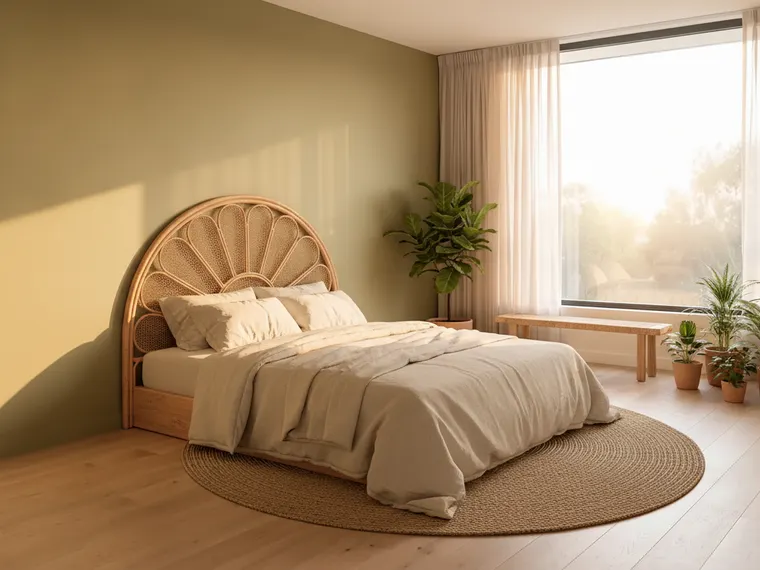 Olive green
 What changed Walls to a warm olive. A rattan arched headboard, oatmeal linen, a round jute rug, a wooden bench and plants in terracotta added.
Why it works Olive is the yellow-green, and it is the one that wants natural texture next to it: rattan, jute, unbleached linen, terracotta. Sage with these materials looks fine; olive with them looks intentional. Avoid crisp white here — the room is built on off-whites and it shows if one thing is pure white.
“Turn this empty room into an earthy olive green bedroom: olive green walls, a rattan headboard bed with oatmeal linen bedding, a woven jute rug, terracotta pots with plants and a wooden bench. Keep the window, curtains and floor exactly as they are.”
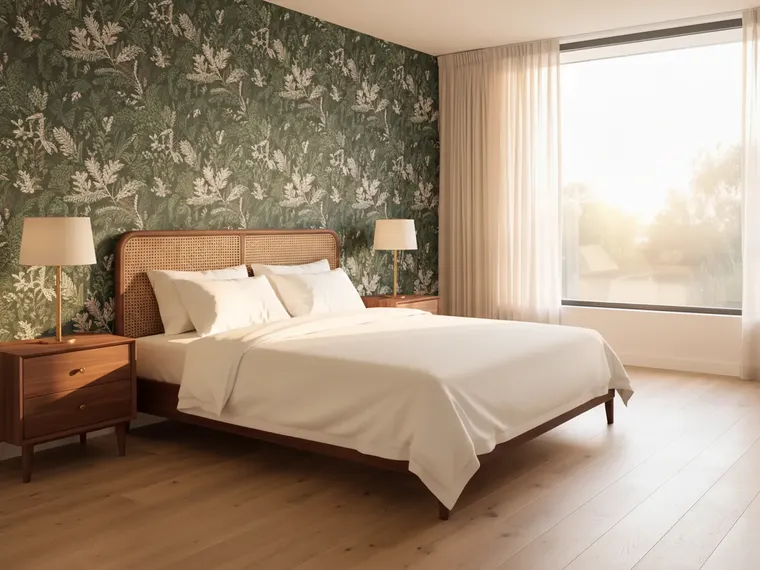 Dark green
 What changed A dark green leaf-pattern wallpaper on the bed wall, the other walls left soft white. A cane bed, walnut bedsides and brass lamps added.
Why it works Pattern is how you get a dark green bedroom without a dark green room. One papered wall carries all the colour and all the interest, and the rest of the room stays as bright as it was. Keep the furniture plain against it — cane, walnut, white — or the wall and the bed will argue.
“Turn this empty room into a green bedroom with botanical wallpaper: put a dark green leafy botanical wallpaper on the wall behind the bed, paint the other walls soft white, add a cane bed with white bedding, walnut bedside tables and brass lamps. Keep the window, curtains and floor exactly as they are.”
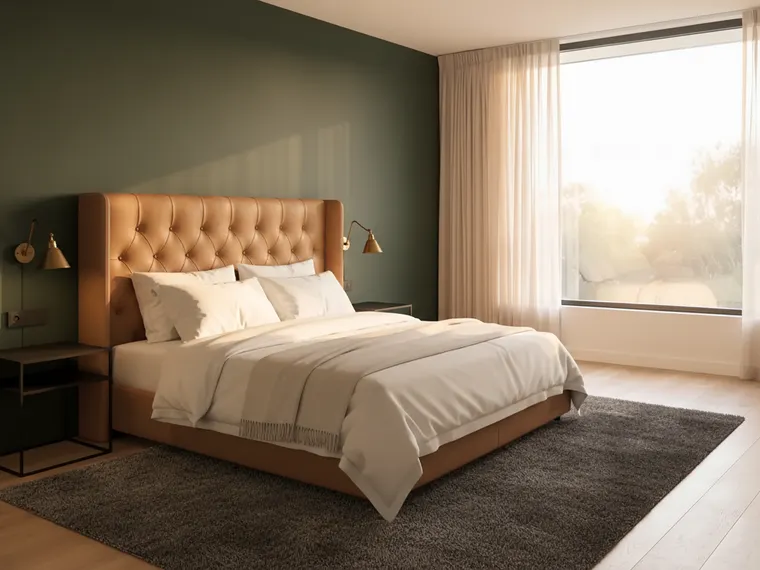 Dark green
 What changed Walls to a deep green, a tall camel leather headboard, layered white bedding, black bedsides, brass reading lights on the wall, a dark rug.
Why it works The hotel look is dark green plus one warm material at scale — here a tall leather headboard — plus wall-mounted lights so there is nothing on the bedside tables. The headboard height matters: a low bed against a dark wall disappears; a tall one gives the wall a reason to be dark.
“Turn this empty room into a boutique hotel bedroom in dark green: deep green walls, a tall camel leather headboard bed with layered white bedding, black metal bedside tables, wall-mounted brass reading lights and a dark rug. Keep the window, curtains and floor exactly as they are.”
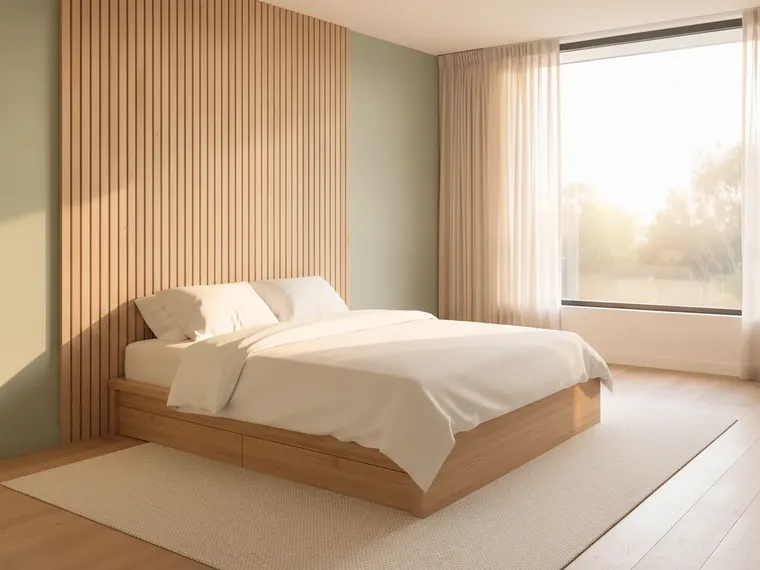 Sage green
 What changed A floor-to-ceiling oak slat panel on the bed wall, sage on the other walls, a low oak platform bed with drawers, white linen and a cream rug.
Why it works Green and wood is the pairing that never dates, and slats give the wood a texture that flat panels do not. Sage is the right green for this because it is grey enough not to compete with the warm oak. If you like it, the wall paneling ideas page has more of it.
“Turn this empty room into a sage green bedroom with a vertical oak wood slat panel wall behind the bed, sage green paint on the other walls, a low oak bed with white linen bedding, and a cream rug. Keep the window, curtains and floor exactly as they are.”
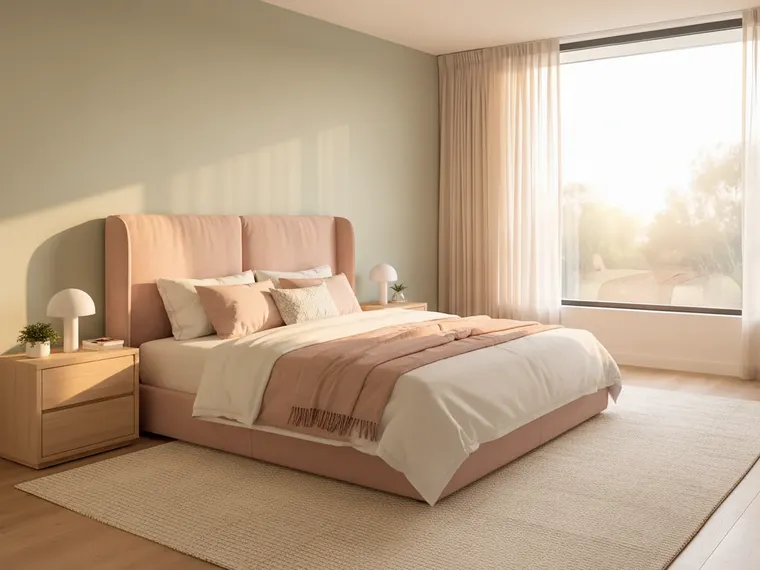 Sage green
 What changed Walls to sage, a blush upholstered bed with blush and white bedding, light oak bedsides, a cream rug.
Why it works Green and pink are opposite each other on the wheel, which is why this works and why it needs restraint: a dusty blush against a grey sage, both of them knocked back. A bright pink or a bright green and it becomes a children's room. Keep the third colour to wood and white.
“Turn this empty room into a sage green and blush pink bedroom: sage green walls, a blush pink upholstered bed with white and blush bedding, light oak bedside tables and a cream rug. Keep the window, curtains and floor exactly as they are.”
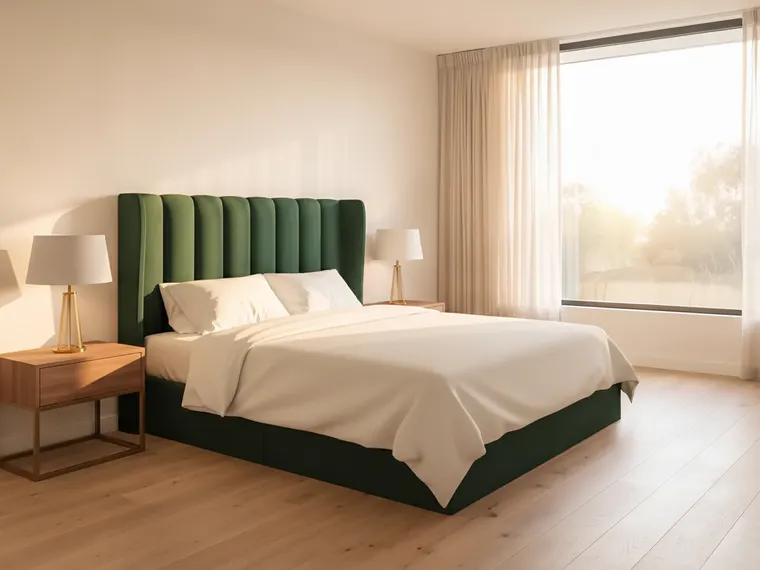 Green as furniture
 What changed Nothing on the walls. An emerald velvet channel-tufted bed, white bedding, walnut bedsides and brass lamps added.
Why it works The green bedroom for renters and for anyone not sure they want to paint. One large green piece against white walls gives you most of the effect and none of the commitment, and emerald velvet in particular reads richer than the same colour on a wall. If you later paint the walls, go sage — not another dark green.
“Turn this empty room into a bedroom with an emerald green velvet upholstered headboard bed, white bedding, walnut bedside tables and brass lamps. Keep the walls white, and keep the window, curtains and floor exactly as they are.”
Every render is the same photograph of the same empty room, rendered on the same engine the free tier of AI Room Design runs on, unretouched. The furniture was added by the sentence; the light, floor, window and curtains are the real room's.
Where to start
A green bedroom is mostly paint, which makes it one of the cheapest room changes in the house. The order below is the order of change-per-dollar, and most people are happy after step two.
The wall behind the bed. One afternoon and a couple of litres, and it answers the whole question of whether you like green in this light. The olive accent wall render above is exactly this.
Under a hundred dollarsIf the one wall worked, do the rest, and paint the skirting and door frames the same colour if the green is dark. That single decision — trim to match — is most of the difference between the sage and forest renders above and an ordinary painted room.
A weekend and a few hundred dollarsWhite or oatmeal linen and one warm metal. Green walls make coloured bedding look busy; they make plain white bedding look expensive. Brass lamps or wall lights are the fastest way to give a green room warmth.
A few hundred dollarsAn upholstered or wood headboard against the green is what turns a painted room into a designed one — the leather in the hotel render, the slats, the velvet. This is the step to render three ways before you buy, because it is the one you will live with longest.
Mid three to low four figuresWhat goes wrong
Green is more sensitive to light than any other wall colour, which is why so many green bedrooms look nothing like the swatch. Each of these is avoidable at the render stage for free.
Green is the colour most affected by the light in the room — sage goes grey in north light and beige in evening light. A two-inch chip tells you nothing. Render it on a photo of the room, then buy a sample pot for the one you liked.
A bright white skirting board draws a line around a dark room and makes it feel smaller. Paint the trim the wall colour, or a shade darker. Light greens can keep white trim.
Green walls plus green bedding plus a green rug is a themed room, not a green room. One green on the walls, then white, wood and one metal. The renders above never use more than one green.
It can be beautiful and it needs a plan for lamps: bedside lights, a floor lamp, warm bulbs. Without them a forest green bedroom is a cave by four in the afternoon in winter.
Questions
Sage, for most rooms. It is a grey-green, so it reads as calm rather than as a colour statement, and it goes with almost anything you already own. Go darker — forest or bottle green — if the room has a good window and you mostly use it at night; go paler — mint or a green-tinted white — if the room is small or faces north. Every one of those is on this page on the same room, which is a better basis for choosing than four different photographs of four different rooms.
The muted greens are. Sage and olive sit close to the colours people find restful in nature, and they read as quiet in low light, which is when you are in a bedroom. Bright, saturated greens are not — they are energising, which is the opposite of what the room is for. If you want the calm version, pick a green with grey in it and check it in the evening, not at noon.
White, oatmeal, and any pale wood for the base. Then one warm metal — brass is the usual choice. Blush pink is the classic accent, as in the sage and blush render above, and terracotta is the earthier version of the same idea. What to avoid is a second green, or grey: grey next to sage makes the sage look dirty.
Only if you are going for the drenched look, and only if the room is tall enough to take it. A green ceiling lowers the room, which is a feature in a tall room and a mistake in an eight-foot one. When we asked for a green ceiling in the drenched render above, the model left it white, and looking at the result that was the right call for this ceiling height.
Yes. A green upholstered headboard against white walls — the emerald velvet render above — gives you most of the effect with none of the commitment, and it moves with you. A green quilt or a green rug does less, because the bed and the wall behind it are what you look at from the door. If you can paint one wall, that is still the better answer.
It makes the walls recede, which reads as depth rather than size. What makes a dark room feel small is contrast at the edges — white trim, a white ceiling line, a bright door — because the eye finds the corners. Paint the trim to match, keep the lamps warm, and a dark green bedroom feels enclosed in the way a good hotel room does.
That is what the upload box at the top of the page is for. Photograph your bedroom from the doorway, type one of the sentences under the renders above, and you get it back in about ten seconds. Run sage, olive and a dark green on the same photo and you have the answer that a swatch card cannot give you.
Photograph it from the doorway, pick the green you kept scrolling back to, and you will have it rendered into your own room in about ten seconds. Free, on iPhone, Android and the web.