12 real before & afters

Living room accent wall ideas, on real walls

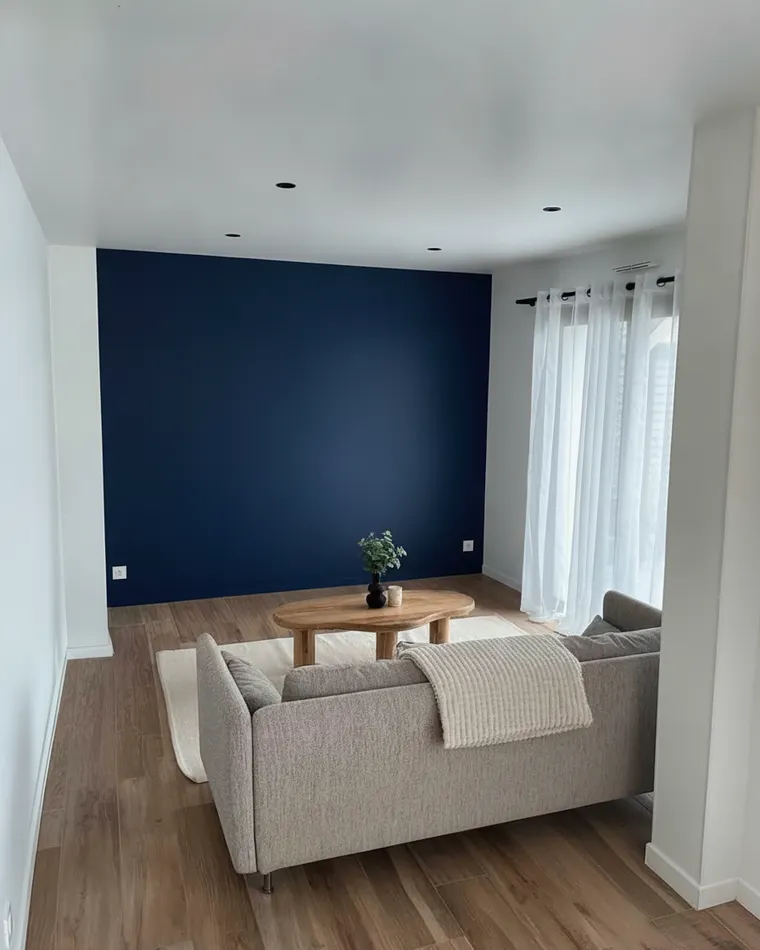
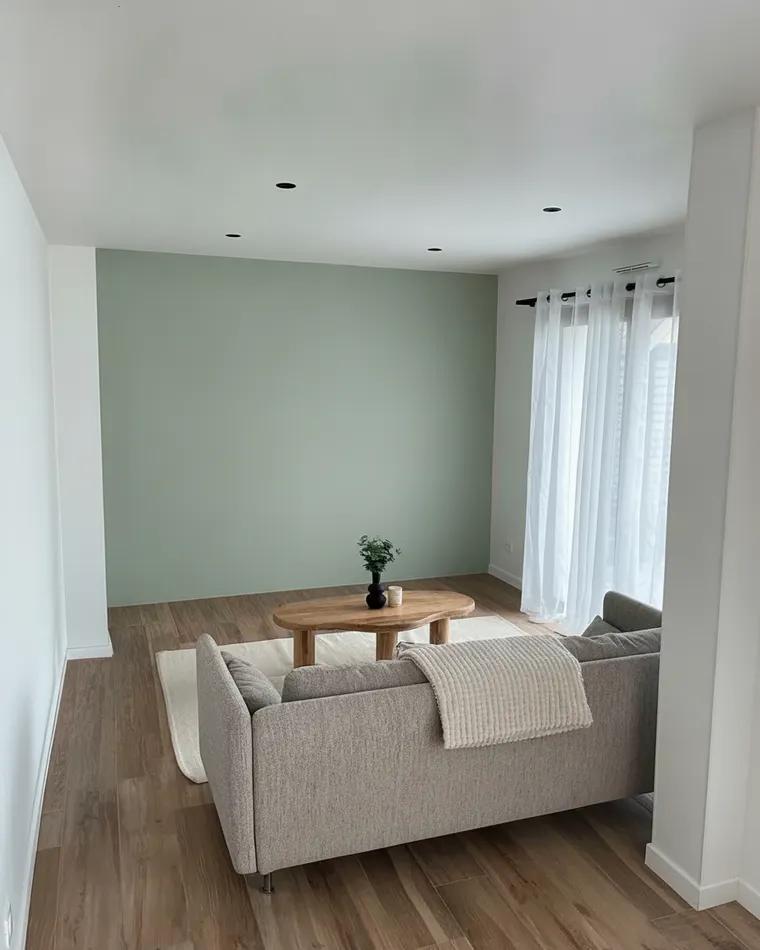
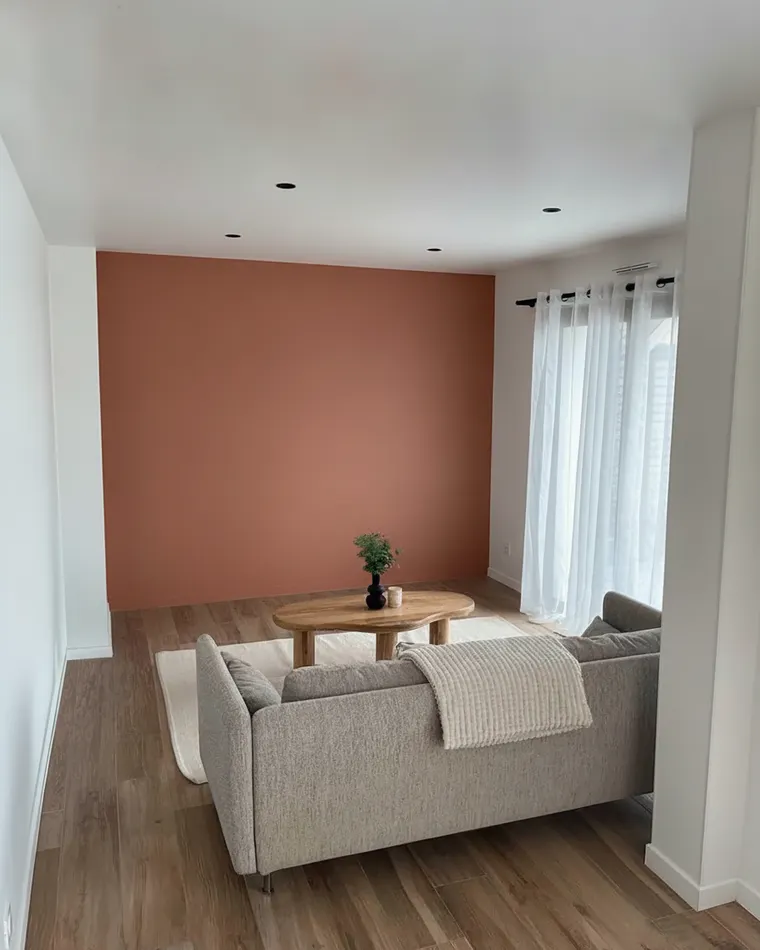
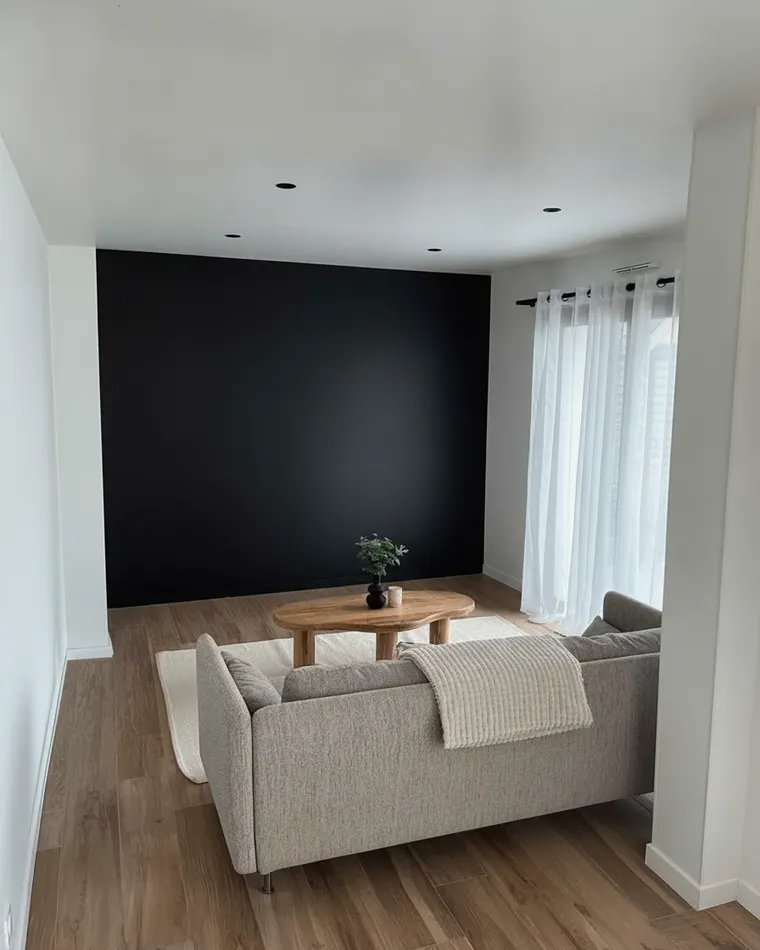
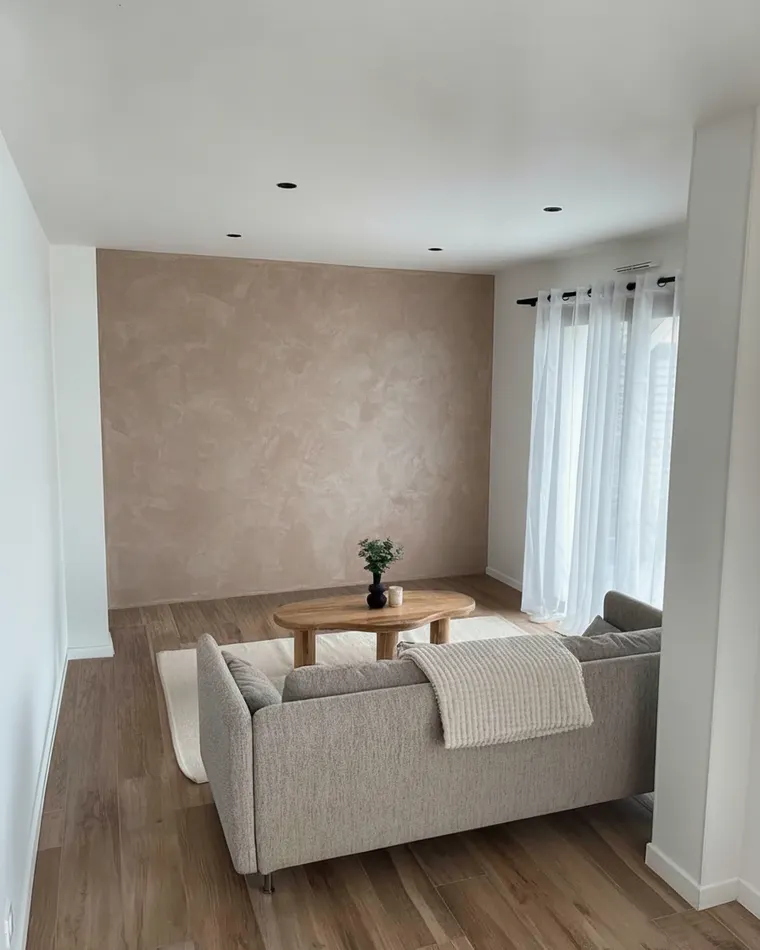
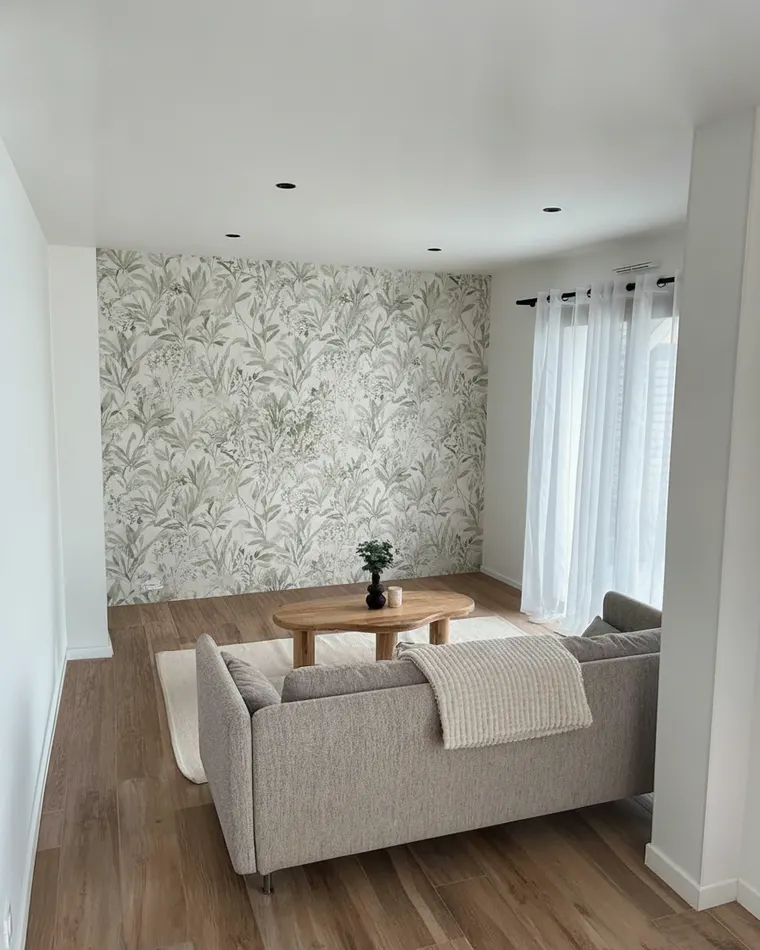
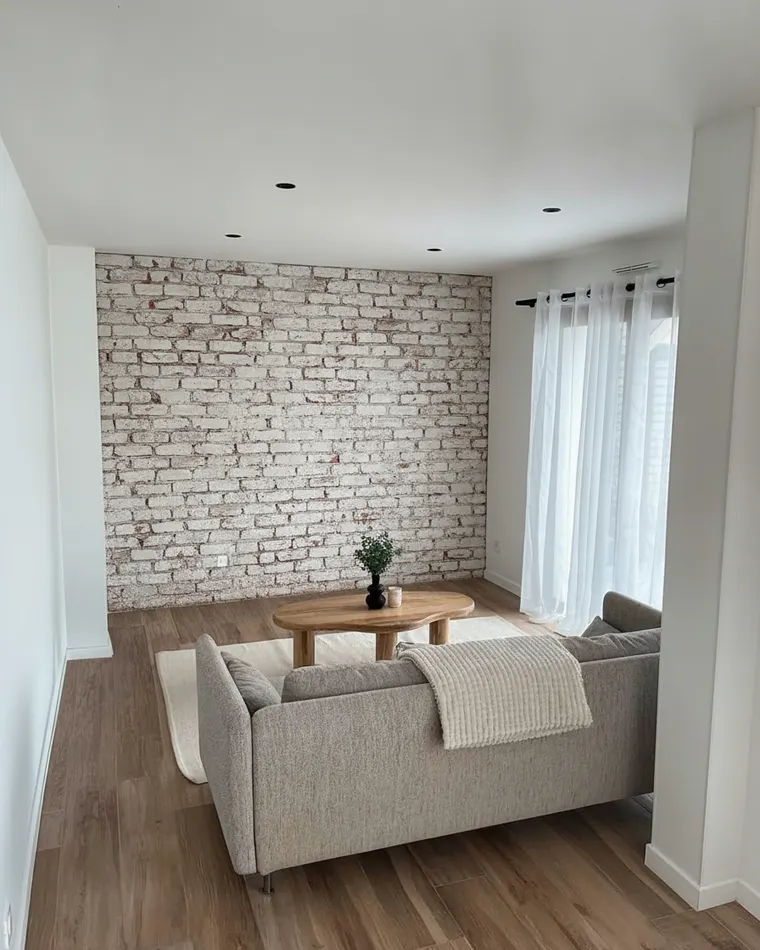
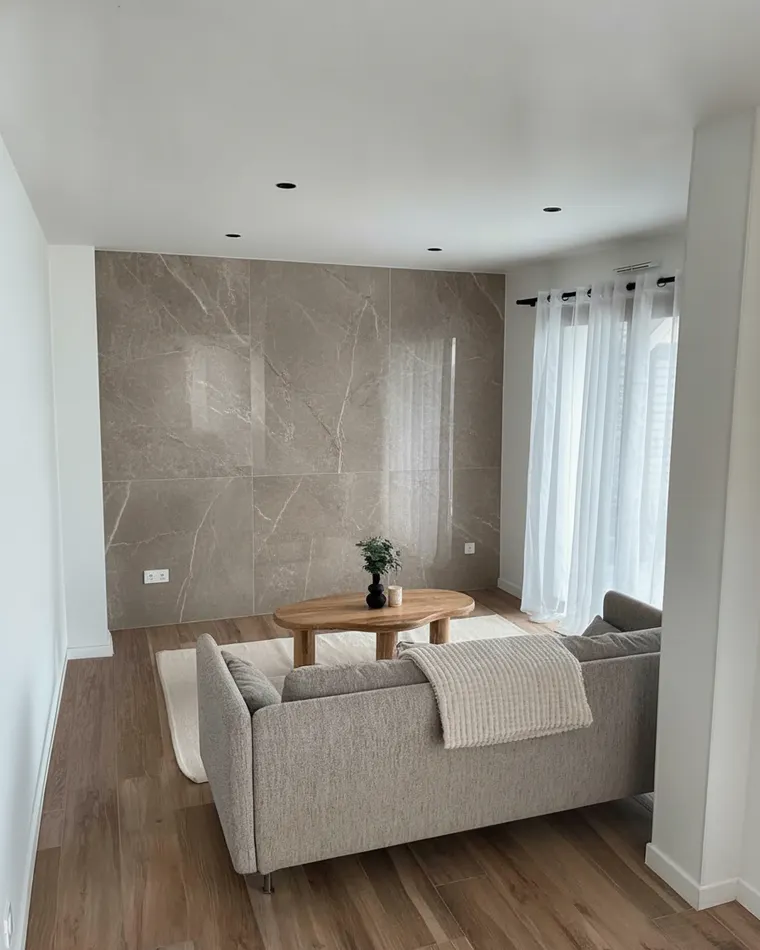
Navy, sage, terracotta, forest green, charcoal, limewash, a mural, brick, stone and a slat wall — ten treatments on the same blank wall behind the same sofa, so you compare the wall and not the photography, plus two on a 1980s living room nobody has touched. Each one says what changed and why it works. Then see it on your own wall.

Your photo
Your photo — ready to restyle

No account for your first render · about ten seconds · nothing to mask or select

What makes it work

An accent wall is four decisions

The colour is the one everybody argues about and the one that matters least. Which wall, how much contrast, whether the colour shows up anywhere else, and the finish are what separate an accent wall that looks designed from one that looks like leftover paint.

01

The wall you face, not the wall you pass

The accent wall is the wall you see from the door, or the wall the main piece of furniture sits against or faces. It should be a full wall — no doors, ideally no windows — so the colour has clean corners to stop at. Every render on this page is that wall.

02

Darker than the others, or nothing

An accent wall works by contrast. A wall two shades off the others reads as a mistake; a wall clearly darker, warmer or textured reads as a decision. If the colour you like is close to white, either commit to all four walls or pick a deeper one for the accent.

03

The colour appears once more

A navy wall with nothing else navy in the room floats. A navy wall with a navy cushion, a book spine or a lamp base is anchored. One repeat is enough; three and it is a theme.

04

Matte, edge to edge, corners crisp

The finish that makes an accent wall look expensive is a flat matte paint, taken cleanly into the corners and the skirting painted to match or left crisp white. Sheen on a dark wall shows every roller mark. Tape the corners.

Before and after

The two real walls behind every render

Nothing on this page is a stock photo of somebody's finished living room. One is a new-build with a blank wall the sofa faces; the other is a living room that has not changed since the 1980s. Every image below is one of them with a sentence rendered into it. Drag the handles.

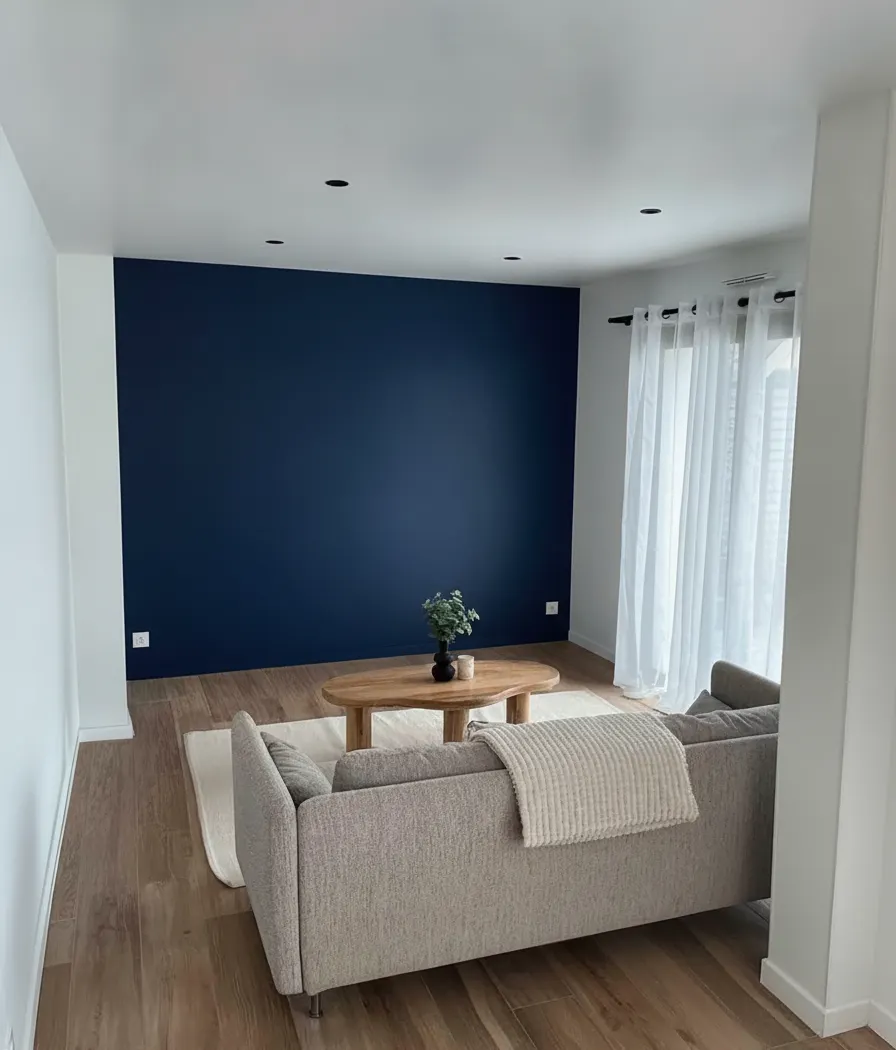
After: Navy accent wall
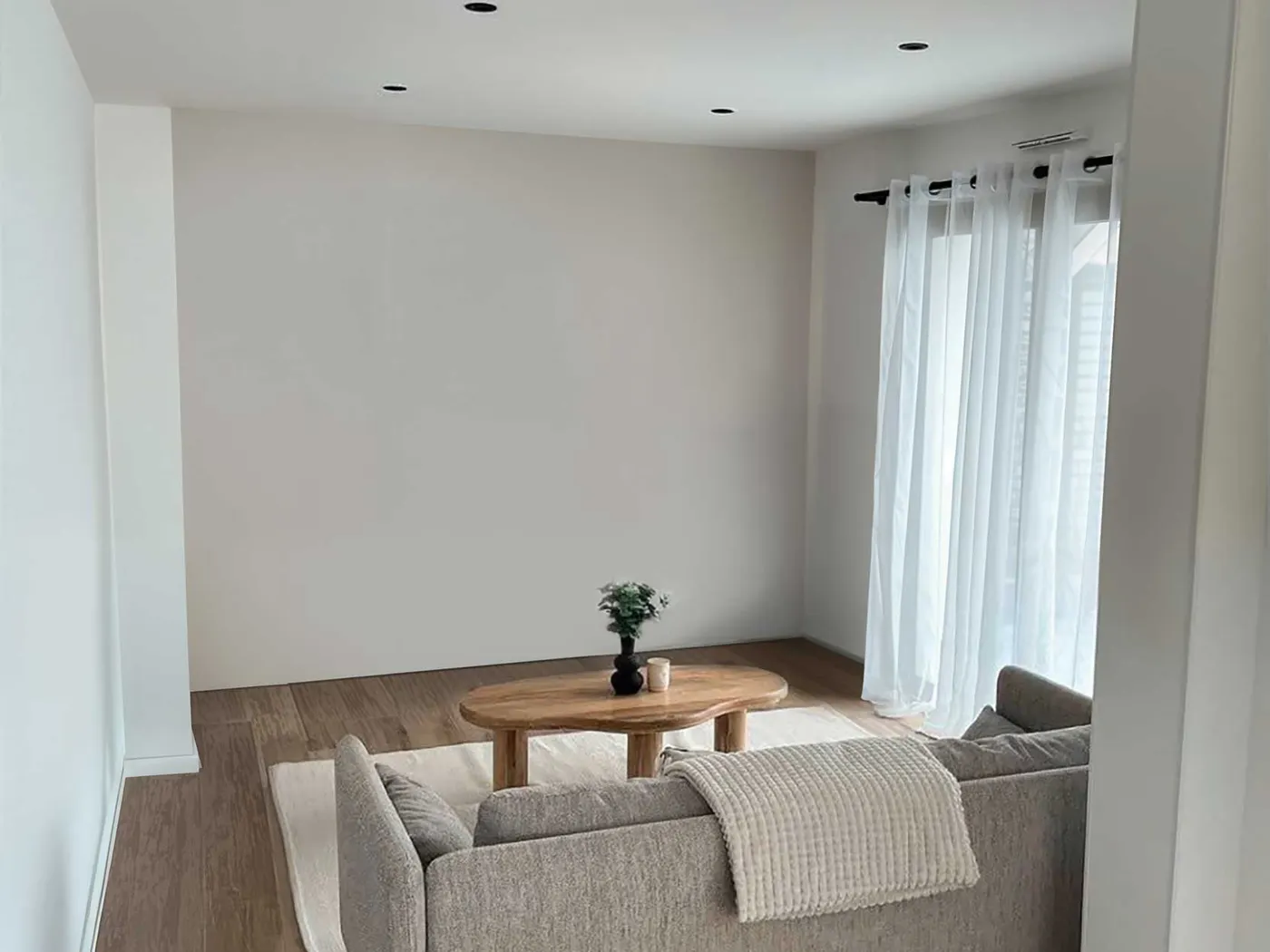
Before: The blank wall
The blank wall Navy accent wall
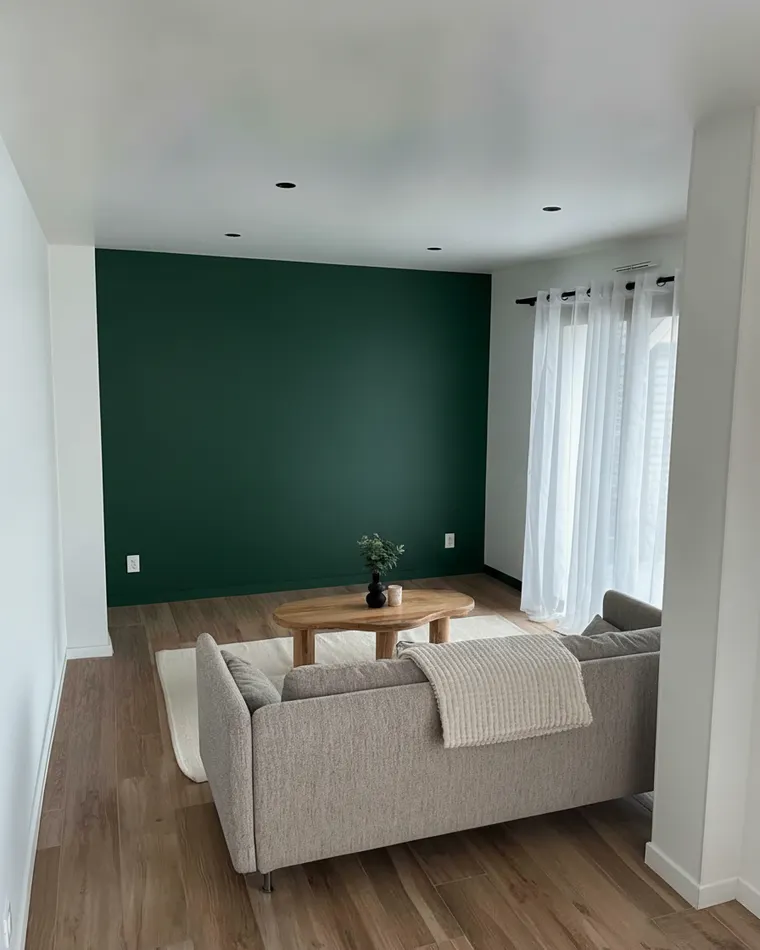
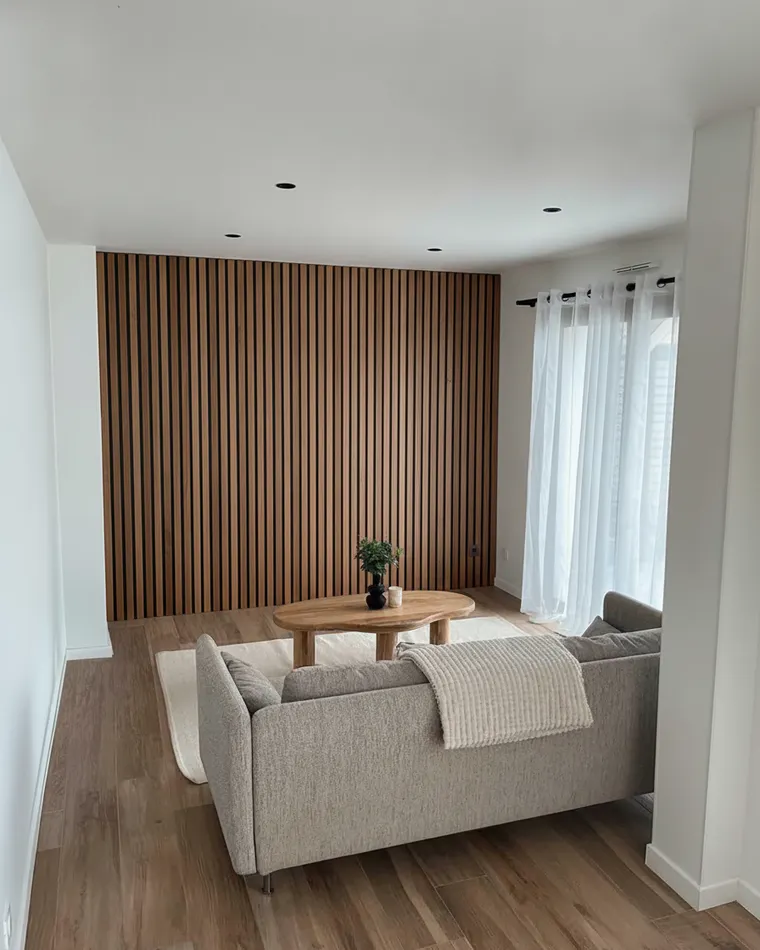
The blank living-room wall. One large wall a sofa faces, nothing on it. Ten of the renders on this page are this exact wall in a different treatment each time — the comparison a stock gallery cannot give you.
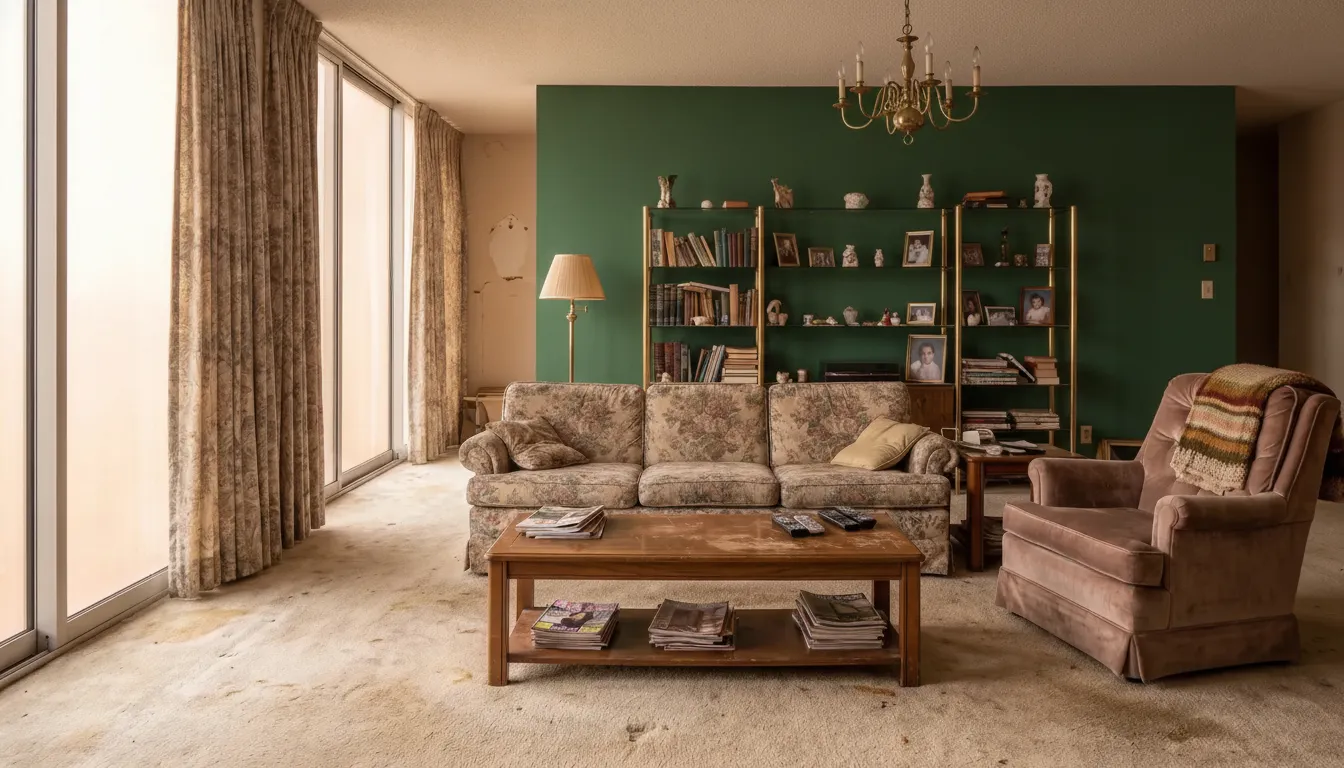
After: Green accent wall
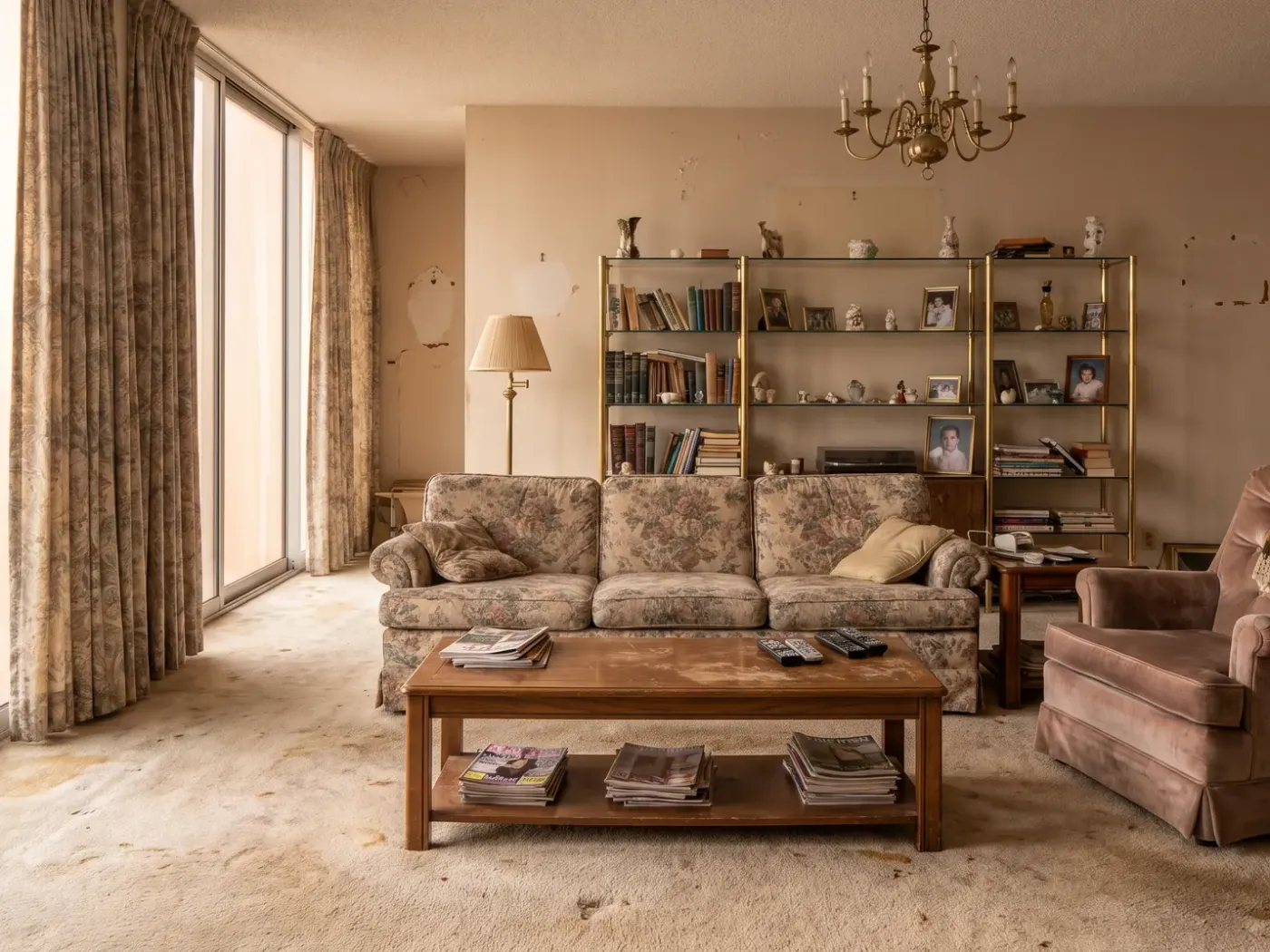
Before: The real room
The real room Green accent wall
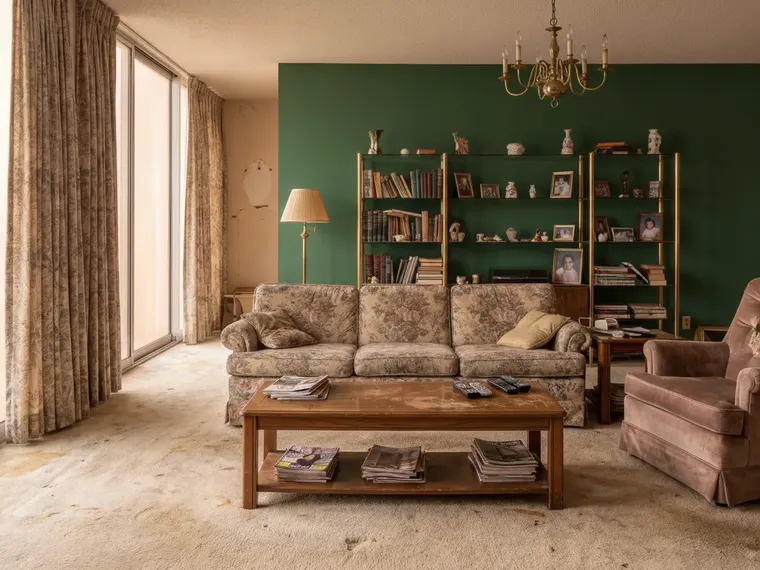
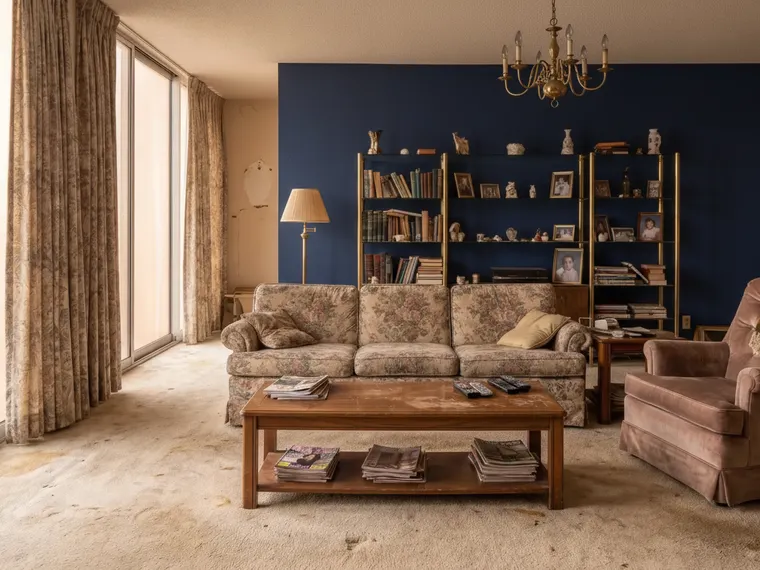
The 1980s living room. A room nobody has touched in forty years. Drag the handle: only the back wall changed, and it changes what everything in front of it looks like.

Where to start

What to do first

In order of change-per-dollar. Two of the four steps are free, and most people who want an accent wall are done at step three.

  1. 1

    Pick the wall

    Stand in the doorway. The wall you look at is the accent wall, and in most living rooms it is also the wall the sofa faces or backs onto. If that wall has the television on it, good — a dark wall makes a screen disappear. If it has the window, pick another.

    Free
  2. 2

    Render three colours on a photo of it

    One dark, one warm, one soft: navy, terracotta and sage is the classic trio and the one on this page. Look at them the next morning on a phone. The one you keep going back to is the answer, and it is usually not the one you expected.

    Free
  3. 3

    Paint it

    One wall, two coats, a Saturday. Buy a matte finish, tape the corners and the ceiling line, and paint the skirting on that wall to match if you want the wall to read as one plane. Total cost is a tin of good paint.

    Under a hundred dollars
  4. 4

    Only then think about texture

    Limewash, a mural, brick slips, a slat wall or stone all cost more and are harder to undo. They are the right call when a painted wall still feels flat, and the renders above show what each one adds. Do not start here.

    A few hundred to a few thousand

What goes wrong

Four ways an accent wall fails

An accent wall is cheap to do and cheap to redo, which is why so many are done badly. Each of these shows up in a render before it shows up on a wall.

The wall with the window in it

A dark wall around a window makes the window read as a hole and the daylight harder. The window wall is the one wall that should stay light. Paint the wall opposite it and the room gets brighter, not darker.

A colour that is nearly the same

Off-white on white, pale grey on white, greige on cream. The room looks like the painter ran out. Go clearly darker or clearly warmer, or do all four walls in the colour you like.

Two accent walls

Two coloured walls in one room is a colour scheme, not an accent wall, and it usually makes the room feel narrower. One wall. If you want more colour than that, you want a painted room.

Stopping the colour short of the corner

An accent wall ends at the corners, all the way up and all the way down. Stopping at a piece of furniture, a shelf or an arbitrary line reads as unfinished from every angle. The exception is a deliberate two-tone split with a crisp taped line at door-head height, which reads as architecture.

Questions

Accent walls, answered honestly

Which wall should be the accent wall in a living room?

The wall you see first from the door, which in most rooms is also the wall the sofa faces or sits against. It should be a whole wall with no doors and, ideally, no windows, so the colour has clean corners. The wall with the television on it is a good candidate because a dark wall swallows a black screen. The wall with the window is the one to leave alone.

What is the best colour for a living room accent wall?

Deeper than the other walls, and one that shows up once more somewhere in the room. Navy is the safest strong choice because it behaves like a neutral against grey, oak and white. Sage and other soft greens are the gentlest. Terracotta and rust are the answer for a cool grey room that feels cold. Charcoal is the most dramatic and the best behind a television. All four are rendered on the same wall above so you can compare them on one room rather than four paint chips.

Does an accent wall make a living room look smaller?

A dark wall at the far end of a room makes the room read longer, not smaller, because the eye travels to it. What makes a room feel small is a dark wall beside the window, or two dark walls facing each other. One wall, opposite the light, is the version that makes a room feel deeper.

Are accent walls out of style?

The 2010s version — one wall in a bright colour with nothing else in the room to explain it — is. The current versions are the ones on this page: a deep colour that repeats once elsewhere, a two-tone split, a limewash finish, or a material wall like brick, stone or slats. The idea of one wall doing the work is not going anywhere; the bright random colour is what dated.

Should the accent wall be darker or lighter than the other walls?

Darker, nearly always. A lighter accent wall only works when the other three are already dark, which is rare in a living room. Every render on this page is darker than the walls beside it, and the sage one — the lightest — is the one that comes closest to disappearing.

Can I do an accent wall in a rental?

Paint, yes, if the lease lets you repaint at the end; one wall is an afternoon to put back. Removable wallpaper murals are made for exactly this and peel off cleanly. Brick slips, stone and a glued slat wall are permanent; a slat panel screwed to a batten frame can come down. The paint renders on this page are the ones to try in a rental.

Can I see an accent wall on my own living room before I paint?

That is what the upload box at the top of the page is for. Photograph the wall from across the room, type one of the sentences under the renders above — "paint only the wall behind the sofa deep navy blue and keep everything else the same" works as-is — and the render is back in about ten seconds. Run three colours and the decision makes itself.

Now see an accent wall on your own living room

Photograph the wall from across the room, pick the colour you kept scrolling back to, and you will have it rendered onto your own wall in about ten seconds. Free, on iPhone, Android and the web.