
How to Make a Kitchen Without Upper Cabinets Look Intentional, Not Unfinished

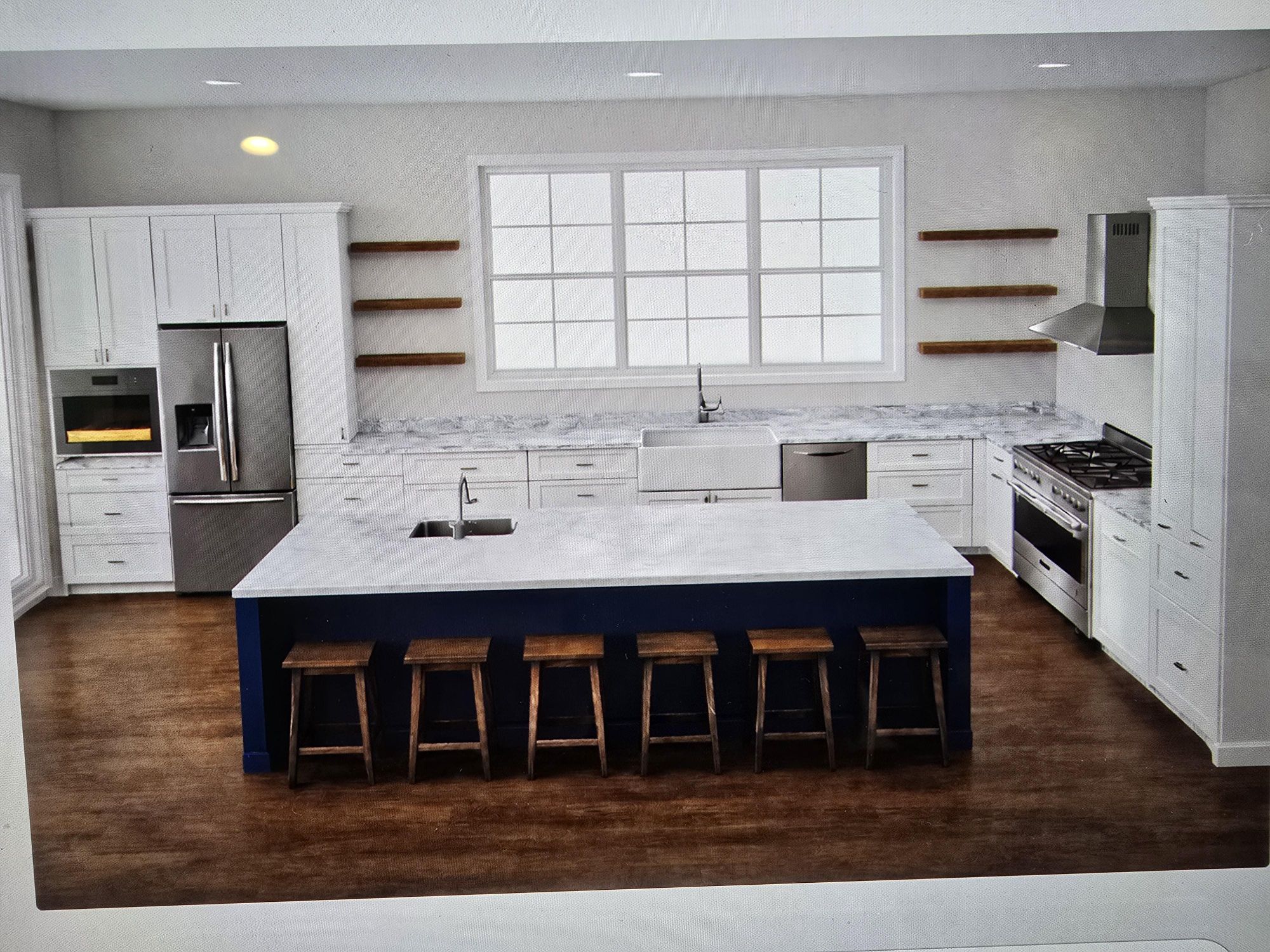
A homeowner on r/kitchenremodel posted their kitchen design with no upper cabinets. 9-foot ceilings, 12-foot island, floating shelves flanking the window. The layout was bold. The 41-comment thread agreed on one thing: the open wall space felt empty.
That’s the anxiety every no-upper-cabinet kitchen creates. You commit to the openness, then stare at blank walls wondering if you made a mistake. I opened the space in Renovate AI and tried three directions to see what makes the difference.
The Design Problem
Removing upper cabinets sounds freeing until you realize how much visual weight they carried. Uppers fill the eye line. Without them, the wall between countertop and ceiling becomes the largest single surface in the room. If nothing fills that gap with intention, it reads as “we forgot to finish.”
This kitchen had floating shelves, which is the standard solution. But floating shelves alone don’t solve the problem. They need to feel designed, not just mounted. LED underlighting, styled objects, and deliberate spacing turn functional shelves into architectural features.
The real question isn’t “upper cabinets or no upper cabinets?” It’s “what fills the space those cabinets left behind?”
The Original Space
This is the kitchen as designed. No upper cabinets, floating shelves flanking the window, a large navy island anchoring the room. The bones are good. The open walls are the question.
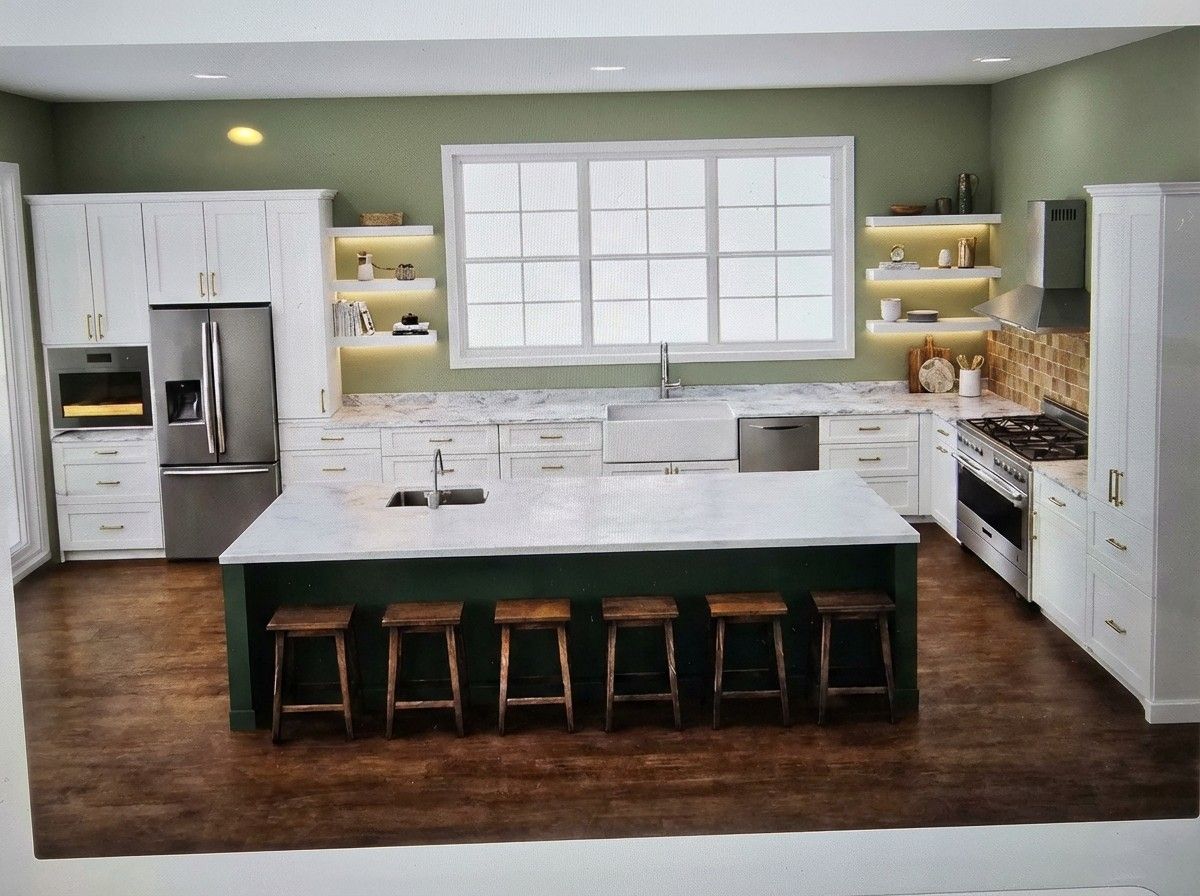
Direction 1: Sage Green Walls. Color as Architecture
What we told RAI:
“Sage green walls. Forest green island. Brass hardware. Zellige tile behind the range.”

Free · No account needed · 10 seconds
When walls become your biggest surface, color becomes structural. The sage green transforms empty drywall into a design decision. The forest green island anchors the lower half. Together they create a green-on-green envelope that makes the open wall space feel like a room, not a void.
The zellige tile behind the range creates a focal point where your eye naturally goes. Without uppers blocking the view, the backsplash area behind the cooktop becomes the kitchen’s centerpiece. Use it.
Why this works: Color on open walls reads as “I chose this.” White or gray on open walls reads as “I haven’t decided yet.”
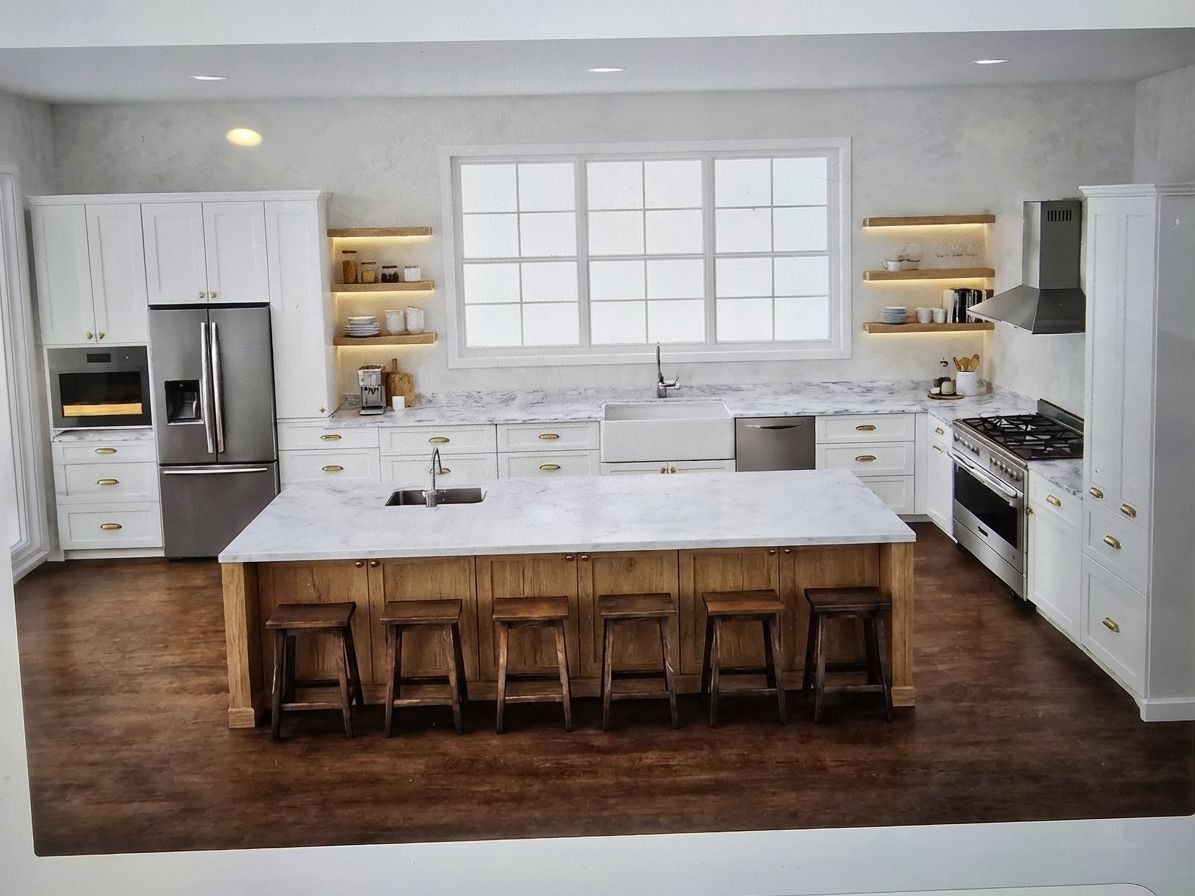
Direction 2: Warm Minimalist. Let Light Do the Work
What we told RAI:
“Limewash white walls. Raw oak island. Unlacquered brass hardware. Floating shelves with LED underlighting. Keep the dark hardwood floors.”

Free · No account needed · 10 seconds
The opposite approach. Instead of filling the space with color, strip everything back and let the architecture speak. Limewash walls have texture that flat paint doesn’t. The raw oak island adds warmth without competing. And the LED underlighting on the shelves is the real move. Lit shelves at night turn a kitchen into a gallery.
This direction only works if the shelves are styled. Empty minimalist shelves look abandoned. A few ceramics, one cookbook spine-out, a single plant. Less is more, but zero is nothing.
Why this works: Minimalism in an open kitchen requires more curation, not less. The light does what upper cabinets used to do: define the upper zone.
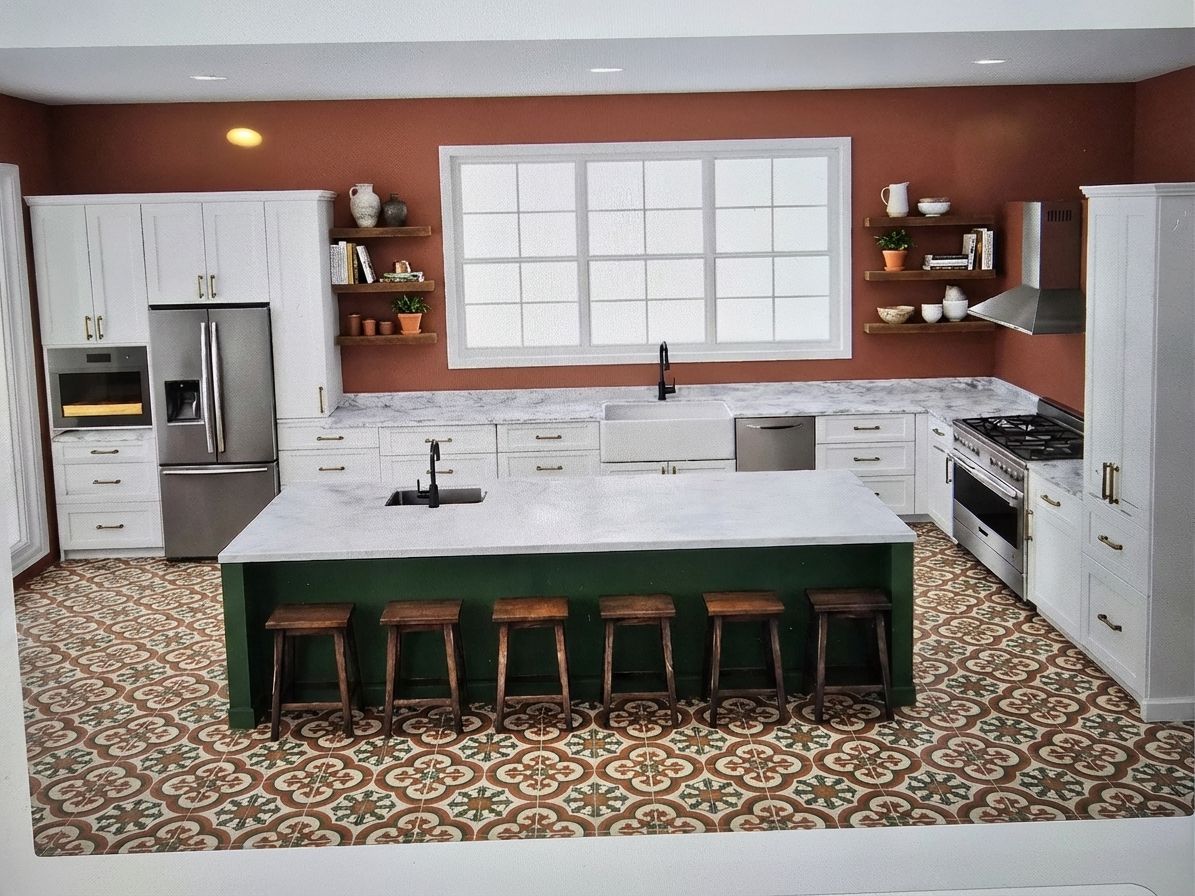
Direction 3: Bold Maximalist. Fill the Void with Personality
What we told RAI:
“Deep terracotta walls. Forest green island. Mixed metals. Patterned tile floor. Keep shelves, add styled objects and plants.”

Free · No account needed · 10 seconds
If minimalism scares you and sage green feels safe, go the other direction entirely. Deep terracotta walls with a patterned floor turns the kitchen into a space with so much character that nobody notices the missing uppers.
The floating shelves here become display cases. Copper pots, trailing pothos, stacked bowls, a few art prints leaned against the wall. The shelves aren’t solving a storage problem. They’re telling a story.
Why this works: Maximum visual density makes open walls disappear. You can’t see what’s missing when every surface has something worth looking at.
The Real Lesson
All three directions solve the same problem differently: they make the space above the counter feel intentional.
- Color makes the wall a design element, not leftover drywall
- Light defines the upper zone the way cabinets used to
- Density fills the visual field so the absence disappears
The mistake isn’t removing upper cabinets. The mistake is removing them and leaving everything else the same. Something has to replace the visual weight they carried. Pick your version of “something.”
How I Made These
I opened the space in Renovate AI and told RAI what to keep first. “Keep the floating shelves. Keep the dark floors. Keep the island layout.” Then each direction was just a few words:
- Direction 1: “Sage green walls. Forest green island. Brass hardware. Zellige tile behind the range.”
- Direction 2: “Limewash white walls. Raw oak island. Floating shelves with LED underlighting.”
- Direction 3: “Deep terracotta walls. Forest green island. Patterned tile floor.”
Short input. Stunning result. That’s Edit with words. You describe the change, RAI reads the direction. Each image came back in about 30 seconds.
Try It on Your Kitchen
If you’ve committed to no upper cabinets and the walls feel empty, try seeing what color, light, or texture does to the space. The right direction is different for every kitchen.
Open your kitchen in Renovate AI. Tell RAI what to keep. See it in seconds.
FAQ
Do kitchens without upper cabinets look unfinished?
Only if the open walls aren’t treated as a design surface. Color, textured tile, styled shelves with lighting, or art can fill the visual gap that cabinets left behind.
What’s the best alternative to upper kitchen cabinets?
Floating shelves with LED underlighting are the most versatile. They provide some storage while creating an architectural feature. Style them with intention, not just function.
Does removing upper cabinets reduce kitchen storage?
Yes, but less than you’d think. A full-height pantry flanking the fridge (like this kitchen has) recovers most of the lost storage. The trade-off is openness for convenience.
What wall color works best with no upper cabinets?
Anything with enough saturation to feel intentional. Sage green, terracotta, warm navy, and deep cream all work. Avoid flat white or builder gray. Those read as unfinished when exposed floor-to-ceiling.
Inspired by a real design on r/kitchenremodel — 19 upvotes, 41 comments, and a debate about whether open walls work. Made with Renovate AI.
You Might Also Like
Kitchen Remodel Ideas You Can Visualize in Seconds →
✨ Dreaming of a Kitchen Makeover? Make it Reality with Your Phone! ✨ →
How to Do a Small Kitchen Remodel with Renovate AI →
AI Kitchen Makeovers: See Your Dream Remodel Before You Cook →