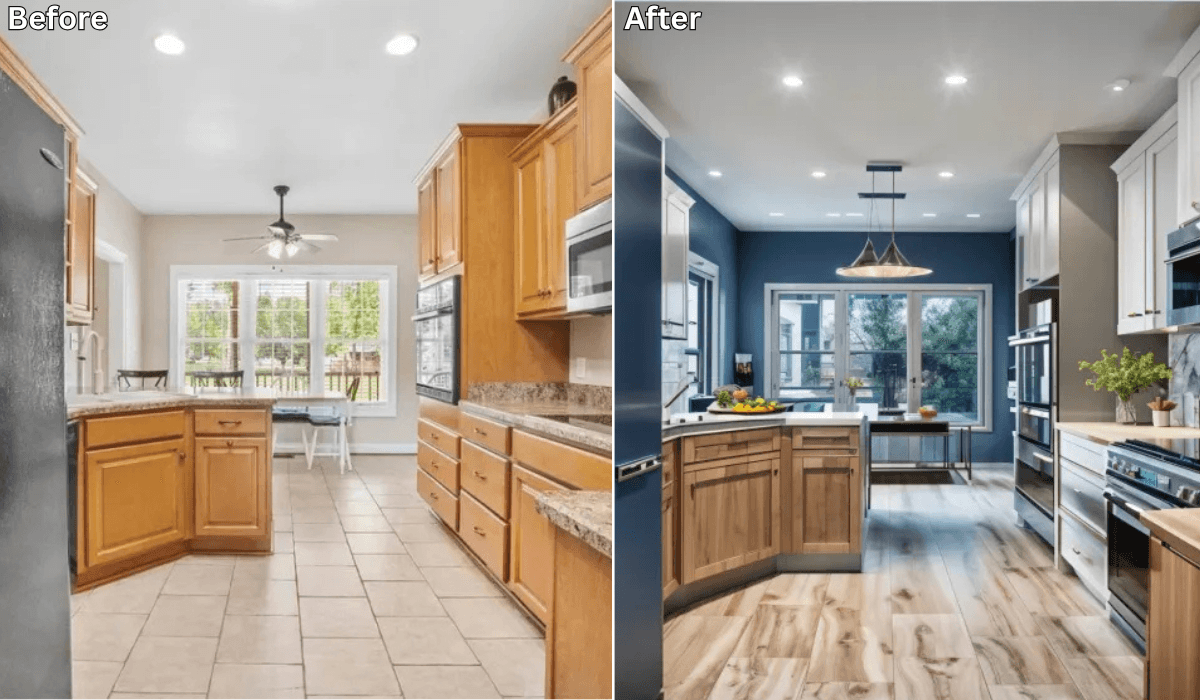
How to Warm Up a White Kitchen (Without Replacing Anything)

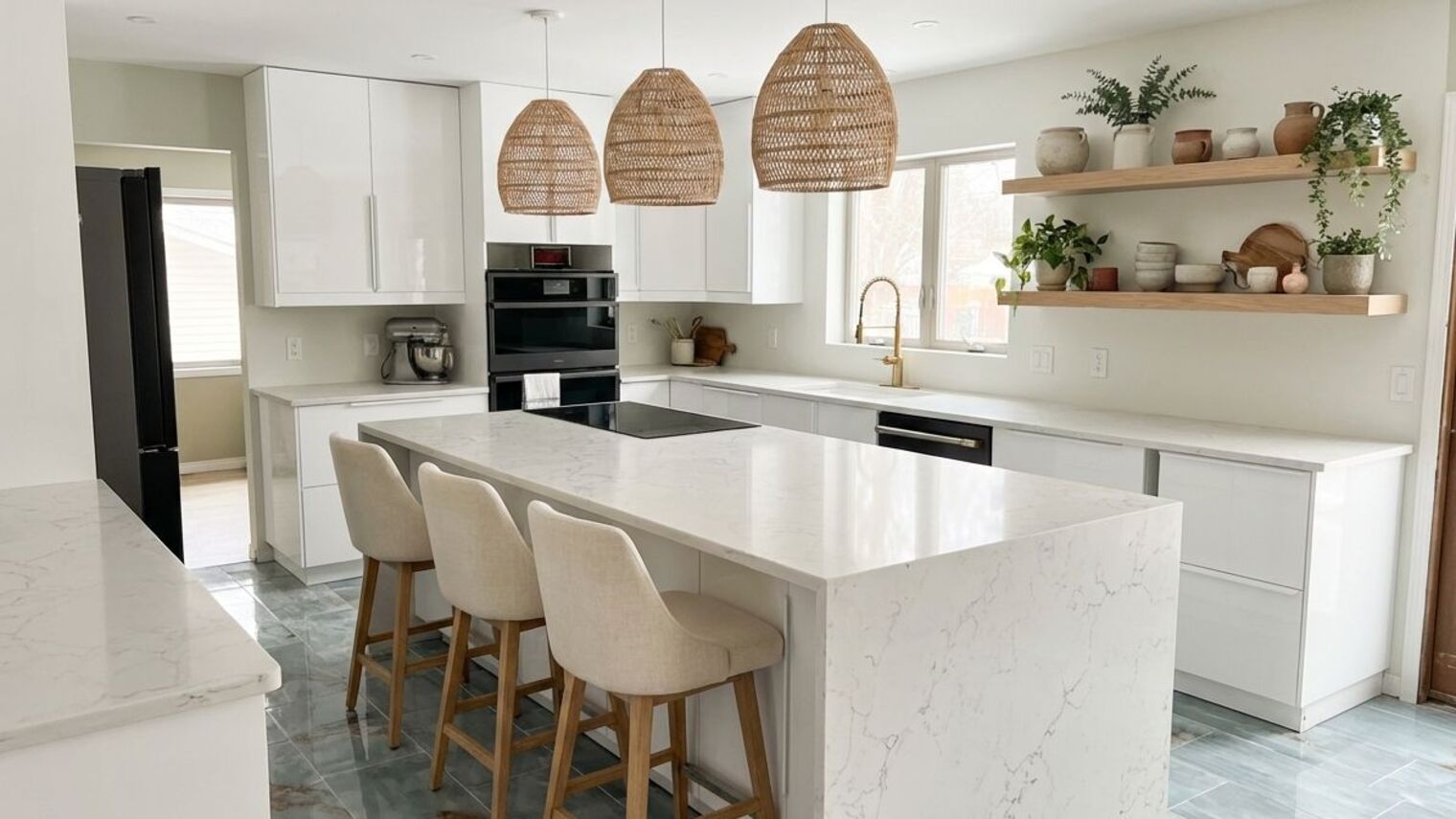
A homeowner posted their in-progress kitchen on Reddit with a question a lot of people have but don’t always know how to ask: “It feels like a hospital. How do I fix this without starting over?”
White gloss cabinets. Blue-gray floor tiles. A massive quartz island. His wife picked the palette and it stayed. The bones were genuinely great. But the drop ceiling tiles, the harsh angular light fixture, and the cold white walls made the whole room feel clinical.
We opened the kitchen in Renovate AI and took it in three directions. Same cabinets. Same floor. Three completely different feelings.
The Challenge
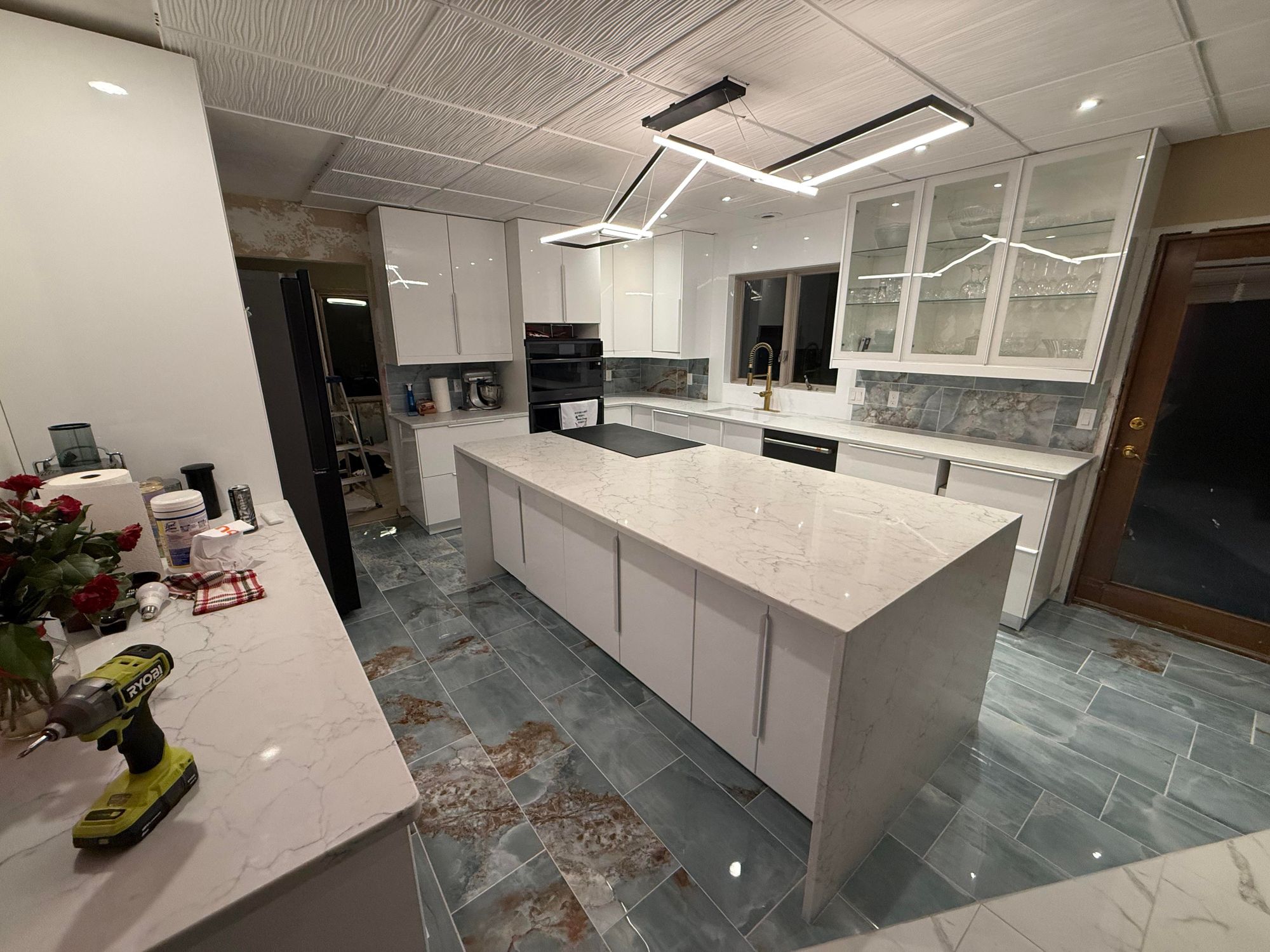
Figuring out how to warm up a white kitchen isn’t about the cabinets or the floor. White and blue-gray can look incredible together. The problem is everything around them.
Drop ceiling tiles are the single biggest culprit. They flatten the room, kill the height, and make any space feel institutional. The angular LED fixture adds to it. Cold white walls finish the job.
The fix isn’t ripping out the cabinets or re-tiling the floor. It’s everything else: ceiling treatment, lighting, wall color, and the details that bring warmth into a cool palette.
Direction 1: Warm Transitional
What we told RAI:
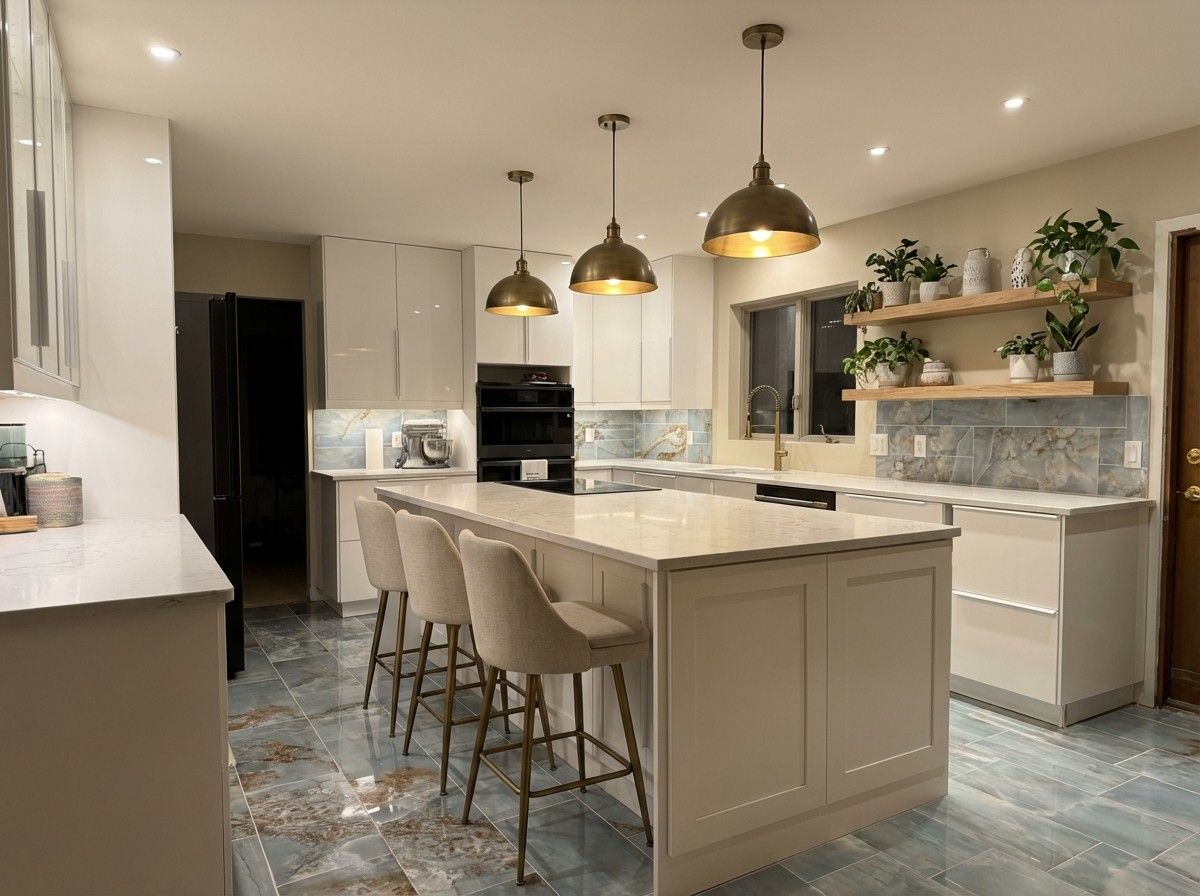
“Keep the blue floor and white cabinets. Brass dome pendants. Greige walls. Wood floating shelf. Linen bar stools.”

Free · No account needed · 10 seconds
The ceiling goes from drop tiles to smooth drywall. Three aged brass dome pendants replace the angular fixture. Warm greige walls replace stark white. A wood floating shelf with plants adds organic texture. Linen bar stools with brass legs give the island a place to sit that actually invites you to stay.
Why this works: Brass and greige have warm yellow undertones that complement the cool blue floor instead of fighting it. The wood shelf breaks up the wall of white without adding clutter. The room reads warm without losing any of the clean lines his wife chose.
Direction 2: Bold Contrast
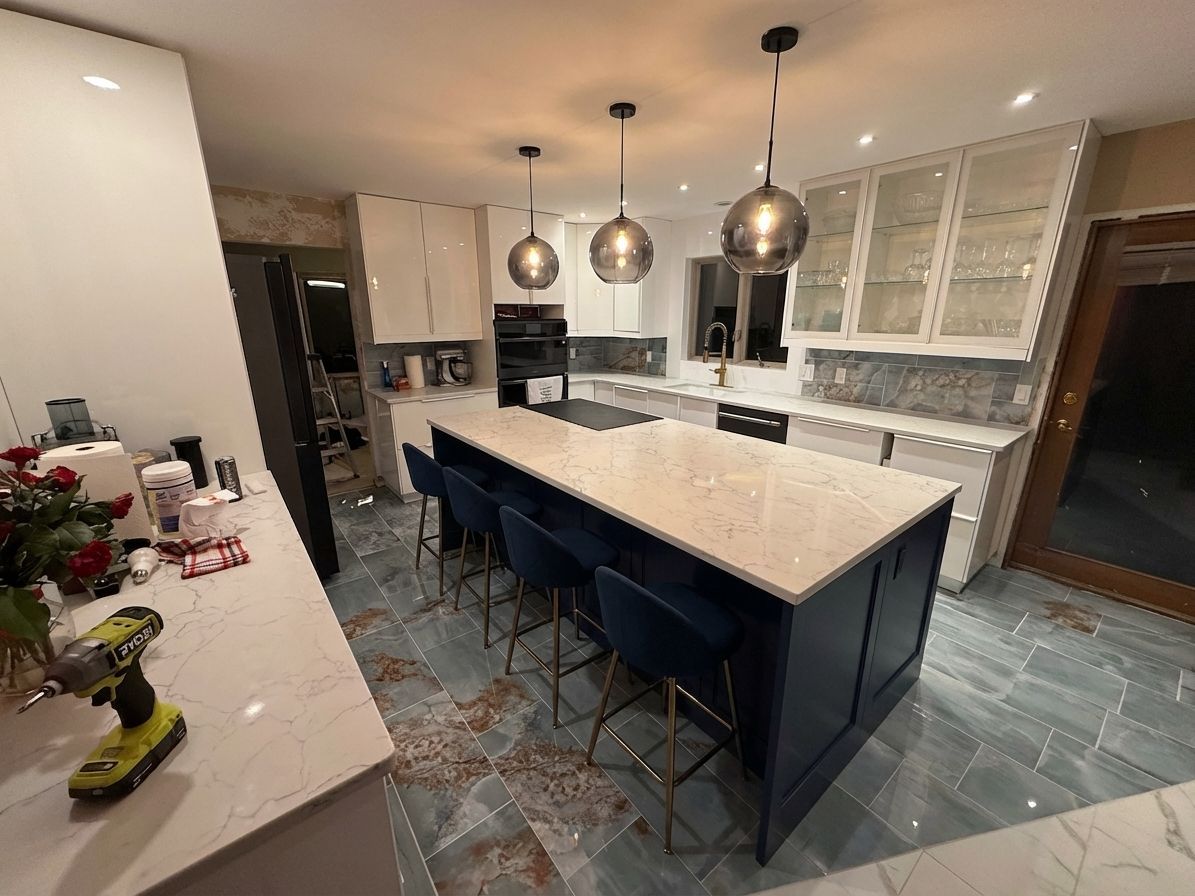
What we told RAI:
“Keep white cabinets and blue floor. Navy island base. Smoked glass globe pendants. Navy bar stools with brass legs.”

Free · No account needed · 10 seconds
Instead of softening the blue, this direction leans into it. The island base goes deep navy. Navy cushioned bar stools pick up the same tone. Smoked glass globe pendants on black cords add drama without weight.
When you commit to blue instead of apologizing for it, the floor stops looking accidental and starts looking intentional. The white uppers and quartz counter provide enough contrast. The navy island anchors the room and makes the blue-gray floor part of a deliberate palette, not a mistake.
Direction 3: Coastal Organic
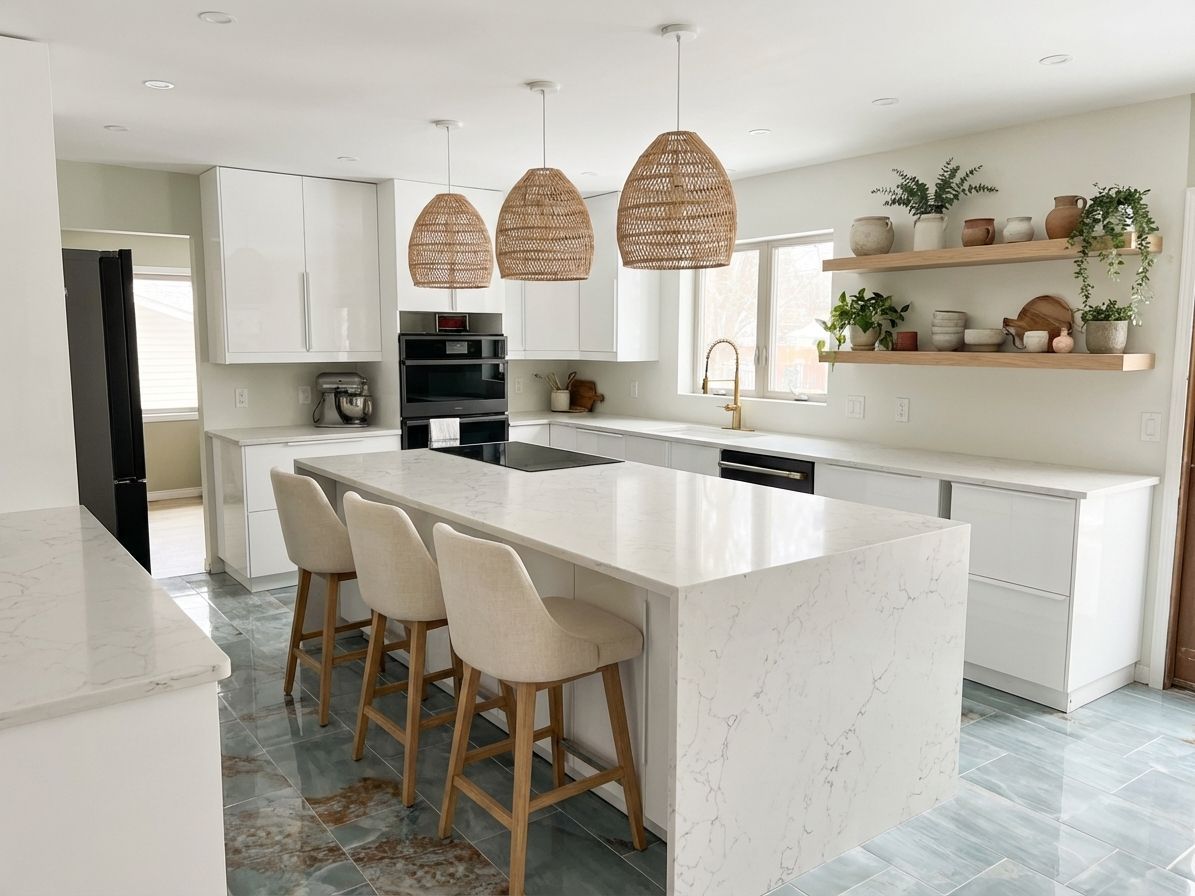
What we told RAI:
“Keep white cabinets and blue floor. Rattan pendant lights. White oak shelves with greenery. Cream linen stools.”

Free · No account needed · 10 seconds
The blue floor becomes water. Three woven rattan pendants bring texture and warmth overhead. White oak floating shelves with ceramic pots and trailing plants add life to the right wall. Cream linen bar stools keep it light. The walls stay warm white with a slight sage undertone.
Why this works: Natural materials do the heavy lifting. Rattan, oak, linen, and ceramic all have organic warmth that no amount of paint color can replicate. The blue floor reads as a design choice when surrounded by coastal textures. This is the lightest, airiest version of the same kitchen.
Which Direction Fits?
Each of these warms up a white kitchen without touching the cabinets or the floor. Same starting point, same constraint.
Go Warm Transitional if you want the safest upgrade. Brass and greige are proven. This is the direction most people will be comfortable with.
Go Bold Contrast if you’re willing to commit. Navy on the island is a statement. It works best in bigger kitchens where the dark base won’t close things in.
Go Coastal Organic if you want the kitchen to feel like a weekend. This reads younger and lighter. Best for homes near water or with lots of natural light.
The biggest change in all three isn’t the color. It’s the ceiling. Removing drop tiles and adding real pendants transforms more of the room’s feeling than any other single decision.
How We Made These
We opened the original kitchen photo in Renovate AI and told RAI what to keep first: the blue-gray floor tiles and white gloss cabinets. Then we guided each direction with a short description of the mood we wanted.
RAI kept the room exactly as it is. Same island. Same appliances. Same window. Same glass-front uppers. It changed the ceiling, lighting, walls, and details around the fixed elements.
You can get specific if you want. Down to pendant style, hardware finish, exact wall color. You can even add materials from your Imagination Library for reference. Or keep it simple. Either way, you see your actual room, not someone else’s.
See What Your Kitchen Could Look Like
If your white kitchen feels cold, try telling RAI what you’d keep and what you’d change. Start with one direction. See if the room feels different.
Open your space in Renovate AI. Tell it what you’d change. See it in seconds.
Inspired by a real question on r/kitchenremodel.
Made with Renovate AI. Open your space, tell RAI what you’d change, see it in seconds.
You Might Also Like
Kitchen Remodel Ideas You Can Visualize in Seconds →
Design Your Dream Kitchen Corner with AI →
See Modular Kitchen Layouts in Seconds with AI →