
How Do I Pick a Front Door Color? One Rule That Actually Works

The one rule
A front door color works when it picks up one undertone that already exists in your house’s fixed elements. It fails when it just tries to “pop.”
Your brick, stone, roof, and siding are the fixed palette. You’re not choosing a door color in a vacuum. You’re choosing the next note in a chord that’s already playing.
Three steps:
- List your fixed elements. Brick, stone, roof, siding, shutters, walkway. The stuff you’re not repainting.
- Name the dominant undertone. Warm (red brick, tan stone, brown roof) or cool (gray brick, slate, charcoal). Squint at a photo of your house. Which way does it lean?
- Pick a door color that echoes one undertone, then contrast in lightness, not temperature. A dark door on a light house, or a saturated door on a muted house. The contrast comes from depth, and the harmony comes from the shared undertone.
That’s why “what pops?” is the wrong question. Pop is temperature war. What you want is contrast with kinship.
Watch the rule work: one house, three doors
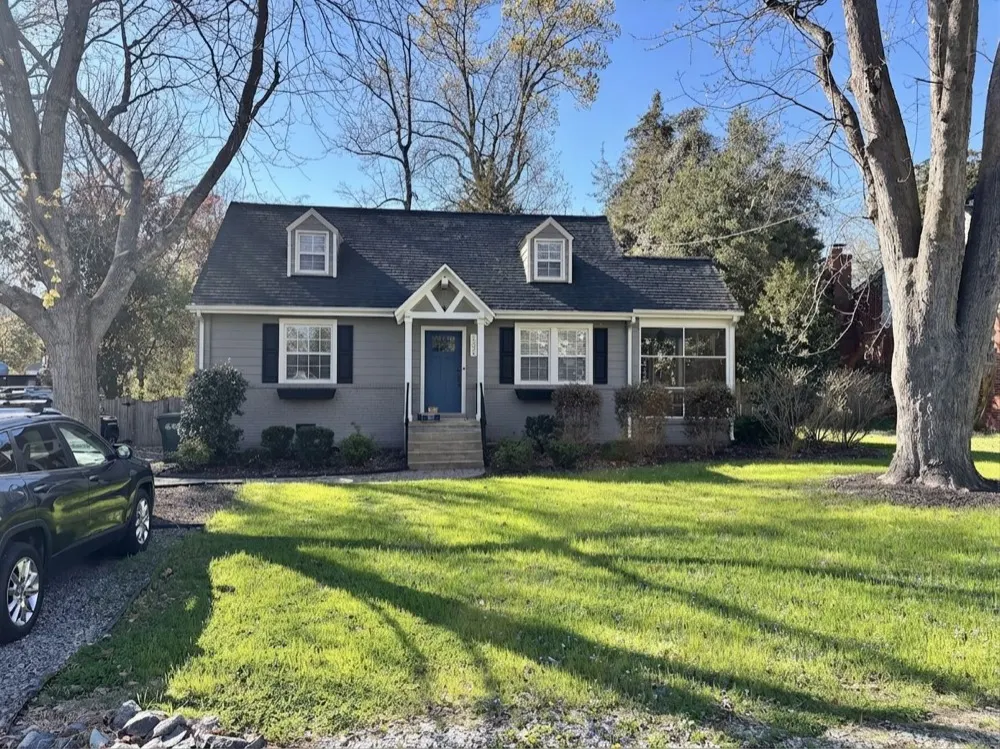
A homeowner on r/ExteriorDesign asked what color to paint the front door of their 1940s Cape Cod. Fixed palette: gray-tan brick, charcoal shutters, white trim, slate roof. Cool undertones, muted values. The thread suggested everything from teal to saffron to eggplant.
We tested three directions on their actual photo. Drag the slider to see each one.
What we told RAI: “Paint the front door a deep navy blue. Keep everything else identical: brick exterior, dark charcoal shutters, white trim around door, slate roof.”
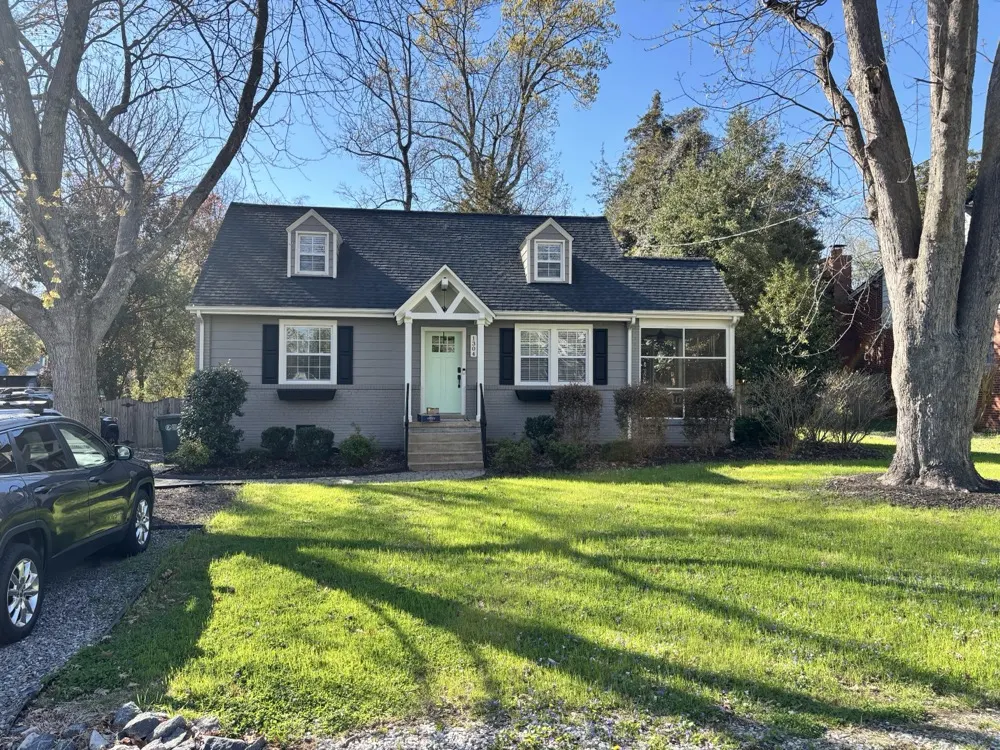
Navy echoes the cool slate-and-charcoal undertone and contrasts the white trim in depth. Kinship plus contrast. This is the rule working.
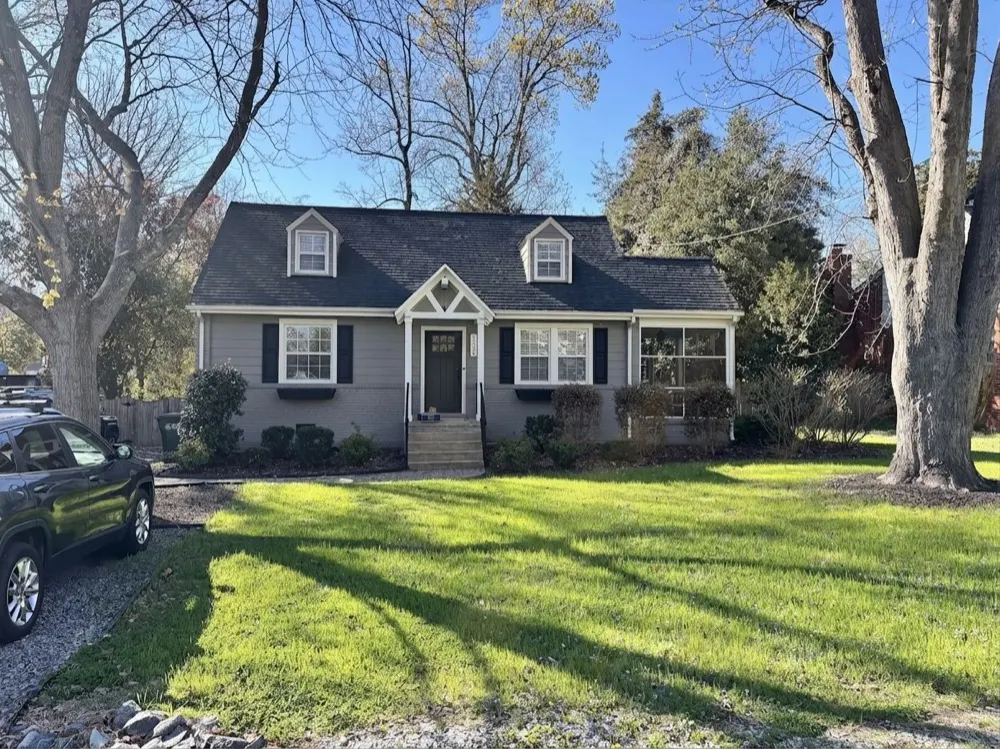
Black unifies with the shutters, which is exactly why it works here: the dark note already existed. On a house with no dark elements, this same door would look like a hole.
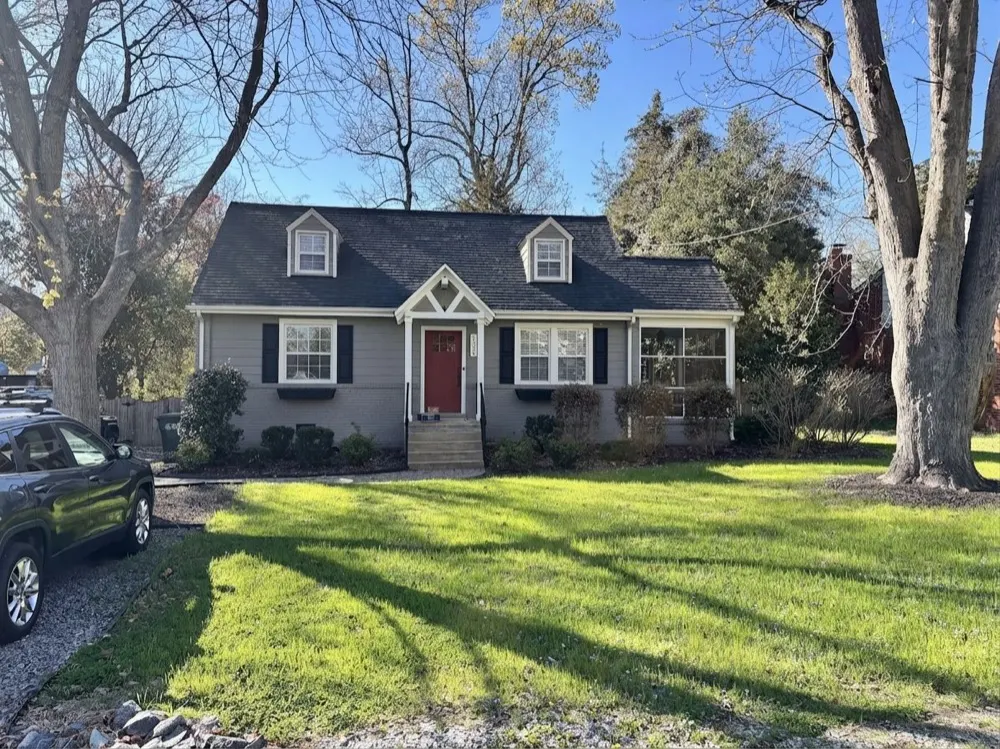
Burgundy was the crowd favorite in the thread, and you can see why it’s the risky one: it imports a warm note the fixed palette doesn’t have. It’s not wrong, but it’s a bigger bet.
Second house, same rule, opposite answer
A mid-century split-level: red brick below, chocolate brown siding above, white trim. Warm undertones everywhere. Here navy becomes the calm contrast and rust becomes the kinship pick, tying the brick’s warmth to the siding.
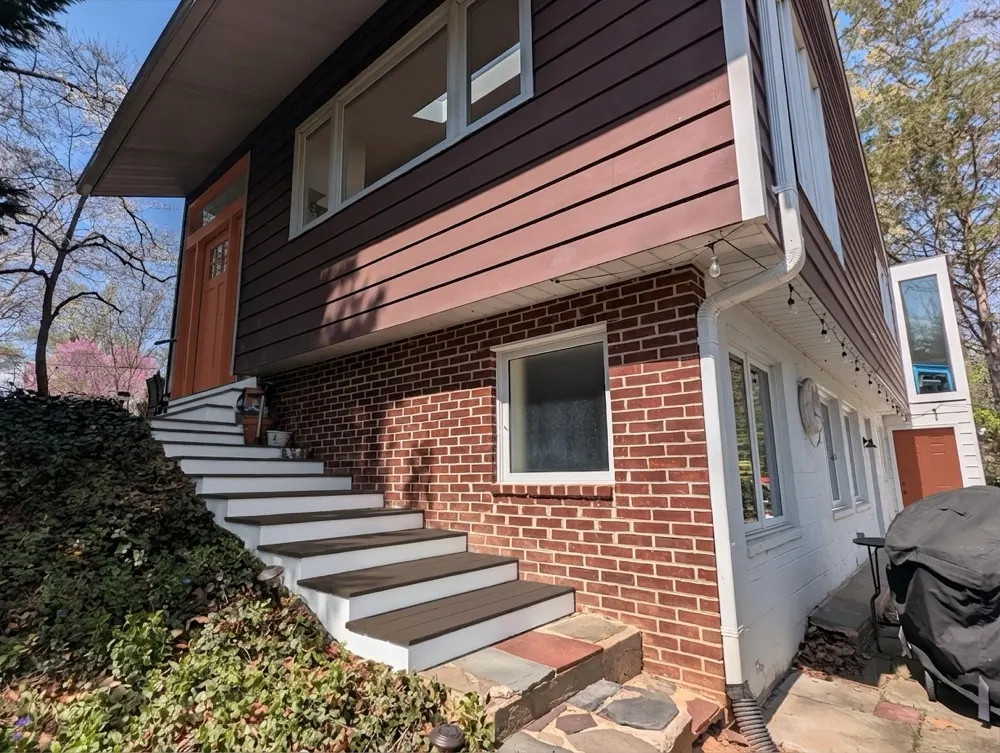
Same rule, different house, different winner. That’s the point. The rule travels, the answer doesn’t.
Now name yours
Pull up a photo of your own space, or just look at it. Answer two questions in plain words:
- Which undertone dominates your fixed palette, warm or cool?
- Does your current door color echo it, fight it, or just disappear?
Most people never name it. They just circle swatches. Finish the sentence — in your words, about your home:
Your sentence rides the button below. Test it on your photo.
Test your answer before you commit. Upload a photo and tell RAI the exact change you're considering. You'll see it on your actual home in seconds.
See it on your home →Free · No account needed · 10 seconds
Stuck between two answers, or not sure what you're looking at? That's a design question. In the Renovate AI app, tap Ask and describe what feels off. Elena will help you name it, then design the direction.
FAQ
- Is a black front door always safe?
- Almost. Black works on most houses because it reads as a neutral and echoes whatever dark elements you already have, like roof, shutters, or railings. It fails on houses with no dark elements at all, where it can look like a hole instead of a door.
- What color front door for a red brick house?
- Red brick has a warm undertone, so pick colors that either echo the warmth (deep burgundy, rust, stained wood) or contrast it calmly with depth (navy, deep green, black). Bright cool pastels fight the brick.
- My HOA limits door colors. What then?
- The rule still works inside a short list. Take the 3 or 4 approved colors and test each against your fixed palette. There is almost always one that picks up an undertone the others miss.
- What finish should a front door be?
- Satin or semi-gloss for most doors. Matte reads modern and hides dents on smooth steel doors. Avoid high gloss unless the door is perfectly smooth, because gloss shows every flaw.