
Is There an App Where I Can Get Free AI Landscape Design?

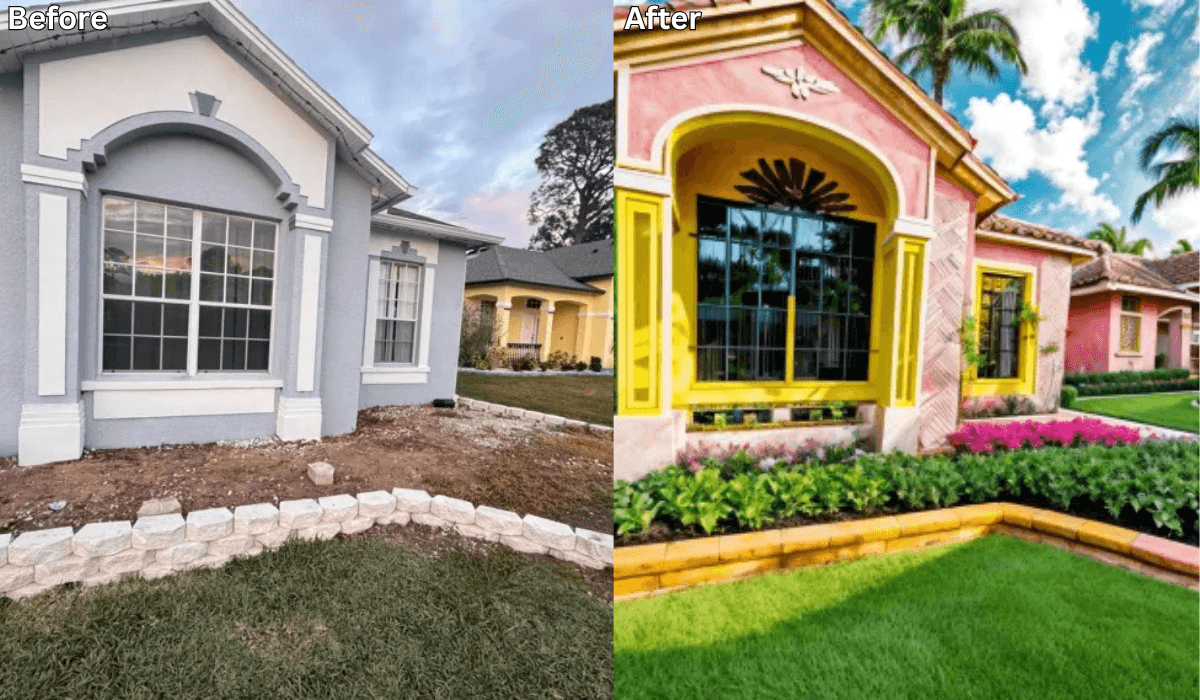
Yes, there are a few options for free AI landscape design tools, with Renovate AI being a leading provider in this space.
Renovate AI offers a free trial that allows users to upload photos of their outdoor spaces and generate AI-powered landscape design concepts. Some key features of Renovate AI’s free offering include:
-
AI-generated design variations based on your preferences
-
Ability to remove clutter and enhance existing elements
-
Options to experiment with different plant arrangements, hardscaping, and lighting
-
No requirement for professional photography equipment - smartphone photos work
The free trial provides a good introduction to Renovate AI’s capabilities, giving users a chance to visualize potential changes to their yards and gardens before committing to any physical renovations.
While the free version has some limitations compared to Renovate AI’s paid plans, it’s an excellent starting point for homeowners, landscapers, and real estate professionals looking to leverage AI for landscape design. By uploading a few photos and selecting preferred styles, users can generate multiple design concepts at no cost.
If you’re interested in exploring free AI landscape design, I’d recommend trying out Renovate AI design tool’s platform. Their intuitive interface and powerful AI technology make it easy to start reimagining your outdoor spaces.
Step by Step instructions to do Free AI Landscape Design on Renovate AI
Renovate AI’s mobile app allows homeowners, landscapers, and real estate professionals to upload photos of their outdoor spaces and generate AI-powered design concepts at no charge.
The process is simple:
-
Download the Renovate AI App: Start by downloading the Renovate AI app on your smartphone. It’s available for both iOS and Android devices.
-
Create an Account: Sign up for a free Renovate AI account or log in to an existing one.
-
Upload a Photo: Tap the “Landscape” option and then the “Upload Photo” button. You can select an image of your yard, garden, or other outdoor area using your smartphone’s camera roll.
-
Choose a Design Style: Renovate AI’s AI will analyze your photo and provide design variations based on different styles, such as Japandi, Zen, or Modern. You can preview these options within the app.
-
Review and Save Designs: Select the designs you like best. The free trial allows you to create up to 3 design variations, which you can save for future reference.
The Power of AI Landscape Design
Renovate AI’s free landscape design tools leverage advanced AI technology to provide realistic, customized concepts for your outdoor space. Unlike basic photo editing tools, Renovate AI’s AI understands the spatial relationships, materials, and design principles required to generate visually appealing and structurally sound landscape designs.
The app can perform a variety of transformations, including:
-
Rearranging plant layouts and garden beds
-
Modifying hardscaping elements like pathways and patios
-
Adjusting outdoor lighting scenarios
-
Experimenting with different lawn designs
All of these changes are made with a focus on creating designs that are practical and achievable, not just aesthetically pleasing.
See It In Action: 3 AI Landscape Directions
Here’s a real home with basic front yard landscaping. We used Renovate AI to preview three completely different landscape directions — all from the same photo, in seconds.
The original yard:
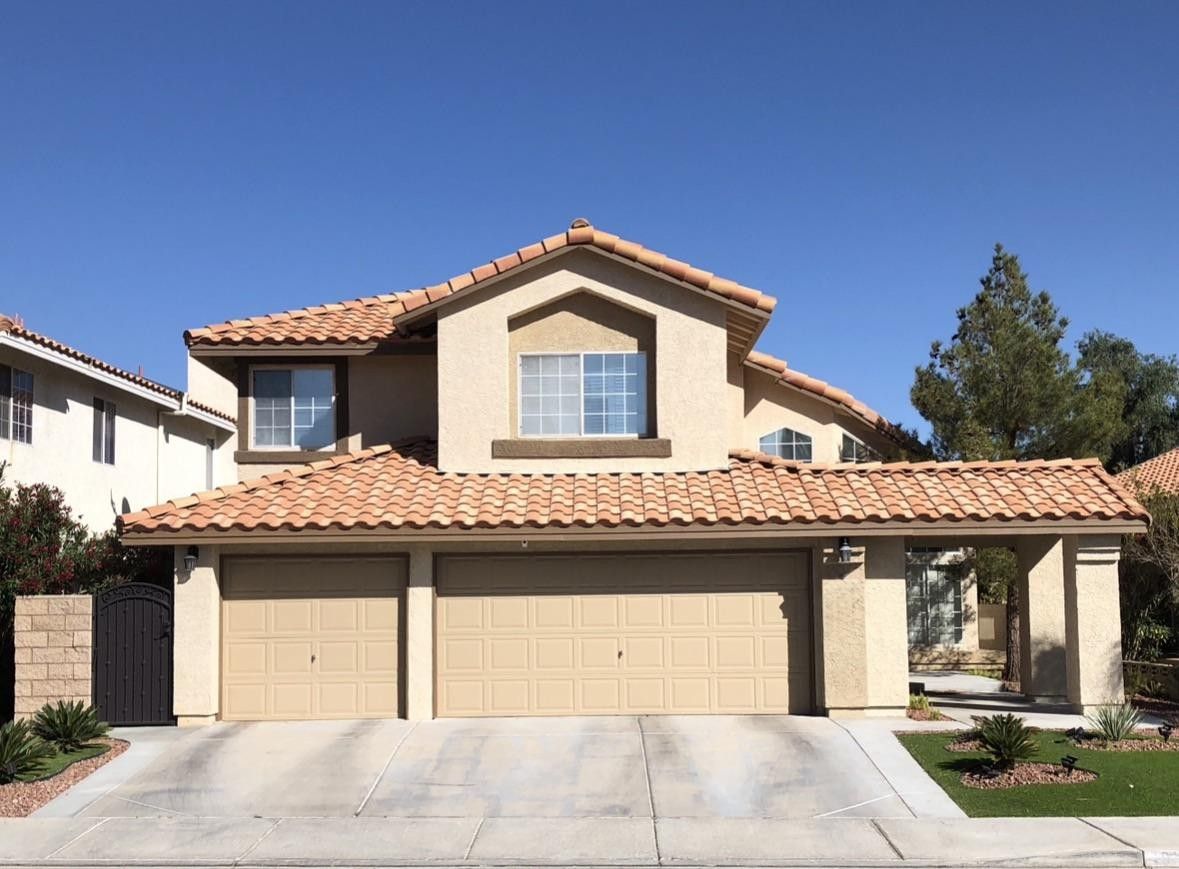
Direction: Lush Mediterranean
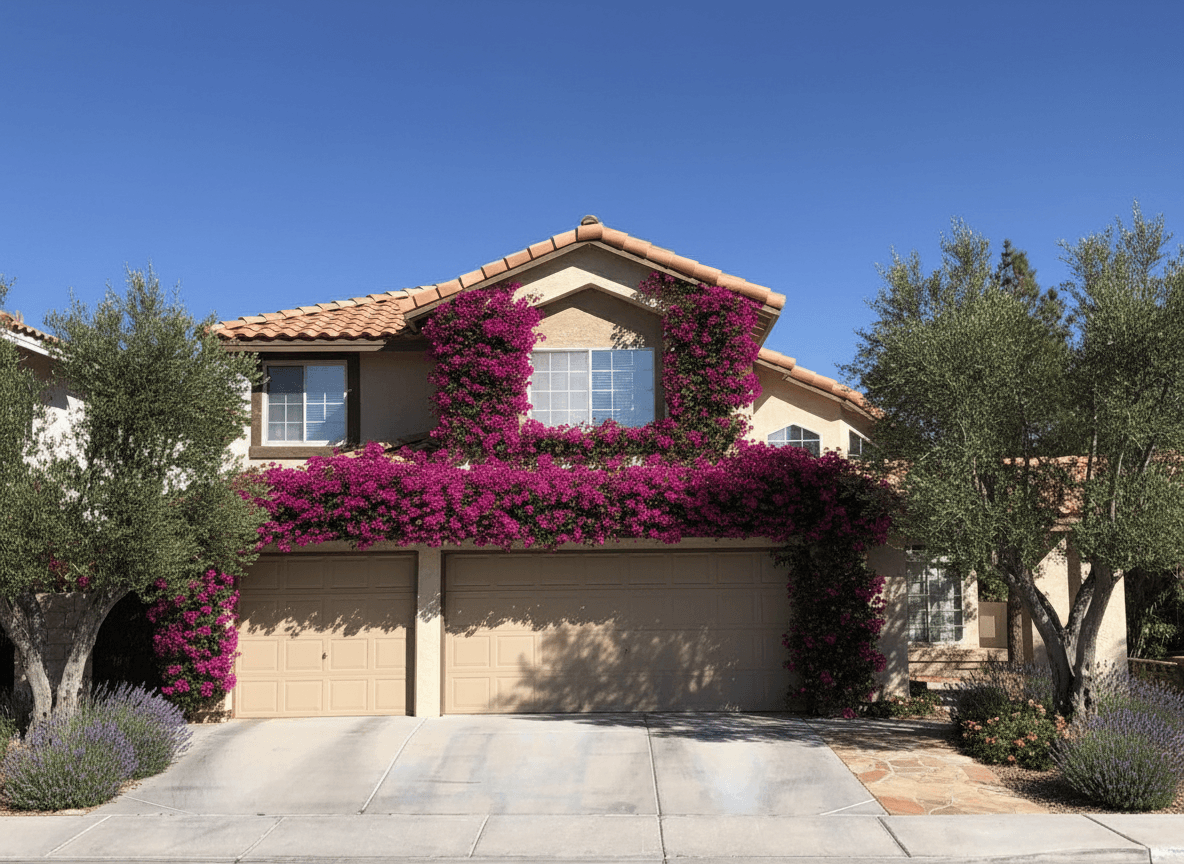
What we told Renovate AI:
Add lush Mediterranean landscaping. Flowering bougainvillea along the entry, olive trees flanking the driveway, lavender borders, and a stone pathway to the front door

Free · No account needed · 10 seconds
Direction: Modern Desert Oasis
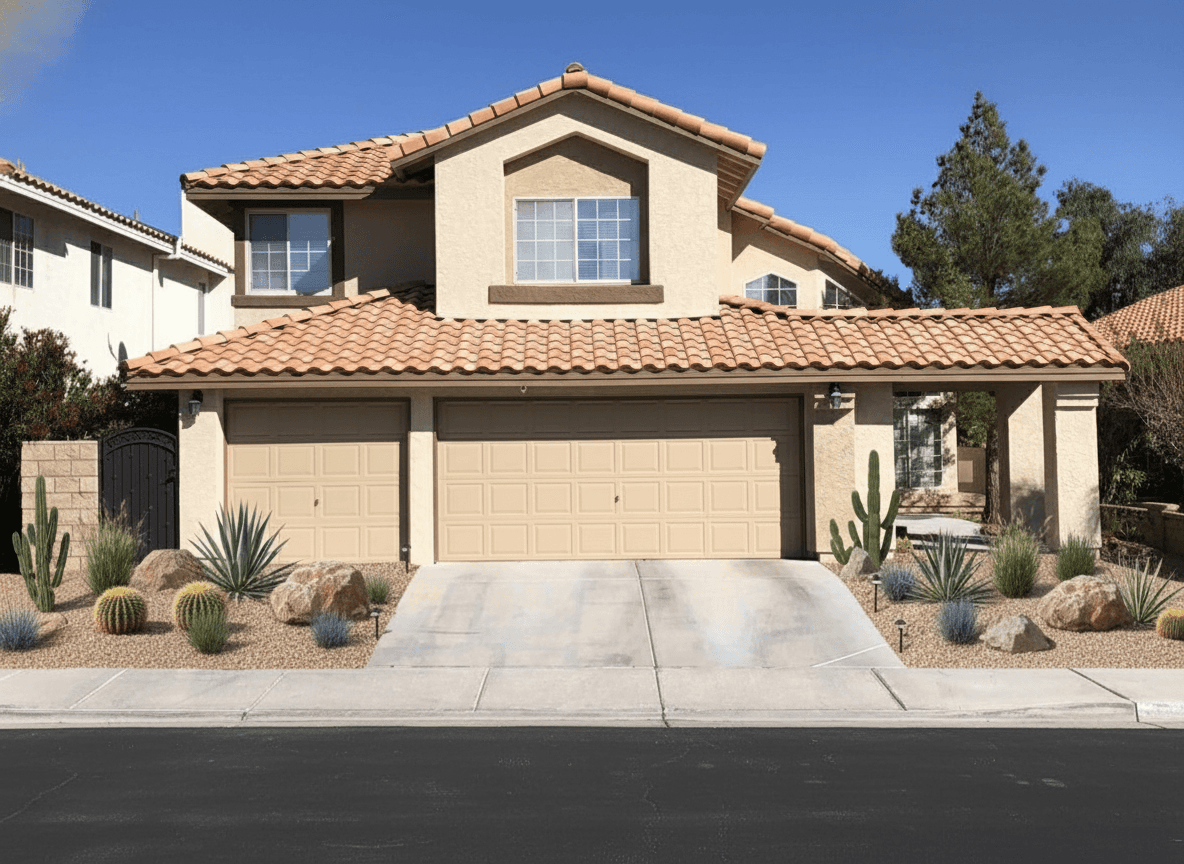
What we told Renovate AI:
Redesign the front yard as a modern desert landscape. Clean gravel beds with architectural agave and tall cacti, accent boulders, low-water ornamental grasses, and path lighting along the walkway

Free · No account needed · 10 seconds
Direction: Cottage Garden
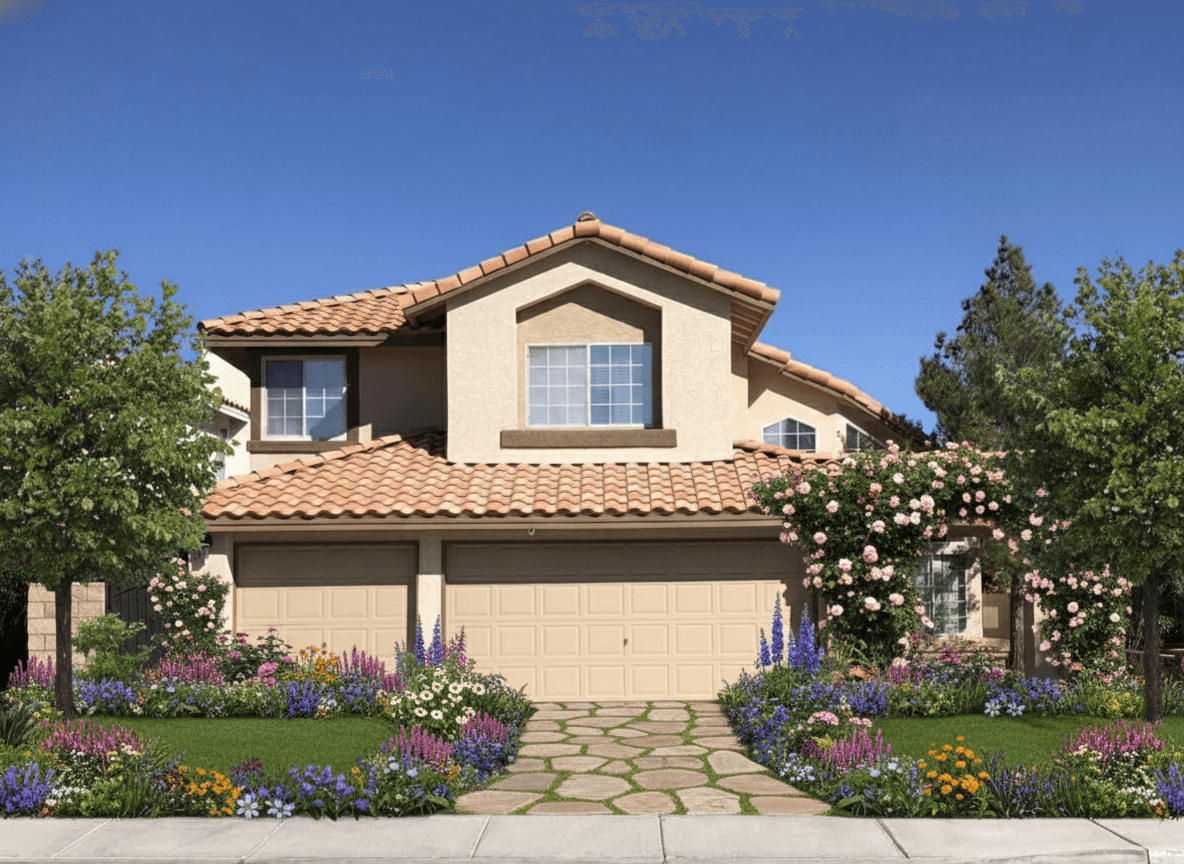
What we told Renovate AI:
Transform the front yard into a lush cottage garden. Flowering perennials along a winding stone path, climbing roses on the entry arch, mature shade trees, and a green lawn

Free · No account needed · 10 seconds
Same house. Same driveway. Three completely different landscapes — all previewed before hiring a landscaper.
Three More Directions on the Same Yard
Those three all lean planted and lush. But the constraint on this house is obvious once you look at it: there isn’t much ground to work with, and the wide concrete driveway isn’t going anywhere. So we ran three more directions that take that seriously.
Direction: Low-Maintenance
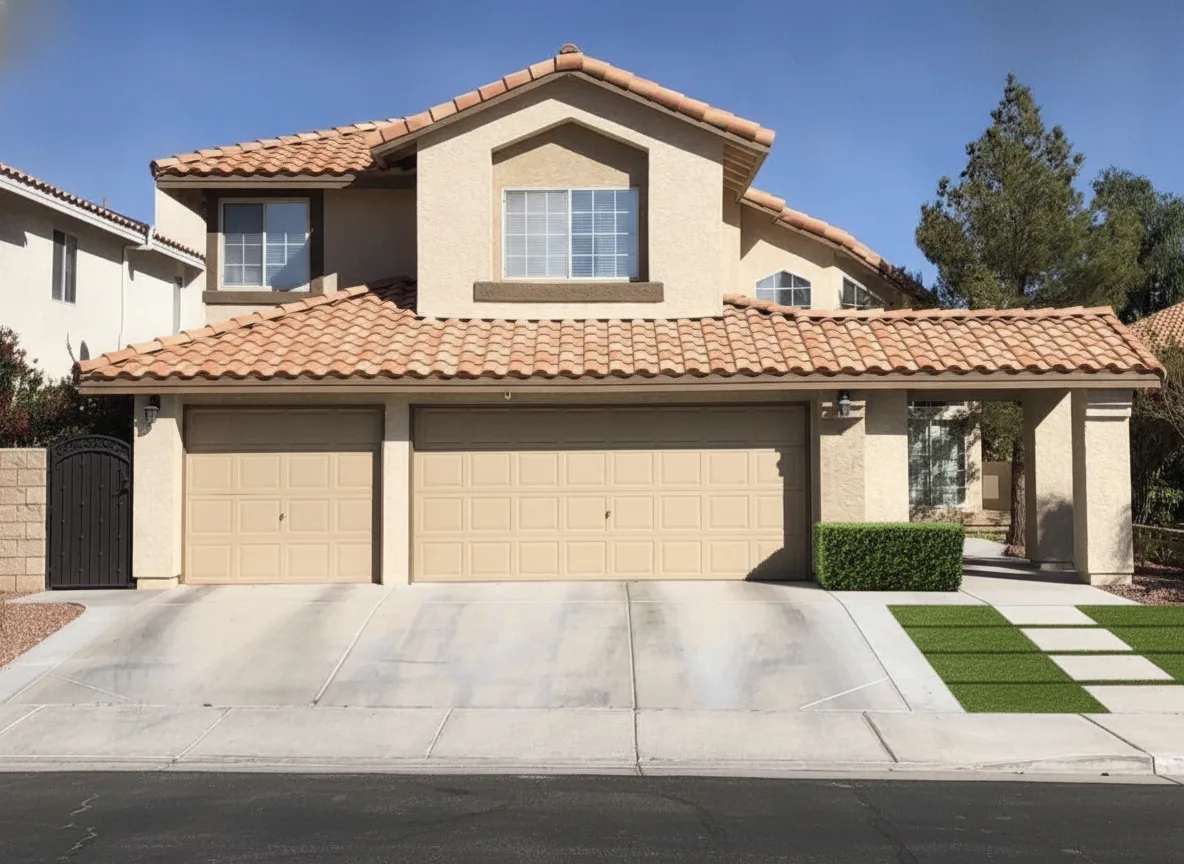
What we told Renovate AI:
Redo the front yard as a low-maintenance design: artificial turf lawn panels, a clipped boxwood hedge along the garage wall, large concrete stepping pavers set into gravel, and steel edging. Keep the house, the tile roof, the garage doors and the driveway exactly as they are.
The quietest of the six, and probably the most honest about the site. A hedge to soften the garage wall, turf panels set into pavers, clean edges. Nothing here needs weekly attention, and nothing here fights the house.

Free · No account needed · 10 seconds
Direction: Tropical
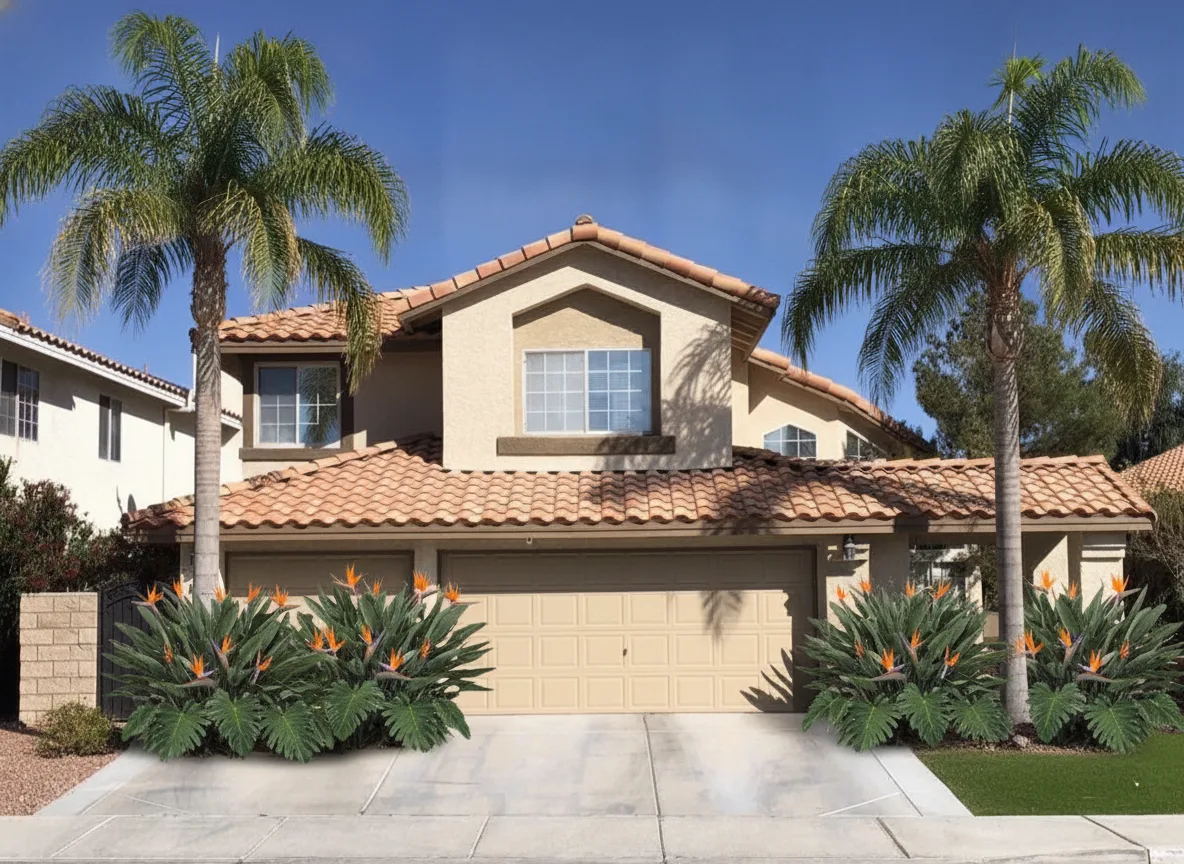
What we told Renovate AI:
Redo the front yard as a tropical resort landscape: queen palms flanking the entry, bird of paradise and large-leaf philodendron mass planted along the driveway, and warm uplighting at the base of the palms. Keep the house, the tile roof, the garage doors and the driveway exactly as they are.
This is the one that changes the house without touching the house. Two palms break up the flat two-story face, and mass planting along the driveway hides the fact that the beds are narrow. Same stucco, same roof, completely different address.

Free · No account needed · 10 seconds
Direction: Modern Farmhouse
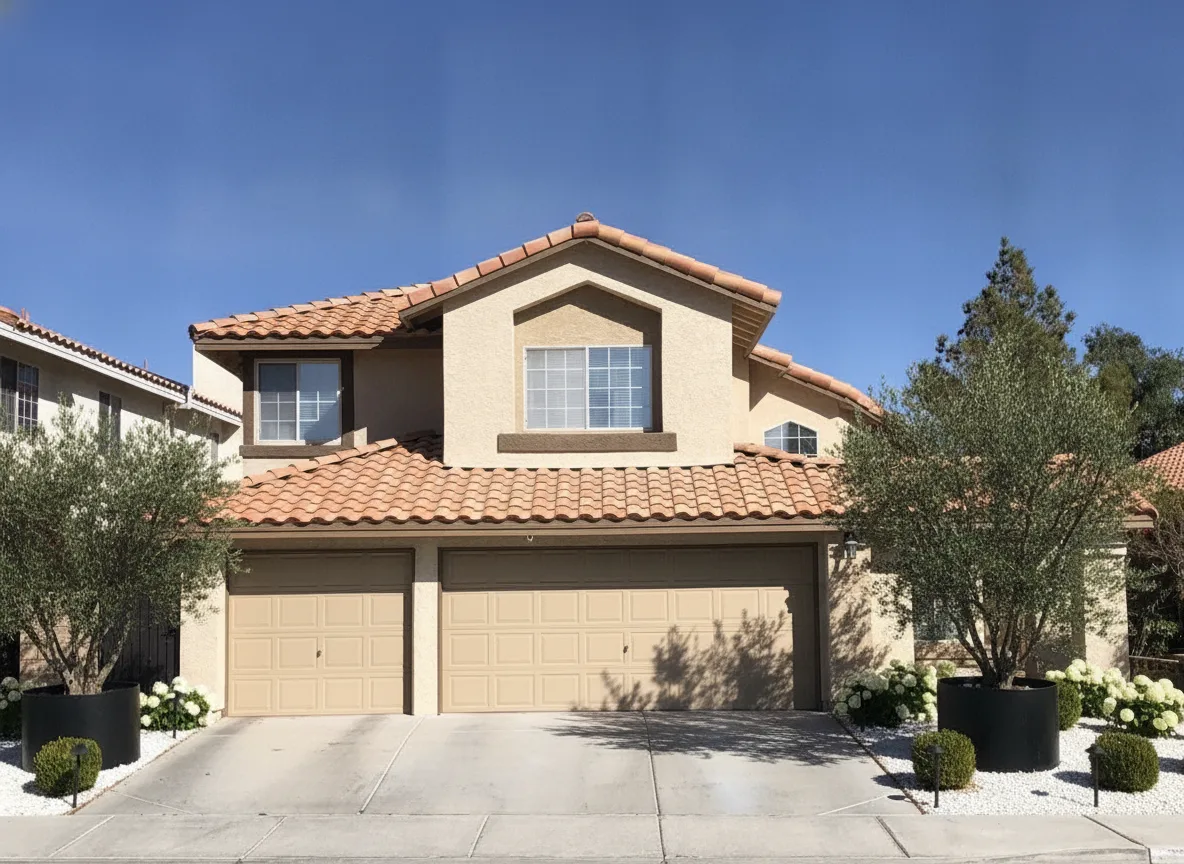
What we told Renovate AI:
Redo the front yard in a modern farmhouse style: white gravel beds, black steel planters holding olive trees, clipped boxwood balls along the foundation, white flowering hydrangeas, and low black path lights. Keep the house, the tile roof, the garage doors and the driveway exactly as they are.
Black planters, olive trees, white gravel, boxwood balls. It’s the best-looking image of the six, and it’s the one with a problem.

Free · No account needed · 10 seconds
The Mistake AI Landscape Design Will Make For You
Look at that last render again. Those are hydrangeas, on a lot with a tile roof, gravel mulch and desert-adapted planting already in the ground. Hydrangeas want shade and constant moisture. On this house they would be dead by August, and in a lot of these towns you would not be allowed to water them enough to try.
The AI designed for the style we named, not for the climate it could see. That’s the single biggest limitation of free AI landscape design, and it’s easy to miss because the image looks so convincing.
This isn’t a reason to skip the tool. It’s a reason to read the render in two passes:
-
The composition — bed shapes, where mass goes, what gets hidden, how the house reads from the street. Trust this. It’s working from your real photo.
-
The plant list — species, size, flowering. Check every one against your hardiness zone and your water rules before you buy anything.
The practical fix is to put the constraint in the sentence. Instead of “modern farmhouse,” ask for “modern farmhouse using drought-tolerant plants suited to a hot dry climate.” You get the same composition with a plant palette that survives.
Two more things it won’t know: what’s underground, and what’s outside the frame. Irrigation lines, utilities and mature root systems are invisible to a photo, and anything your camera didn’t capture cannot be redesigned.
How to Photograph Your Yard
-
Shoot from the street or the sidewalk, straight on, with the whole house and both edges of the lot in frame.
-
Overcast light beats midday sun. Hard shadows across a lawn confuse the model about where beds end.
-
Include the driveway and walkway. They’re the fixed geometry every design has to work around.
-
One photo is enough. Run it several times with different sentences rather than uploading several photos.
Benefits of Using Renovate AI’s Free Tools
Trying Renovate AI’s free landscape design tools offers several advantages:
-
No-Cost Experimentation: You can explore various design ideas without any financial commitment, making it easy to find the perfect look for your outdoor space.
-
Realistic Visualizations: Renovate AI’s AI-powered visualizations provide a clear idea of how potential changes will look in your actual landscape, helping you make informed decisions.
-
Inspiration and Idea Generation: Even if you don’t end up implementing the exact designs, the app can spark new ideas and inspire you to think creatively about enhancing your outdoor area.
-
Accessibility: With just a smartphone and the Renovate AI app, anyone can access professional-grade landscape design tools, democratizing the design process.
Getting Started with Renovate AI
Ready to transform your outdoor space? Download the Renovate AI app today and start exploring free AI landscape design solutions. Whether you’re a homeowner, landscaper, or real estate professional, these tools can help you visualize and plan your dream outdoor oasis.
Remember, the free trial is just the beginning. Renovate AI offers additional features and capabilities for those looking to take their landscape design to the next level. But even with the free version, you can unlock a world of creative possibilities and bring your outdoor vision to life.
So what are you waiting for? Download the Renovate AI app and let the power of AI help you reimagine your landscape today!
More AI Home Design Guides
You Might Also Like
AI Landscape Design Tool — Visualize Your Yard Makeover Free →
Instantly Preview Outdoor Makeovers with AI →
Renovate AI’s approach to pairing every image with a cost estimate was recently featured in Morning Brew’s The Playbook, reaching 4.4 million real estate investors.

Sid Sarasvati · Founder, Renovate AI
Sid Sarasvati is the founder of Renovate AI, featured in the Wall Street Journal and Morning Brew’s The Playbook. He studied architectural philosophy at Harvard GSD and has tested AI design tools on 200+ real homes.
Now name yours
Pull up a photo of your own space, or just look at it. Answer two questions in plain words:
- What is the fixed frame of your yard — driveway, walkway, and the wall the planting sits against?
- How much watering and trimming are you honestly willing to do in August?
Most people never name it. They just circle swatches. Finish the sentence — in your words, about your home:
Your sentence rides the button below. Test it on your photo.
Test your answer before you commit. Upload a photo and tell RAI the exact change you're considering. You'll see it on your actual home in seconds.
See it on your home →Free · No account needed · 10 seconds
Stuck between two answers, or not sure what you're looking at? That's a design question. In the Renovate AI app, tap Ask and describe what feels off. Elena will help you name it, then design the direction.
FAQ
- Is there a genuinely free AI landscape design app?
- Yes. Renovate AI is free to start — new accounts get credits to run real designs on your own photos with no card, and a free tier stays available after that. Paid plans add volume, higher-resolution downloads, and unwatermarked exports. Comparing several directions for your front yard sits comfortably inside the free tier.
- Does AI landscape design know what grows where I live?
- No, and this is the failure worth watching for. The model designs for the look you asked for, not for your hardiness zone or your water restrictions. Ask for modern farmhouse on a desert lot and you will get hydrangeas, which will not survive there. Treat the render as a composition and check the plant list against your own zone before you buy anything.
- Do I need a survey, measurements, or a site plan?
- No. It works from a single photo of the yard, so your driveway, walkway, and grade are already in the picture. What it cannot see is what's underground — irrigation, utilities, root systems — or anything outside the frame.
- Can it design a backyard as well as a front yard?
- Yes, and backyards are often easier because there's usually more open ground to work with. The same rule applies: photograph the whole space you want changed, because the AI can only redesign what's in the frame.
- Can I take the render to a landscaper?
- As a conversation starter, yes, and it's much better than a Pinterest board because it's your actual house. As a plan, no. It has no dimensions, no plant schedule, no drainage and no irrigation. It tells a landscaper what you want. They still have to tell you what it costs and whether it drains.